How to Grow Mung Beans at Home for Fresh Mung Bean Sprouts
Published on
April 25, 2026
Author
Zuri Khumalo
Zuri's frequent journeys to South Africa in her youth ignited her fervor for environmental science, gardening, and sustainable living. These travels deepened her connection with nature, inspiring her to contribute to conservation efforts in her own meaningful ways.
Growing Chia Plants Q&A
Can I grow chia from the chia seeds I buy at the store?
Yes. Organic chia seeds from the grocery store will often germinate, though germination can vary. Fresh seed from a garden supplier is more reliable.
How long does it take to grow chia?
Seeds sprout in about a week. The plant needs 100 to 150 days to mature before you can harvest the seeds.
Is chia a California native plant?
Salvia hispanica is native to central Mexico and Guatemala. However, Salvia columbariae, sometimes called California chia, is a California native plant.
Can I grow chia indoors?
You can grow chia sprouts and microgreens indoors easily. A full-size chia plant needs strong light and rarely sets a good seed crop indoors.
Why won't my chia flower?
Chia flowers when days get shorter. Plants in cooler regions or those lit at night may bloom late or not at all.
How to Grow Pumpkins Q&A
Can I grow pumpkins in a small home garden?
Yes. Choose bush or miniature varieties, grow vines on a trellis, or use raised beds. Plan on one or two plants per hill and prune vines when space is tight.
When should I plant pumpkins for Halloween?
Plant seeds in late May or early June in most climates. Count back from your first frost date and allow for 90 to 120 days of growth.
Why does my pumpkin plant have flowers but no fruit?
Male flowers appear first, so early flowers will not set fruit. If female flowers open but fail to fruit, you probably have too few bees. Pollinate by hand in the morning.
What causes pumpkin leaves to turn white?
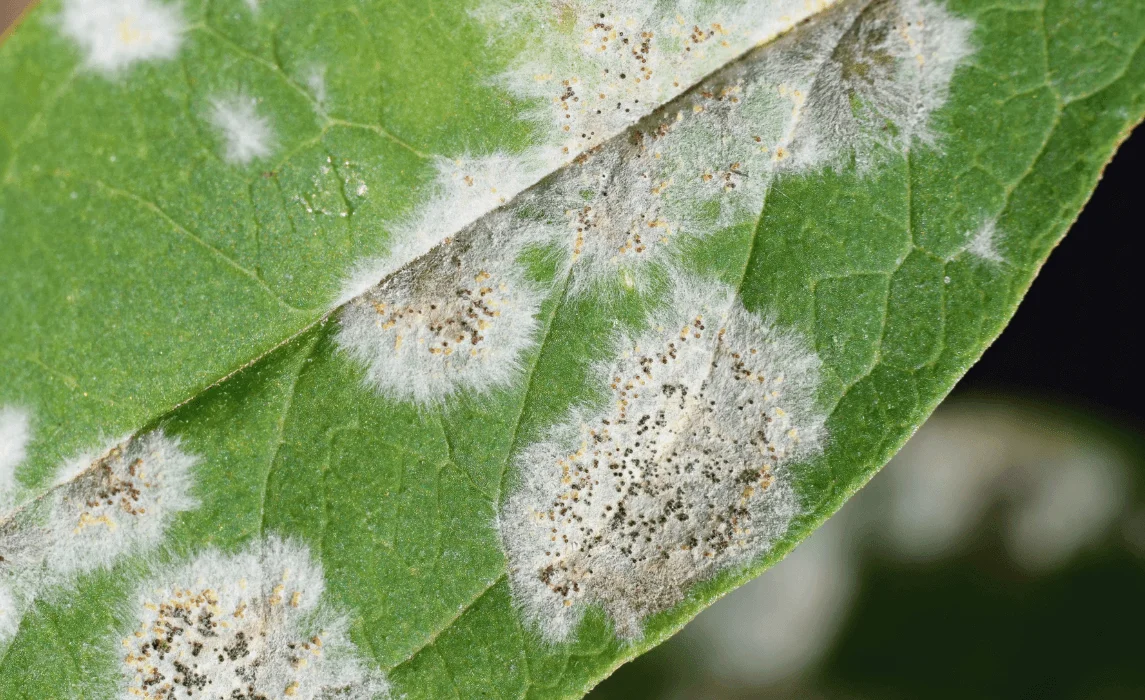
This is usually powdery mildew. Improve airflow, water at the base, remove infected leaves, and apply a fungicide or neem oil.
Can I eat the pumpkin I grew for carving?
Yes, though carving types are stringy and bland. Pie pumpkins are sweeter, but the seeds from any pumpkin can be roasted.
Growing Grapevines Q&A
How long does it take for a grape plant to produce fruit?
Most young vines need two to three years after planting before they set a full crop, though a few clusters may appear in year two. Patience pays off — established vines can keep producing for 40 years or more.
Do I need more than one vine to grow grapes?
No. Since most grape varieties are self-fertile, one plant is enough to produce fruit on its own. Planting a second variety nearby is optional and mainly helps with cross-pollination in a few less common types.
Can grape vines grow in containers?
Yes, though grape vines grow best planted directly in the ground, where the root system has room to spread. A large container works for a year or two, but expect to transplant once the vine outgrows the pot.
Why aren't my grapes ripening?
Grapes ripen slowly compared to many fruits, and cool weather, too much shade, or overcrowded canes can all delay the process. Give the vine full sun, thin the clusters, and be patient through the growing season.
What's the difference between table grapes and wine grapes?
Table grapes are bred for fresh eating, with thinner skins and fewer seeds, while wine grapes tend to have thicker skins, more seeds, and higher sugar content suited to fermentation.
Are grape vines toxic to pets?
Grapes and grape leaves are not toxic to people, but grapes and raisins are toxic to dogs and can cause kidney damage, so keep fallen fruit cleaned up if pets have access to the vineyard.
If you love the crisp crunch of fresh bean sprouts in your stir-fries, salads, or noodle bowls, there is no better way to get them than straight from your own kitchen. Store-bought sprouts often spoil quickly, but when you grow mung beans at home, you are guaranteed peak freshness, flavor, and crunch. Mung beans, sometimes called green gram or golden gram, are small, fast-growing members of the legume family that are nutritional powerhouses, notably high in protein, dietary fiber, and essential vitamins.
These bean seeds are closely related to adzuki and cowpea. They have been grown in India since ancient history—in fact, they have thrived in India since ancient times and have been widely grown in Southeast Asia since ancient times as well. Today, many million pounds of mung beans are consumed globally as a popular health food.
In the garden, the entire plant is highly valued. It is often used as a green manure or green manure crop to fix nitrogen into the soil, and it can even be grown for livestock forage. Whether you eat them as a mature dry bean in stews or grow sprouts for a crunchy salad addition, they are incredibly versatile. If you want to find out how to grow them, you do not need a green thumb; you can easily grow at home.
In this guide, we will show you exactly how to turn a handful of dry seeds into a fresh batch of home-grown mung bean sprouts right on your countertop.
Plant Name
Mung Bean (Vigna radiata)
Plant Type
Annual Legume
Size
24–36 inches tall (upright bush growth)
Soil Type
Well-draining loam
Soil pH
6.2–7.2 (slightly acidic to neutral)
Bloom/Harvest Time
90–120 days to mature (dry pods)
Hardiness Zones
2–11 (warm-season crop)
Native Area
India and Southeast Asia
Toxicity Level
Non-toxic (safe for humans and pets)
Best Mung Bean Types
While most home gardeners grow the standard green mung bean, there are a few notable agricultural varieties developed for specific traits:
Berken
The Berken mung bean is a highly popular choice for both commercial and home growers, prized for its large green seeds and consistently high yields. Its sturdy, upright growth provides excellent resistance to lodging, meaning the plants won't easily fall over in bad weather. With uniform pod maturation and a mild flavor, it is highly efficient to harvest and wonderfully versatile for both cooking and sprouting.
Texsprout
Specifically bred for the sprouting industry, the Texsprout variety focuses on rapid, uniform germination to produce the perfect crunch. When sprouted, these beans yield consistent, thick, and high-quality sprouts that hold up beautifully in dishes and commercial packaging without quickly turning mushy. It is the ideal choice for growers seeking a clean, dependable harvest of premium sprouts.
Celera
The Celera is a smaller-seeded mung bean variety distinguished by its exceptionally rapid maturation cycle. Because it is ready to harvest so quickly, it is ideal for regions with short, hot growing seasons or as a quick catch crop between primary plantings. Highly heat-tolerant and resilient, Celera offers growers a fast, low-maintenance turnaround without demanding excessive resources.
How to Plant Mung Beans
Note: Mung beans have extremely fragile root systems and do not tolerate transplanting well. It is highly recommended to grow them strictly from seeds sown directly into the garden, rather than starting them as seedlings indoors.
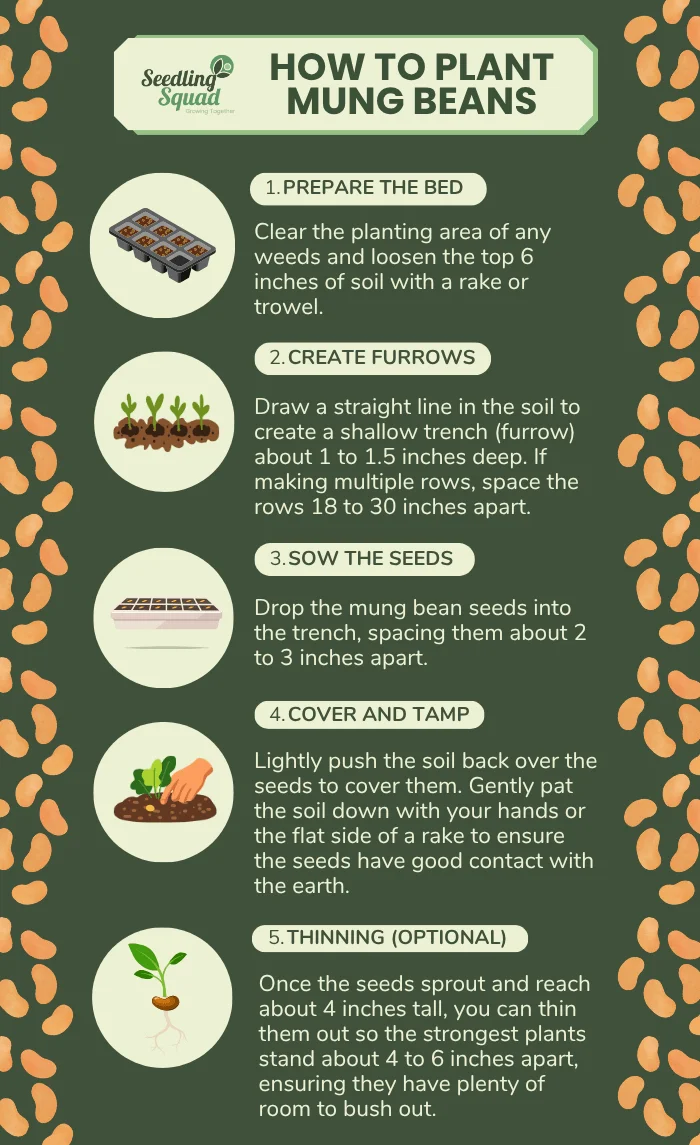
Prepare the Bed: Clear the planting area of any weeds and loosen the top 6 inches of soil with a rake or trowel.
Create Furrows: Draw a straight line in the soil to create a shallow trench (furrow) about 1 to 1.5 inches deep. If making multiple rows, space the rows 18 to 30 inches apart.
Sow the Seeds: Drop the mung bean seeds into the trench, spacing them about 2 to 3 inches apart.
Cover and Tamp: Lightly push the soil back over the seeds to cover them. Gently pat the soil down with your hands or the flat side of a rake to ensure the seeds have good contact with the earth.
Thinning (Optional): Once the seeds sprout and reach about 4 inches tall, you can thin them out so the strongest plants stand about 4 to 6 inches apart, ensuring they have plenty of room to bush out.
Mung Beans Requirements
Soil
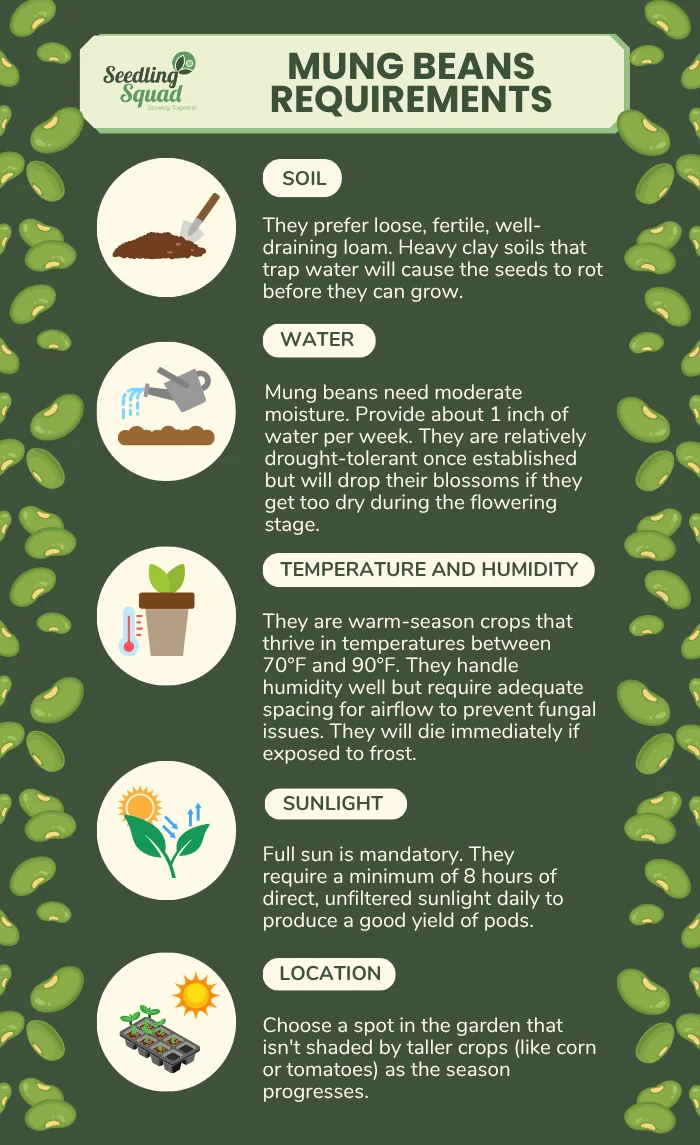
Mung beans perform best in loose, fertile, and well-draining loamy soil that allows their root systems to expand easily and access nutrients. Incorporating organic matter, such as aged compost, before planting can help achieve this ideal texture while providing a gentle nutritional boost. It is absolutely critical to avoid planting them in heavy, compacted clay soils. Clay tends to trap and pool water, creating a waterlogged environment that deprives the roots of oxygen. This poor drainage will almost certainly cause the seeds to rot before they can even germinate, or lead to devastating root rot in young seedlings.
Water
While these plants are considered relatively low-maintenance, they require a consistent, moderate moisture level to establish properly. Providing about one inch of water per week—whether through natural rainfall or supplemental irrigation—is usually sufficient to keep them healthy. As they mature and their root systems deepen, mung beans develop a strong tolerance to drought. However, it is vital to monitor moisture levels closely during the crucial flowering stage. If the soil becomes excessively dry while the plants are trying to bloom, they will experience drought stress and prematurely drop their blossoms to conserve energy, which will drastically reduce your final harvest of pods.
Temperature and Humidity
True to their warm-climate origins, mung beans are heat-loving crops that thrive when ambient temperatures remain consistently between 70°F and 90°F. They are highly sensitive to cold weather and will suffer irreversible damage or die back completely upon exposure to even a light frost. While they are naturally adapted to handle high environmental humidity, trapped moisture around the foliage can easily invite fungal issues like powdery mildew or rust. Therefore, planting them with adequate spacing is essential to ensure excellent air circulation through the canopy, allowing the leaves to dry off quickly after rain or morning dew.
Sunlight
To fuel their rapid growth cycle and maximize pod production, full sun is an absolute, non-negotiable requirement for mung beans. They need a strict minimum of eight hours of direct, unfiltered sunlight every single day to reach their full potential. Insufficient sunlight will cause the plants to stretch and become leggy, resulting in weak stems, sparse foliage, and a significantly diminished harvest. Ensuring they receive intense, all-day sun provides the necessary photosynthetic energy for robust flowering and the development of plump, healthy beans.
Location
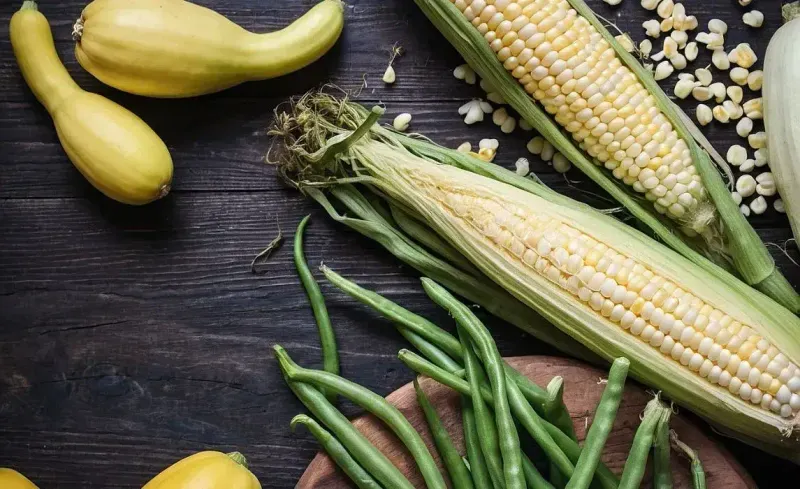
When planning your garden layout, carefully select a dedicated location that will remain fully exposed to the sun from early summer through the end of the harvest. It is important to anticipate how neighboring plants will grow and change the landscape of your garden. Avoid positioning your mung beans to the north or east of taller, vigorously growing crops like sweet corn, trellised tomatoes, or sunflowers, which will inevitably cast long, heavy shadows over them as the season progresses. Proper site selection ensures your relatively compact mung bean plants won't have to compete for the light they desperately need.
Learn how to grow corn, beans, and squash together using this time-tested companion planting method for healthier plants and bigger harvests.
Maintenance Tips for Growing Mung Beans
Fertilizer
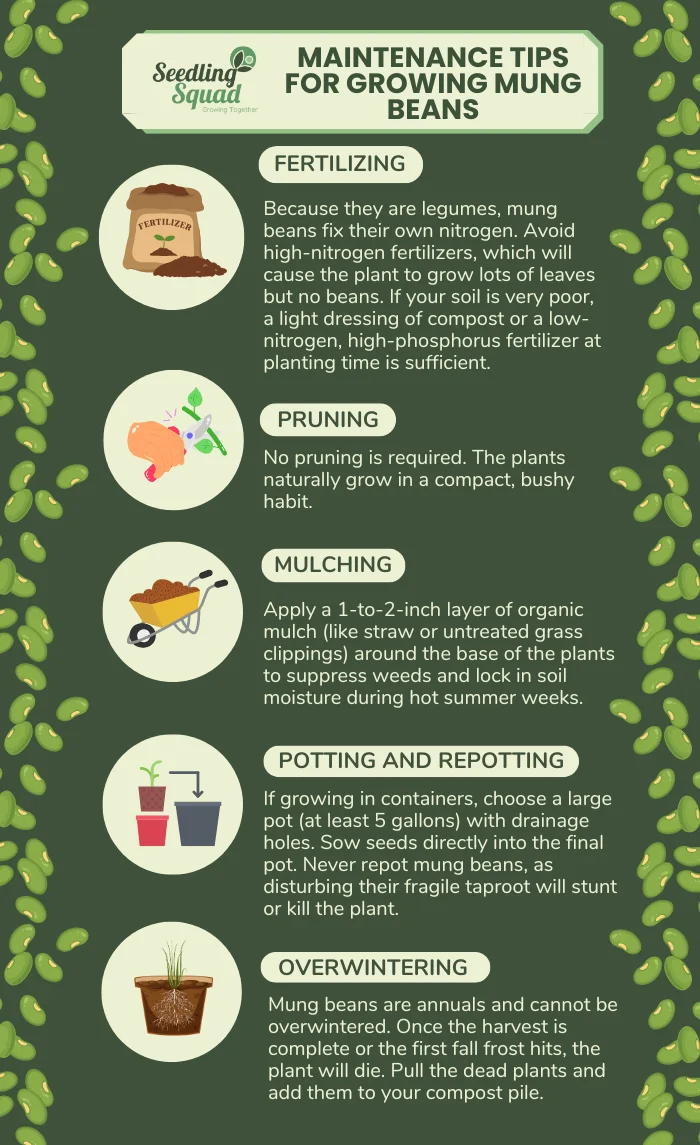
As members of the legume family, mung beans possess the incredible ability to fix their own nitrogen from the atmosphere through a symbiotic relationship with beneficial soil bacteria. Because of this self-feeding trait, it is crucial to avoid applying high-nitrogen fertilizers. Excess nitrogen will trigger the plant to prioritize lush, leafy green growth at the direct expense of blossom and pod production, leaving you with a beautiful, bushy plant but no harvestable beans. If your garden soil is exceptionally poor or depleted, a light top-dressing of well-aged compost or a low-nitrogen, high-phosphorus fertilizer mixed into the soil at planting time is more than enough to support strong root development and give the seedlings a healthy start.
Pruning
Unlike sprawling vining crops that require constant management and trellising, mung beans are incredibly low-maintenance when it comes to shaping. Absolutely no pruning, pinching, or topping is required to manage their growth. These plants naturally develop into a tidy, compact, and bushy habit on their own, usually reaching a manageable one to two feet in height. Leaving the foliage completely intact allows the plant to maximize its photosynthetic energy, ensuring that all its resources are efficiently directed toward setting flowers and developing a heavy yield of seed pods.
Mulching
Applying a one-to-two-inch layer of organic mulch around the base of your mung bean plants is a highly beneficial practice, particularly during the peak of summer heat. Materials like clean straw, shredded leaves, or untreated grass clippings work exceptionally well to insulate the soil surface. This protective barrier serves two vital functions: it aggressively suppresses competing weeds that might steal nutrients from your crop, and it significantly slows down water evaporation, locking in essential soil moisture. By keeping the root zone cool and consistently damp, a good layer of mulch reduces heat stress on the plants and cuts down on how frequently you need to water.
Potting and Repotting
While mung beans can be successfully cultivated in patio containers, it is vital to start them in their permanent home. You should choose a large, spacious pot—at least five gallons in volume—equipped with ample drainage holes to ensure excess water can escape freely and prevent root rot. You must sow the seeds directly into this final container. Mung beans quickly develop a long, incredibly fragile taproot early in their growth cycle that is highly sensitive to disruption. Attempting to transplant seedlings or repot mature plants will almost certainly damage this delicate root system, which can severely stunt the plant's growth or kill it entirely.
Overwintering
Because mung beans are strict warm-season annuals, their entire life cycle—from germination to producing mature seed—is designed to be completed within a single, hot growing season. As a result, they cannot be overwintered indoors or protected outside to survive into the following year. Once the plants have finished producing their final flush of harvestable pods, or the moment the first killing frost of autumn arrives, the foliage will inevitably die back. At the end of the season, simply pull up the spent plants and incorporate them into your compost pile. Their remaining root nodules and stems will break down beautifully to add rich, organic nitrogen back into your garden soil for next year's crops.
Common Pests and Diseases
According to agricultural extensions like Oklahoma State University, mung beans grown in the United States can occasionally face pest pressure.
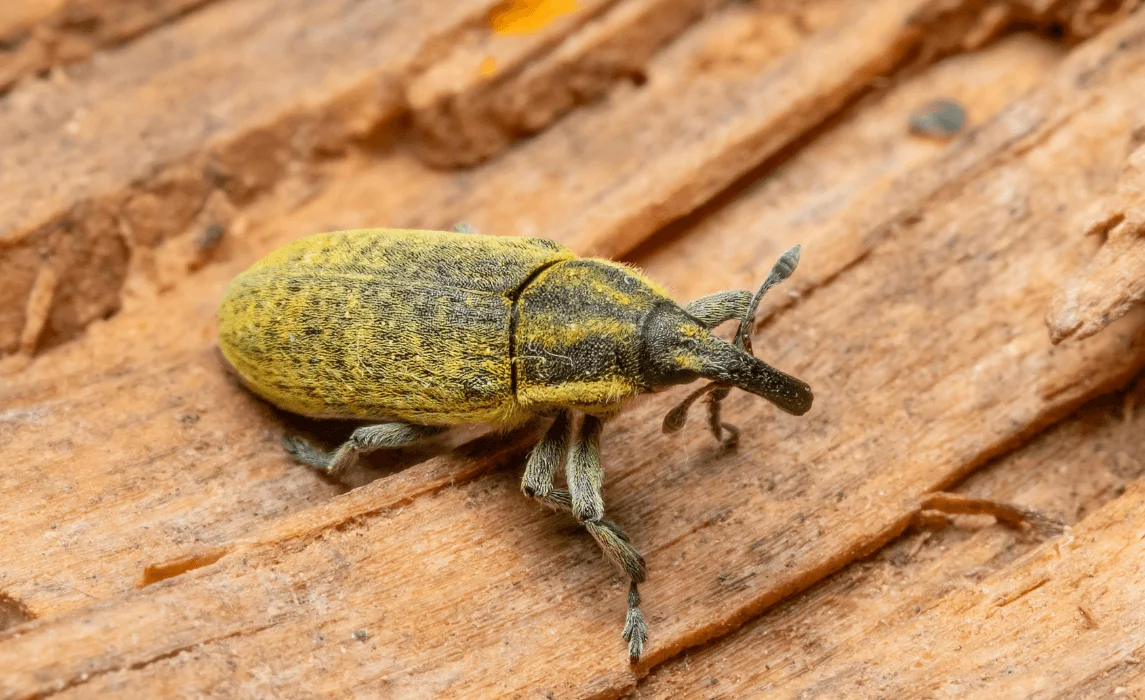
Bean Weevils
These beetles lay eggs on the pods, and the larvae bore into the harvested seeds. Clean up garden debris, and freeze your dry harvest for 48 hours to kill unseen eggs.
Aphids and Spider Mites
These tiny pests suck sap from the leaves. Spray the foliage with insecticidal soap if an infestation occurs.
Powdery Mildew
A fungal disease that thrives in damp, stagnant conditions, appearing as a white, dusty coating on the leaves. Prevent this by watering the base of the plant to keep foliage dry and ensuring plants are spaced far enough apart for proper air circulation.
Root Rot
Caused by heavy, waterlogged soils, this fungal issue suffocates the fragile root system, causing the plant to wilt and collapse. Prevent it by planting in loose, well-draining soil and avoiding overwatering.
How to Harvest
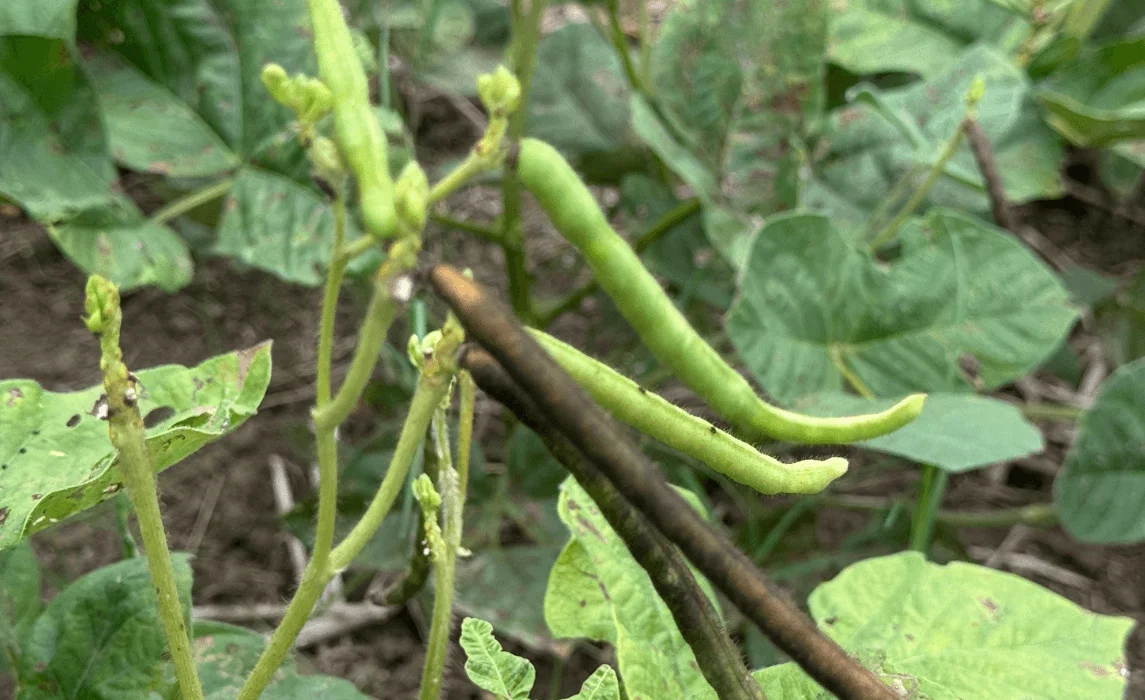
Harvesting mung beans for dry storage requires patience.
Wait until the green pods turn dark brown or black and feel dry and brittle.
Give the pod a gentle shake; you should hear the hard seeds rattling inside.
Snap the mature pods off the plant by hand.
Shell the brittle pods to release the beans.
Ensure the beans are completely dry before storing them in airtight jars in a cool, dark place like a pantry, garage or shed.
Discover beginner-friendly garden layouts—from raised beds to square-foot gardening—to maximize space, improve organization, and boost your harvest.
Frequently Asked Questions:
Q: Can I plant the dry mung beans I bought from the grocery store?
A: Yes, you often can! Many home gardeners successfully sprout or plant whole, dried mung beans from the supermarket. However, for the highest germination rates and to ensure the seeds haven't been heat-treated or irradiated (which prevents sprouting), it is best to purchase organic mung beans or seeds specifically packaged for planting and sprouting.
Q: Do mung bean plants need a trellis or support to grow?
A: No. Unlike pole beans that require a tall trellis to climb, mung beans are "bush beans." They grow into upright, self-supporting, bushy plants that typically reach between 24 and 36 inches tall.
Q: Why did my homegrown mung bean sprouts turn green and bitter?
A: Your sprouts were likely exposed to light. When sprouting beans are exposed to sunlight, they begin to produce chlorophyll, which turns the leaves green and creates a bitter taste. To keep your sprouts white, sweet, and crisp, make sure you store your sprouting jar in a completely dark place, like inside a kitchen cabinet, or cover it with a thick, dark towel.
Related posts
Here are some articles you might be interested in.


-p-800.webp)