How to Start New Plants from Cuttings with Easy Plant Propagation
Published on
April 7, 2026
Author
Ryan Johnson
Ryan Johnson relocated to his grandfather's old farm when he was 22 years old where he discovered the joys of farming and gardening. With his cool demeanor and strong-willed passion for the agrarian lifestyle, he now shares his know-how to aspiring gardeners.
Growing Grapevines Q&A
How long does it take for a grape plant to produce fruit?
Most young vines need two to three years after planting before they set a full crop, though a few clusters may appear in year two. Patience pays off — established vines can keep producing for 40 years or more.
Do I need more than one vine to grow grapes?
No. Since most grape varieties are self-fertile, one plant is enough to produce fruit on its own. Planting a second variety nearby is optional and mainly helps with cross-pollination in a few less common types.
Can grape vines grow in containers?
Yes, though grape vines grow best planted directly in the ground, where the root system has room to spread. A large container works for a year or two, but expect to transplant once the vine outgrows the pot.
Why aren't my grapes ripening?
Grapes ripen slowly compared to many fruits, and cool weather, too much shade, or overcrowded canes can all delay the process. Give the vine full sun, thin the clusters, and be patient through the growing season.
What's the difference between table grapes and wine grapes?
Table grapes are bred for fresh eating, with thinner skins and fewer seeds, while wine grapes tend to have thicker skins, more seeds, and higher sugar content suited to fermentation.
Are grape vines toxic to pets?
Grapes and grape leaves are not toxic to people, but grapes and raisins are toxic to dogs and can cause kidney damage, so keep fallen fruit cleaned up if pets have access to the vineyard.
Bee Garden Q&A
What flowers attract the most bees to a garden?
Bees are generally drawn to flowers that are blue, purple, yellow, or white, and that offer easy access to nectar and pollen. Lavender, bee balm, sunflower, and coneflower are some of the most reliable plants that attract bees to a home garden.
Do I need to avoid pesticides in a bee-friendly garden?
Yes, whenever possible. Insecticide and pesticide products can harm adult bees and their larva, even in small amounts. Choosing natural pest control methods helps keep your garden safe for visiting bees.
Can a small home garden still support pollinators?
Absolutely. Even a few containers of zinnias, salvia, or crocus on a balcony can offer pollen and nectar for local bees. Bees will travel between small garden spaces, so every bit of habitat helps.
Do bees need more than just flowers?
Yes. Bees also need nesting sites and water. Ground-nesting bees need patches of bare soil, while a shallow bee bath gives bees a safe spot to drink, especially in hot weather.
Will planting a pollinator garden really help save the bees?
It genuinely can. As natural habitat shrinks, home gardens have become an important food source and shelter for bees, including many native bee species. A well-planned bee garden supports pollination for your own flowers and vegetables while helping the wider bee population.
What is the best USDA zone for growing a bee garden?
There is no single best zone. Most of the plants above grow well across USDA zones 4 through 9, and gardeners in colder or warmer zones can simply choose varieties suited to their climate, or grow warm-season bees favorites like sunflower and zinnia as annuals.
Hypoallergenic Plants Q&A
Do houseplants cause allergies?
Yes, certain indoor plants can trigger a plant allergy through loose pollen, scented flowers, sap, dust, or damp soil. Allergies and houseplants are highly individual: one person may sneeze near peace lilies while another has no response. Overwatering lets mold produce a spore that may become airborne. If symptoms begin after adding plants in your home, isolate each pot, clean the area, and discuss persistent allergy symptoms with a qualified clinician.
Which plants to avoid?
Plants to avoid include strongly fragrant flowers, visibly dusty specimens, and wind-pollinated garden plants brought inside while shedding. Male palms can release pollen if they flower, and wet potting mix can make allergies worse. The best and worst choices depend on the person, so remove any plant that appears to cause pollen allergy symptoms or contact irritation.
Can indoor plants purify air?
Claims about indoor plants that purify come largely from controlled chambers. Although some air-purifying plants can take up chemicals, ordinary air purifying plants are not fast enough to replace ventilation or air cleaners in a real room. Plants can improve air quality mainly by supporting comfort and encouraging care for the space; they should not be presented as houseplants for clean air that reliably remove formaldehyde. To improve indoor air quality, control sources, ventilate safely, and use proven filtration.
How does the ogren scale work?
The Ogren Plant Allergy Scale system, also called OPALS, rates a plant's potential allergenicity from 1 to 10. It considers pollen, fragrance, and contact reactions, but the likelihood a plant will cause a reaction still depends on the individual and exposure. A high score does not prove a particular plant will cause pollen allergy, and a low score is not a medical guarantee.
Can plants help you breathe?
Allergy-friendly plants may make an indoor space calmer, but they do not treat disease or guarantee allergy relief. For people with allergies, clean leaves, dry saucers, fresh potting mix, and steady air circulation matter more than labels such as hypoallergenic plants. These indoor plants that are allergy-safe can help you breathe easier only by limiting likely triggers; they cannot help you breathe during an asthma attack.
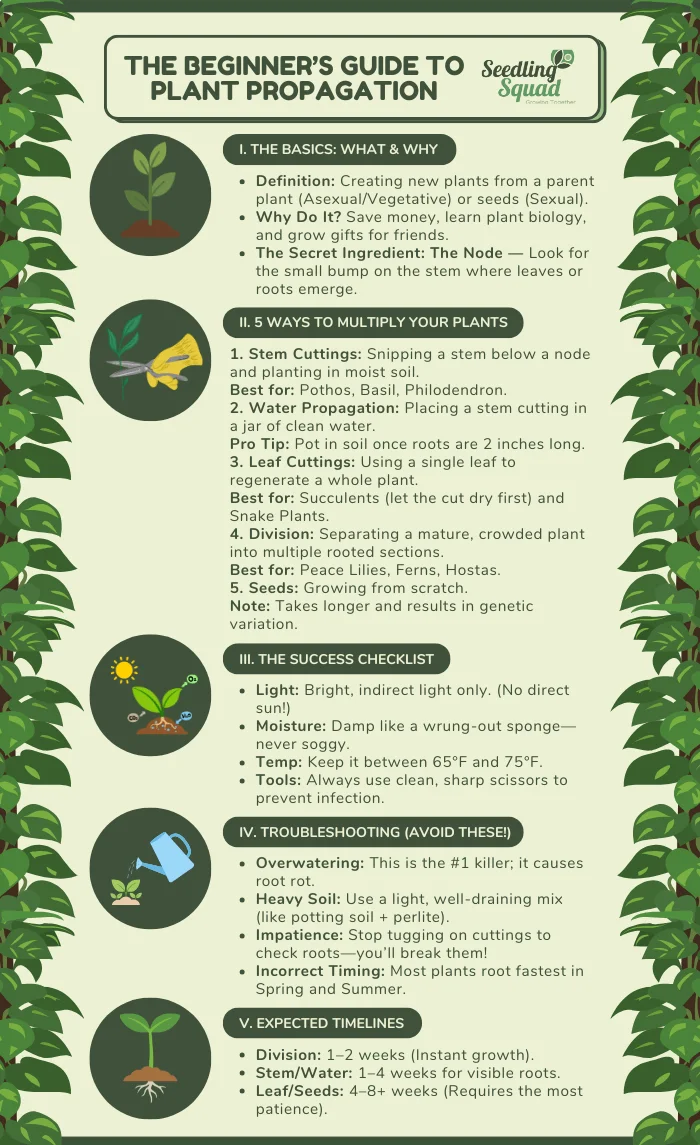
If you have ever admired a lush houseplant and wished you could have more of it without spending another cent, you are already thinking about plant propagation. In the simplest terms, propagation is the process of creating a new plant from an existing plant. Whether you snip a piece of stem, divide a crowded pot, or drop a seed into damp soil, you are using propagation techniques that gardeners have relied on for centuries.
Here is the reassuring truth: you do not need a greenhouse, a botany degree, or fancy equipment to propagate plants. Most methods require little more than a glass of water, a handful of soil, and a bit of patience. This beginner’s guide to plant propagation will walk you through everything you need to know. The main benefit is hard to beat—you get to multiply your plant collection and share the joy with friends and family, all without buying new ones.
What Is Plant Propagation? Understanding the Propagation Basics
Plant propagation is the process of producing new plants from a parent plant. Think of it as nature’s copy-and-paste function. Every plant you see in a nursery was propagated in some way, and you can learn to do the same at home.
There are two broad categories. Sexual propagation uses seeds. A seed carries genetic material from two parent plants, which means that plants grown from seed may show natural variation—different leaf shapes, flower colors, or growth habits. This is how many plants are propagated in nature and by plant breeders who want to develop a new plant variety.
Asexual propagation—also called vegetative propagation—skips the seed stage entirely. Instead, you take a part of the plant, such as a stem cutting, leaf cutting, or root division, and encourage it to develop its own roots. The result is a new plant that is genetically identical to the parent plant. This is the method most home gardeners prefer for houseplants because it is faster, more predictable, and wonderfully beginner-friendly.
Why Beginners Should Try to Propagate Plants
Saving money is one of the most satisfying reasons to propagate. A single healthy plant can yield several cuttings, each one capable of rooting a new plant. Over time, one plant becomes many plants, and your indoor jungle grows without draining your wallet.
Beyond the financial perks, propagation teaches you how plants grow at a deeper level. You start noticing where the node sits on a stem, how new growth emerges, and what conditions encourage plant roots to develop. That hands-on understanding builds real confidence as a gardener.
There is also a social side. Once you have mastered a method of propagation, you can share rooted cuttings with friends, neighbors, or family. A little pot with a plant grown from your own collection makes a thoughtful gift. Whether you are a new gardener or someone returning to the hobby, plant propagation is a skill that rewards you at every stage.
Main Plant Propagation Methods and Propagation Techniques for Home Gardeners
A. Propagation by Stem Cutting: The Most Popular Way to Take Cuttings
A stem cutting is a portion of the stem that is severed from the parent plant and encouraged to grow its own roots. This is the most common way home gardeners propagate houseplants, and for good reason—it is straightforward and works with a huge number of plants.
To take cuttings, choose a healthy plant with vigorous new growth. Using clean scissors or a blade, cut just below a node—that small bump on the stem where leaves or roots emerge. Your cutting should include at least one node and a few healthy leaves. Remove any lower leaves so they will not sit in water or soil and rot.
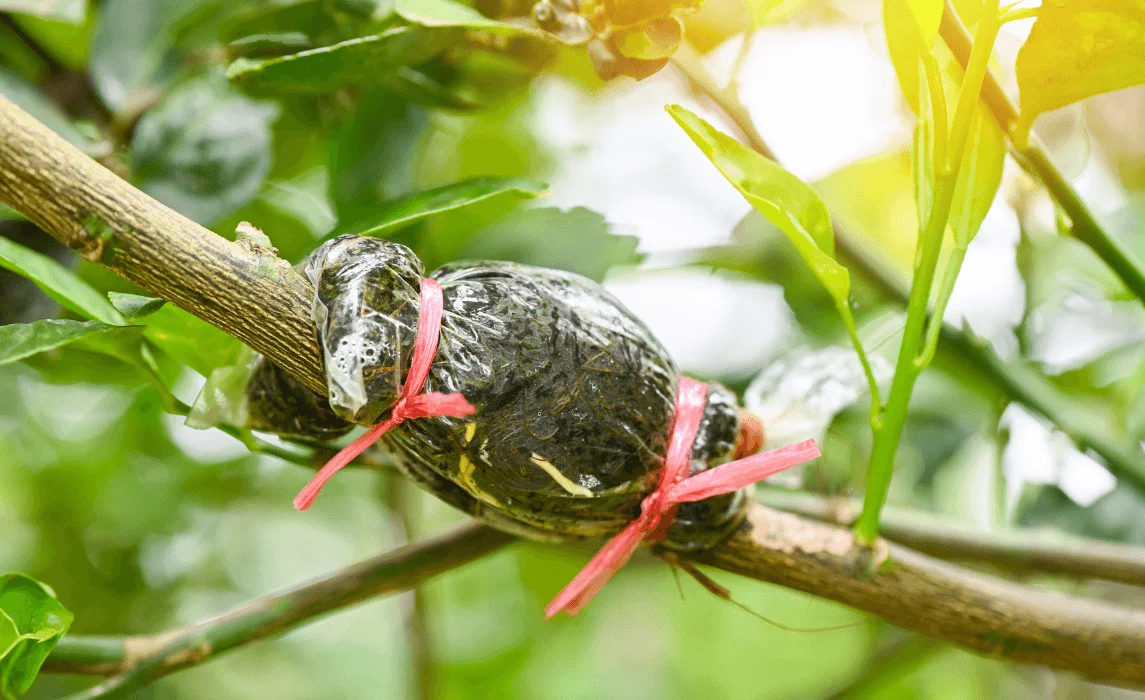
If you like, dip the base of the cutting in rooting hormone to speed things up, although many plants root well without it. Place the cuttings in a small pot filled with moist potting mix or perlite, and keep the humidity around the plant by loosely covering it with a clear plastic bag. Easy plants for this method include pothos, spider plant, philodendron, and herbs like basil. You can also try softwood cuttings from tender new stems in early spring, semi-hardwood cuttings from partially mature stems in summer, or hardwood cuttings from dormant woody plants in late autumn.
B. Water Propagation: Watching Your Plant Roots Grow
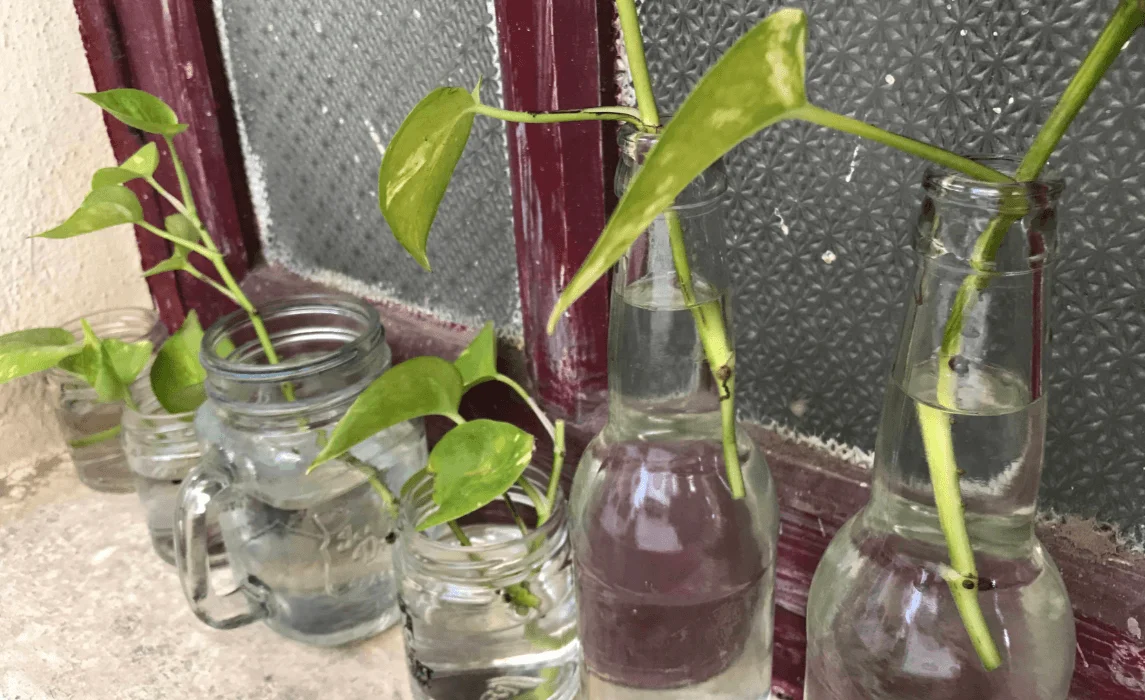
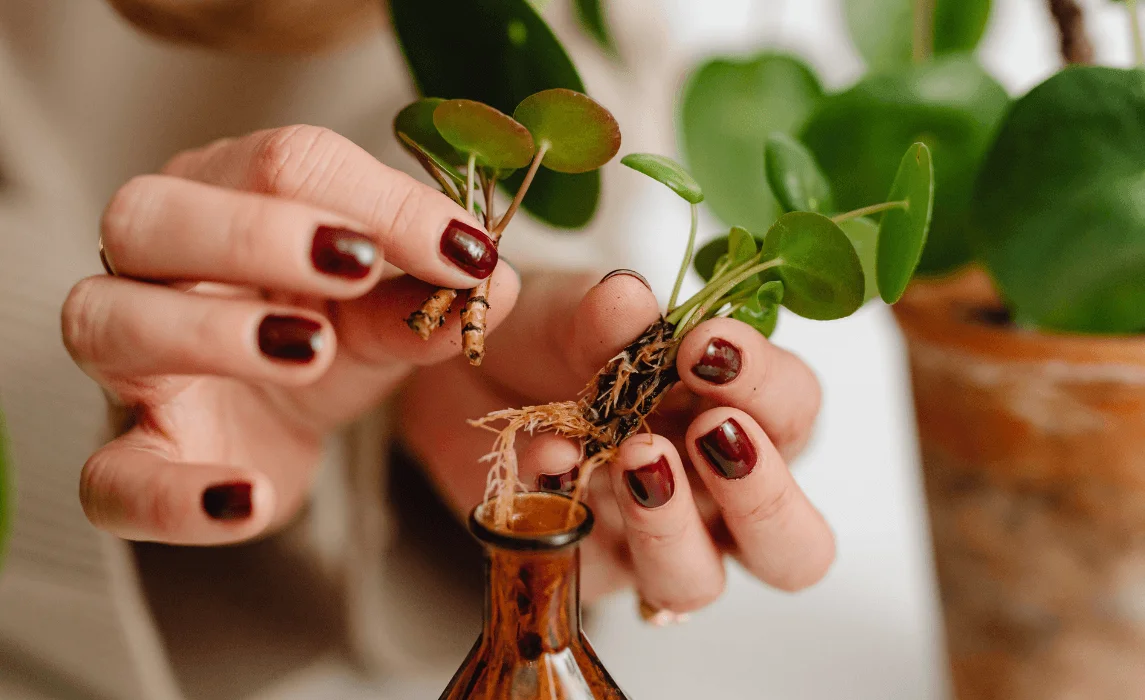
Water propagation is exactly what it sounds like: you place the cuttings in a jar of clean water instead of soil. Many beginners love this approach because the roots are completely visible, so you can watch the entire process unfold day by day.
Fill a glass or jar with room-temperature water and set your cutting so that at least one node is submerged but the remaining leaves stay above the waterline. Change the water every few days to keep it fresh. Within one to four weeks, depending on the plant, you should see small white roots forming.
When the roots are about two inches long, move the cutting from water to soil. Gently pot it in a well-draining mix and water the plant lightly. The transition can be a brief shock, but most cuttings adapt quickly. Tip cuttings of pothos, tradescantia, and philodendron are especially reliable for water propagation.
C. Leaf Cutting and Leaf Propagation: Growing a Plant from a Single Leaf
Leaf propagation is a fascinating form of vegetative propagation where a single leaf—or even a portion of a leaf—can produce a brand-new plant. This works because certain plant cells retain the ability to regenerate entire plant parts, a quality that plant scientists call totipotency.
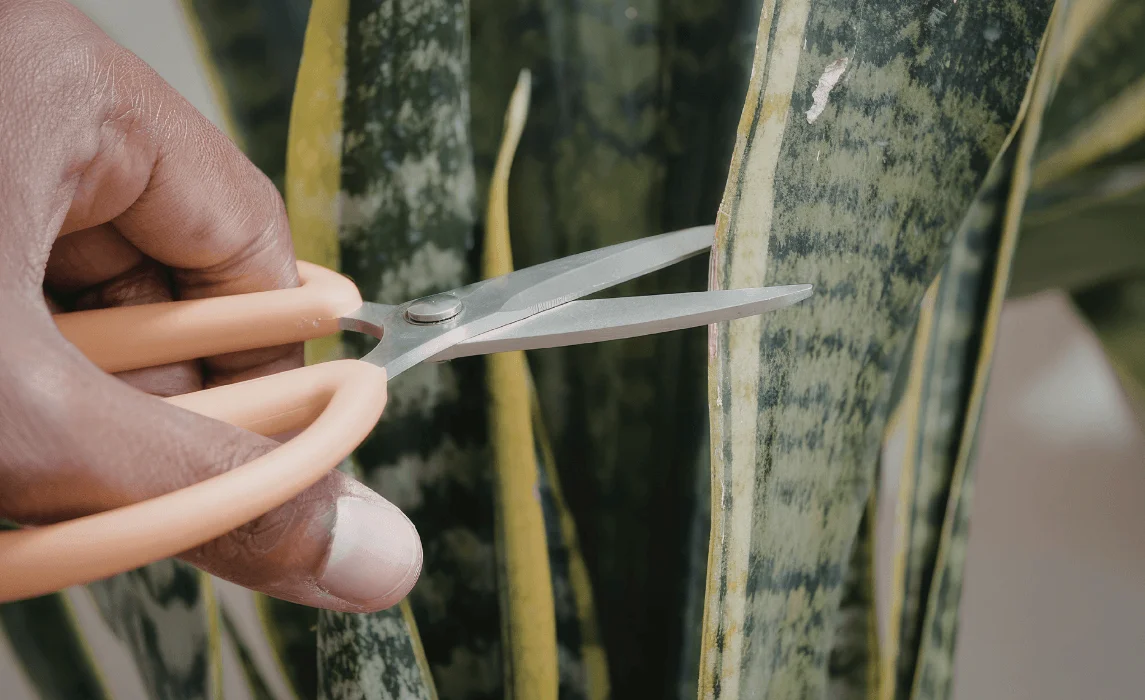
Succulents are the classic choice for leaf propagation. Gently twist a plump, healthy leaf from the mother plant, let the cut end dry for a day or two, and lay it on top of lightly dampened soil. Over several weeks, tiny roots and a miniature rosette will appear. Snake plants also respond well to leaf cutting: cut a healthy leaf into horizontal sections, let them callous, and place the cuttings upright in moist perlite or soil.
The key here is patience and gentle care. Leaf propagation is slower than stem methods, and it can be tempting to poke and prod. Resist the urge. Let the plant do its work, keep the soil barely moist, and give it bright, indirect light.
D. Division: How to Propagate a Mature Plant by Splitting It
Division is perhaps the easiest propagation method because you are not rooting anything new—you are simply separating an existing plant into two or more pieces, each with its own roots still attached to the parent plant material. It works best on mature plants that have grown into a crowded clump.
To divide, carefully remove the plant from its pot and tease the root ball apart. If roots are tangled, use a clean blade to make a decisive cut. Each division should have a healthy portion of roots and several stems or leaves. Pot each section into its own container with fresh soil, water the plant well, and place it in a warm spot with indirect light.
Division gives fast results because every piece is already a self-sustaining vegetative plant—each section was still attached to the parent plant moments before separation, so it already has everything it needs. Peace lilies, ferns, hostas, and many ornamental grasses respond beautifully to this technique. Root cuttings—a piece of stem or thick root severed from the parent plant and planted horizontally—are a related method that works for certain woody plants and deciduous plants. Plants can be grown from root cuttings surprisingly quickly when conditions are right.
E. Seed Propagation: Growing Plants from Seed with Patience
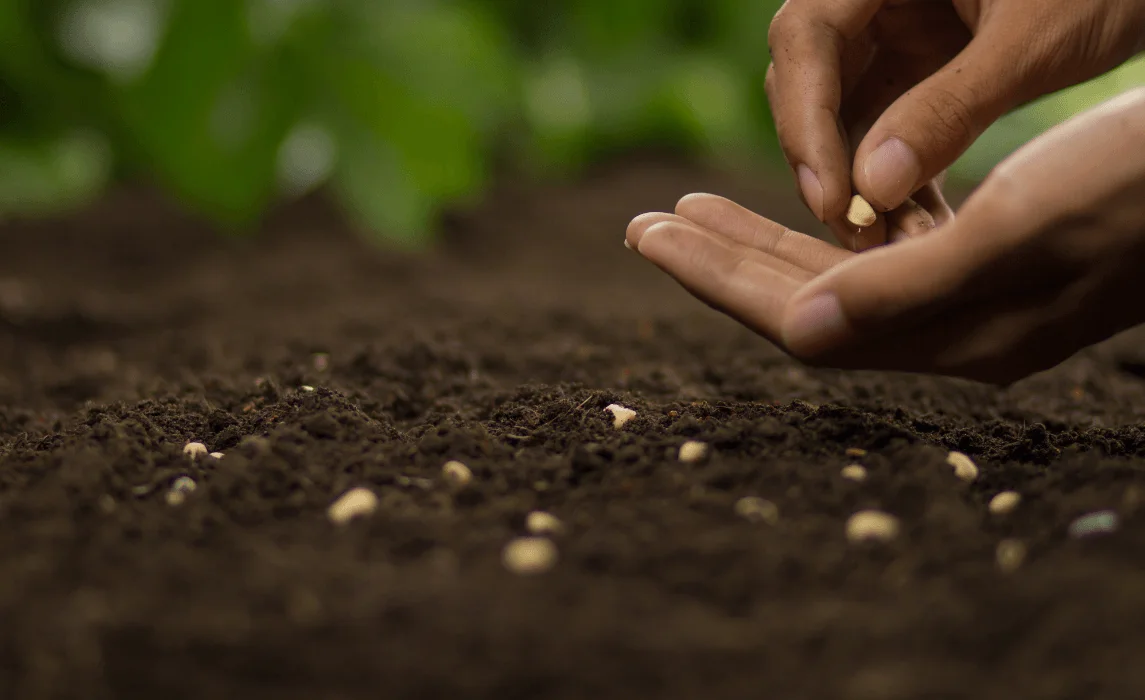
Seed propagation—sexual propagation—is how many plants reproduce in the wild. While it takes longer than asexual methods, growing plants from seed is deeply rewarding and makes sense when you want to produce plants in large numbers, grow vegetables, or experiment with a new plant variety. Plants grown from seed carry a mix of genetics, which is why this method appeals to plant breeders looking to develop fresh cultivars.
Start by filling small pots or seed trays with a light, well-draining mix. Sow seeds at the depth recommended on the packet, moisten gently, and cover with a humidity dome or plastic wrap. Most seeds need consistent warmth and moisture to germinate. Once seedlings develop their first true leaves, transplant them into individual pots.
Patience and consistency are essential. Unlike a cutting that is already part of the plant, a seed must build every plant cell from scratch. Germination times vary widely depending on the plant species, from a few days for lettuce to several weeks for some perennials.
What Plants Need to Successfully Propagate: Propagation Basics Every Gardener Should Know
Light is critical. Most cuttings and seedlings thrive in bright, indirect light. Direct sunlight can scorch tender new growth and dry out plant material before roots have a chance to establish.
Moisture balance matters just as much. Keep soil or growing media evenly moist but never soggy. Overly wet conditions invite rot, which is the fastest way to lose a cutting. Using a well-draining mix—potting soil blended with perlite, for example—helps maintain the right balance.
Warmth and gentle airflow encourage healthy plant growth. Most houseplants propagate best in temperatures between 65 and 75 degrees Fahrenheit. A light breeze or occasional fan helps prevent mold without drying out the humidity around the plant.
Finally, always use clean tools and containers. A quick wipe with rubbing alcohol prevents bacteria and fungi from infecting the base of the stem where new roots will form. These simple techniques can be used by any gardener to dramatically improve success rates. Cleanliness at the base of the cutting is one of the most overlooked yet powerful propagation basics.
Common Beginner Mistakes to Avoid When You Propagate Plants
Overwatering is the number-one mistake. It is natural to want to pamper your cuttings, but soggy soil suffocates roots and invites rot. Water only when the top half-inch of soil feels dry.
Using poor-draining soil is a related trap. Heavy garden soil holds too much moisture. Instead, use a light blend designed for propagation—perlite mixed with a small amount of peat or coco coir works well.
Placing cuttings in direct sunlight is another common error. While every plant needs light, freshly cut stems lack the root system to replace water lost through their leaves. Bright, indirect light is the sweet spot.
Checking roots too often can actually slow growth. Every time you tug a cutting to peek at the roots, you risk disturbing the delicate new tissue. Trust the process and observe changes from the outside instead of interfering.
Finally, expecting instant results leads to discouragement. Propagation is a living process. Some cuttings are taken and root within days, while others need weeks. Slow growth is completely normal.
How Long Does Plant Propagation Take?
Timelines vary depending on the plant and the method of propagation. Stem cuttings in water often show visible roots within one to three weeks. Soil-rooted cuttings may take two to six weeks because the roots are hidden. Leaf propagation—especially with succulents—can take four to eight weeks or longer before a recognizable new plant emerges. Division gives the fastest results since each piece already has an established root system; you may see new growth within a week or two. Seed propagation is the most variable; some seeds sprout in days while others remain dormant for months.
Remember: every plant grows on its own schedule. Cuttings of deciduous species may root faster in spring when plant hormone levels naturally support new growth. Semi-hardwood and hardwood cuttings might take longer because the plant material is denser. Provide steady conditions and resist the temptation to give up too early.
Beginner-Friendly Tips for Propagation Success: A Gardener’s Cheat Sheet
Start with easy plants—pothos, spider plants, and snake plants are famously forgiving. These plants can be propagated by almost any method and tolerate the small mistakes every beginner makes.
Use what you already have at home. A clean glass jar works for water propagation. An old yogurt container with drainage holes makes a fine small pot. You do not need to buy specialized gear to get started.
If you are propagating multiple plants at once, label your cuttings. A simple piece of tape with the plant name and date helps you track progress and learn which plant species root fastest in your environment.
Observe changes instead of interfering. Check on your cuttings regularly, but let the plant do its thing. Many plants are propagated successfully by gardeners who simply provide light, warmth, and a little water—nothing more.
Conclusion: Every Gardener Can Learn to Propagate
Plant propagation is a skill anyone can learn, regardless of experience. Whether you are rooting a new plant from a simple stem cutting, coaxing roots from a leaf, dividing a pot-bound plant while it is still thriving, or nurturing seedlings from seed, every method of propagation brings you closer to understanding how plants truly work. You can use cuttings to grow entirely new plants, and plants can be grown by anyone willing to be patient.
You do not need to master every technique at once. Pick one plant to propagate—perhaps a pothos or a succulent—and try a single method. Watch the roots form, pot your new plant, and celebrate that quiet thrill of creating something alive from almost nothing. That first success will give you the confidence to try another plant, then another.
Propagation is generous. One plant becomes many. One gardener’s experiment becomes a gift for another plant lover. Every plant grown from a cutting or a seed carries a little patience and a lot of possibility. So grab those clean scissors, choose a healthy plant, and start your propagation journey today.
Frequently Asked Questions
1. What is the easiest plant to propagate for a complete beginner?
Pothos is widely considered the easiest plant to propagate. It roots quickly in water, tolerates low light, and is very forgiving of mistakes. Spider plants and tradescantia are also excellent starting points because they naturally produce offsets or root readily from cuttings.
2. Do I need rooting hormone to propagate plants?
No. Rooting hormone can speed up root development and is especially helpful for hardwood cuttings or slower-rooting plant species, but many houseplants—like pothos, philodendron, and herbs—root perfectly well without it. If you are just starting out, try without rooting hormone first and see how your cuttings perform.
3. Can I propagate a plant in winter?
You can, but results may be slower. Most plants enter a period of slower or dormant growth during the colder months, which means cuttings take longer to root. If possible, propagate in early spring or summer when plant hormone activity and daylight hours naturally support faster new growth.
Related posts
Here are some articles you might be interested in.