Planting a Beginner Garden with the Best Plants and Vegetables to Grow for Beginners
Published on
May 4, 2026
Author
Zuri Khumalo
Zuri's frequent journeys to South Africa in her youth ignited her fervor for environmental science, gardening, and sustainable living. These travels deepened her connection with nature, inspiring her to contribute to conservation efforts in her own meaningful ways.
Planting Calendar Q&A
Is an almanac planting calendar exact?
No. It is a useful regional estimate built from historical conditions. Confirm its suggested planting date with your local forecast, soil condition, and microclimate.
When is the best time to plant?
The best time to plant is when the crop's temperature needs match your frost window and the soil is workable. Cool crops can begin earlier; tender warm-season crops wait until frost danger has passed.
Can every vegetable be started indoors?
No. Tomatoes and peppers handle indoor seed starting well, while carrots are usually sown directly in the ground. Follow crop-specific seed packets and avoid disturbing sensitive roots.
What if a late frost is forecast?
Delay transplanting tender crops, move containers inside, or cover established plants overnight. Remove covers after temperatures rise so light and airflow return.
How often should I revise my calendar?
Review it at the start of each growing season and add notes after major sowings and harvests. Records reveal which dates, varieties, and methods work best in your garden.
Evergreen Shrubs Q&A
How do I choose evergreen shrubs for my outdoor space?
Match mature size to USDA hardiness, light, drainage, and wind. Use a tall evergreen for screening, a mounded shrub for foundation planting, or ground cover on slopes. Repetition unifies home landscapes, while contrast creates a focal point in the landscape.
What are the best small evergreen shrubs?
Blue Star juniper, dwarf Chamaecyparis, azalea, and Daphne are strong small-space choices. The best evergreen shrubs fit without constant shear work; check mature spread and leave airflow around glossy foliage.
Do evergreen shrubs flower as long as hydrangea?
Not usually. A hydrangea may have a long bloom time from mid-summer onward, while evergreen shrubs often bloom briefly. Combine azalea for spring, Viburnum or Mahonia for winter, and summer perennials.
When should I prune an evergreen hedge?
Prune flowering shrubs after bloom, and shape boxwood, yew, or Thuja lightly during growth. Avoid leafless old conifer wood; natural forms need less pruning and preserve year-round interest.
Why can an evergreen turn brown in winter?
Frozen soil, wind, salt, or poor drainage can brown green foliage. Water before freezing, mulch roots, and choose a protected area so evergreen shrubs retain year-round beauty and lasting structure.
Starting a Fruit Garden Q&A
What is the easiest fruit to grow for a first garden?
Strawberry is often the simplest starting point because it fits containers, fruits quickly, and is easy to replace. Raspberry, blackberry, and currant can also be forgiving when their spread is controlled. The best fruit is the one matched to your climate, sunlight, soil, and available care.
Can I grow fruit trees in a small space?
Yes. Choose a dwarf tree on a clearly labeled rootstock, train an espalier against wires, or use fruit trees in containers with sufficient soil volume and winter protection. Confirm mature dimensions, pollination needs, and whether the container can be watered consistently before you grow fruit trees.
Do I need more than one fruit tree?
It depends on the cultivar. Some trees are self-fertile, while others need compatible partners that bloom together. A nursery may recommend 2-4 fruit trees for varied harvests, but one self-pollinating dwarf tree can be enough when garden space is limited.
How soon will fruit plants produce fruit?
Strawberries and some cane fruits may crop in the first or second season, while a grafted fruit tree often takes several years. Rootstock, plant age, climate, pruning, and stress all affect timing. Remove an excessive early crop if the young plant needs energy for roots and structure.
Can a fruit garden share space with vegetables?
Yes. A combined vegetable and fruit area works when permanent crops do not shade or crowd annual beds. Put long-lived fruit plants where future digging will not disturb their roots, maintain clear paths, and choose fruits to grow at home that fit the same sunlight and watering pattern as the wider garden.
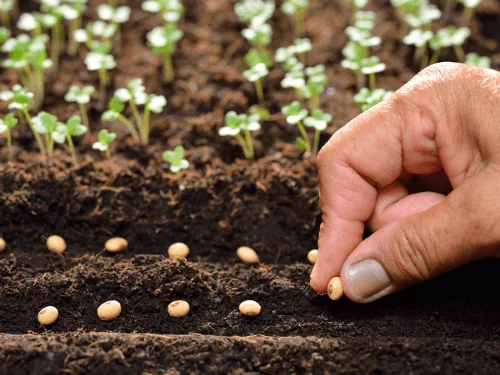
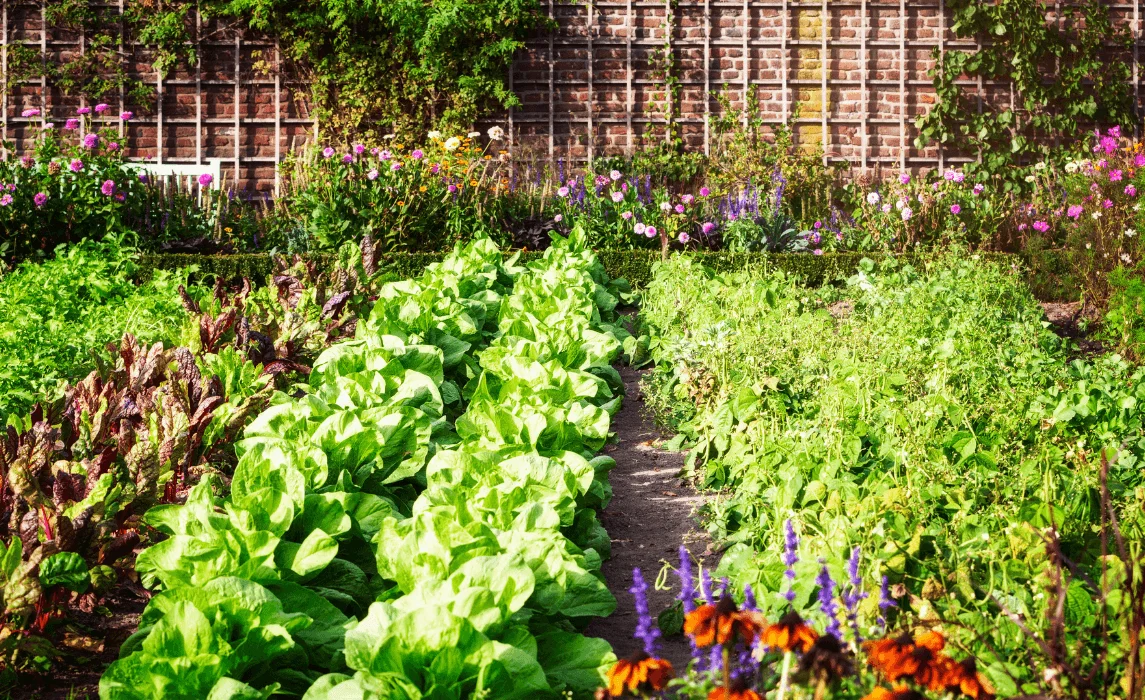
Starting your plant journey feels exciting, but the wrong plant can quickly turn enthusiasm into frustration. The good news? Plenty of beginner-friendly options grow better than you might expect, even with minimal experience. Whether you have a sunny balcony, a small patio, or a full backyard, the right plant makes all the difference between a struggling garden and a thriving one.
This guide rounds up the healthiest and easy plants to grow for beginners — from leafy greens and crisp vegetables to cheerful flowers and kitchen herbs. Every entry on this list is low-maintenance, forgiving of common mistakes, and rewarding to harvest or admire. You will get clear care tips covering soil, water, light, humidity, and temperature, plus the USDA zones where each plant thrives. With this lineup of the best plants for your garden, you will be harvesting your first homegrown salad or snipping fresh herbs in no time.
10 Healthiest Garden Plants for Beginners
1. Basil
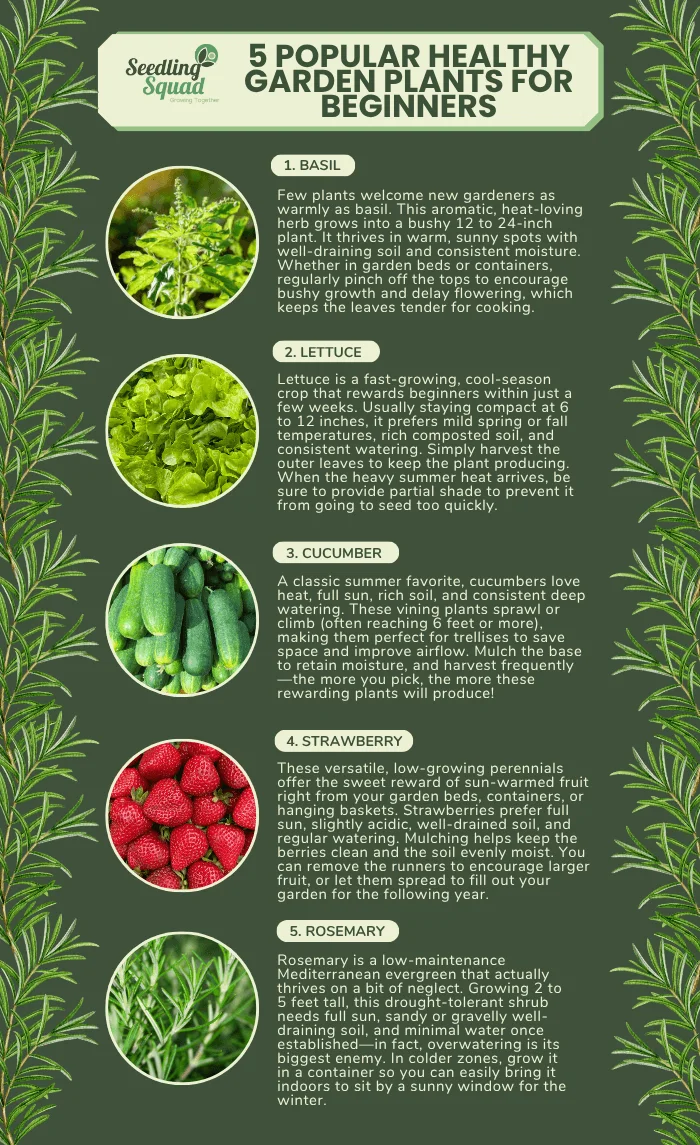
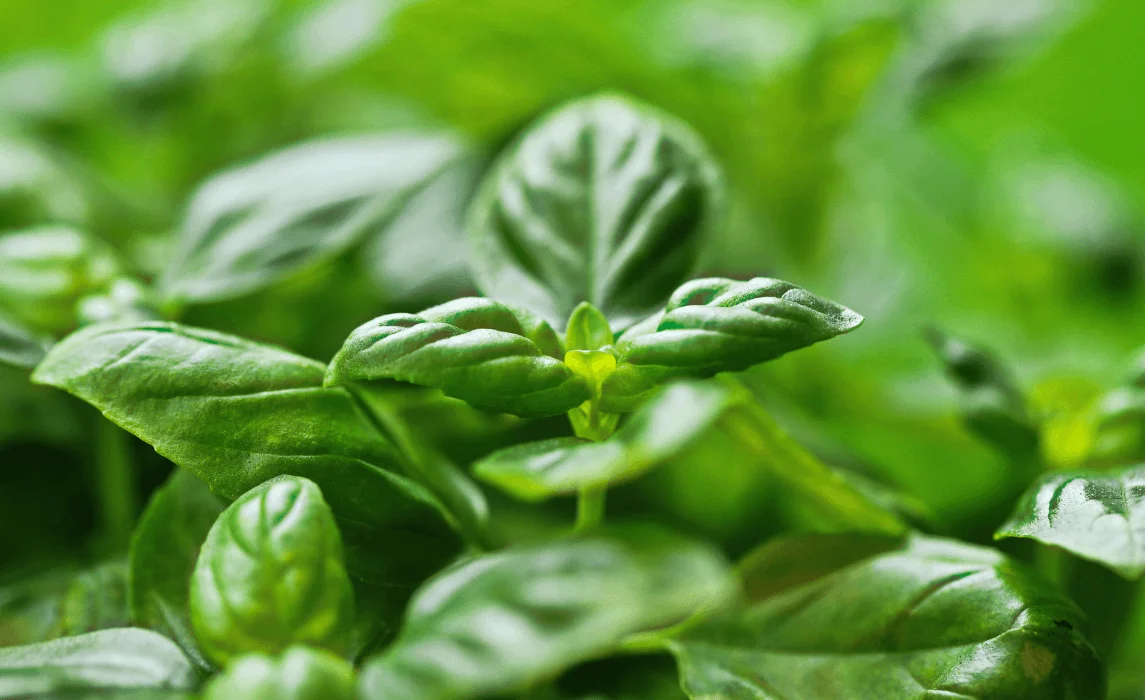
Few plants welcome new gardeners as warmly as basil. This aromatic herb has been a kitchen staple for thousands of years, traveling from India to the Mediterranean where it became a cornerstone of Italian cooking. Basil grows into a bushy, upright plant about 12 to 24 inches tall, with bright green, slightly ruffled leaves and small white flowers that appear in late summer when the plant goes to seed. It loves the heat of summer and thrives in warm, sunny spots with good soil that drains well. Plant basil in garden beds, containers, or hanging baskets on your balcony, and water consistently to keep the soil evenly moist. Pinch off the tops regularly to encourage bushy growth and to delay flowering, which keeps the leaves tender and tasty to eat. Beginner gardeners who want a quick-rewarding, easy-to-grow herb with an incredible aroma will adore this pick.
Soil: Rich, well-drained, pH 6.0-7.5
Water: Keep consistently moist, not soggy
Light: Full sun (6+ hours daily)
Humidity: Moderate
Fertilizer: Light feeding every 4 weeks
Temperature: 70-85°F (21-29°C)
USDA Zone: 10-11 (grown as annual elsewhere)
2. Lettuce
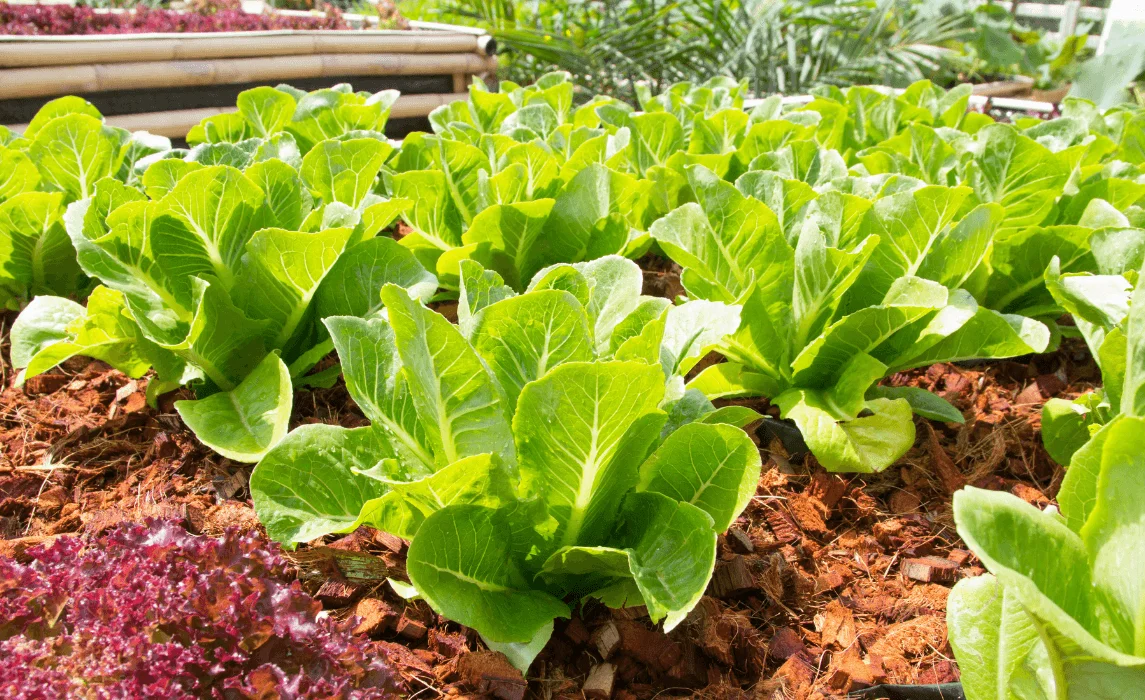
Lettuce is one of the easiest plants to grow for beginners, and it rewards you within just a few weeks. A cool season crop native to the Mediterranean, lettuce has been cultivated for over 4,500 years. Varieties range from frilly green leaf types to crisp romaine heads, with colors from vivid lime to deep burgundy. Most plants stay low and compact, usually 6 to 12 inches tall and wide. Plant lettuce in spring or fall when temperatures are mild, and give it good soil mixed with plenty of compost. Water regularly — lettuce plants need consistently moist soil — and harvest outer leaves to keep the plant producing. In the heat of summer, it goes to seed quickly, so provide partial shade or switch to heat-tolerant varieties when temperatures climb. It is ideal for any new gardener who wants fast, visible results and fresh salads straight from the garden beds.
Soil: Loamy, rich in compost
Water: Keep evenly moist
Light: Full sun to partial shade
Humidity: Moderate
Fertilizer: Low-nitrogen feed every 2-3 weeks
Temperature: 60-70°F (15-21°C)
USDA Zone: 4-9
3. Radish
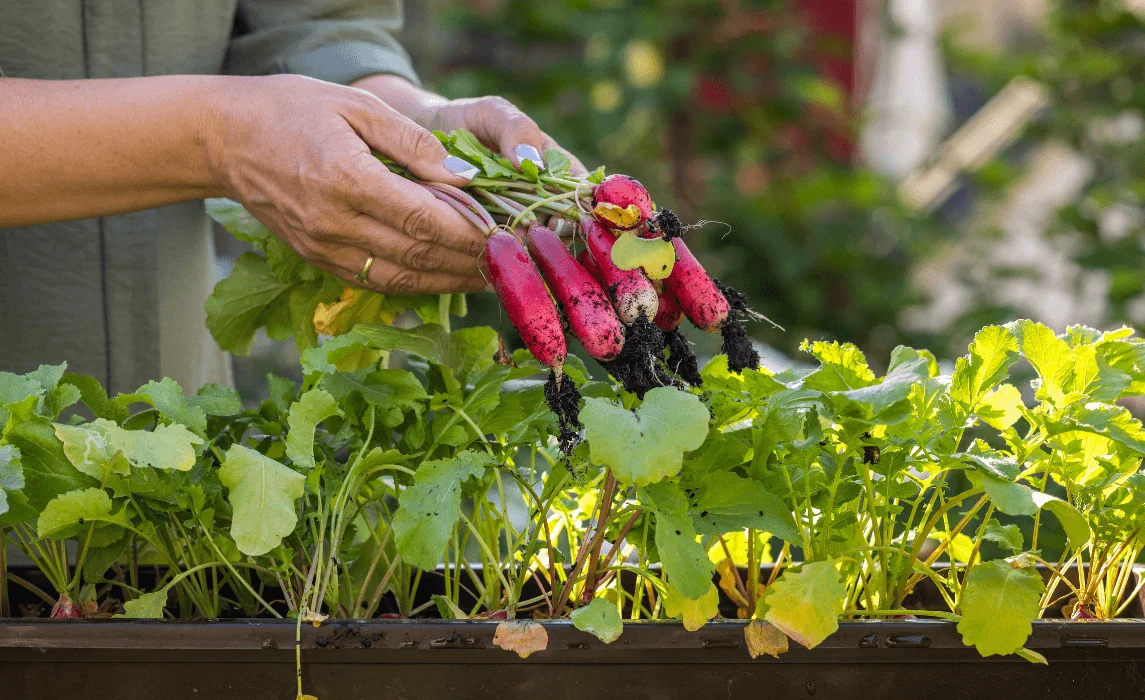
Radishes are the sprinters of the vegetable garden. These crisp, peppery root crops go from seed to harvesting in as little as 25 days, making them perfect for impatient beginners and kids who like to grow their own food. Originating in Southeast Asia, radishes now come in colors ranging from classic red to pink, white, and even purple. The round globes or cylindrical roots sit mostly underground, topped by bright green, slightly bristly leaves. They thrive in loose, well-drained soil with full sun and cool weather. Water regularly to prevent woody, pithy roots, and thin seedlings early to give each plant room to develop. Radishes do best as a spring planting or fall crop and can be tucked between slower-growing plants to maximize every garden bed. Perfect for first-time growers and anyone who wants a quick confidence boost.
Soil: Loose, sandy-loam, free of stones
Water: Consistent moisture; never let soil dry out
Light: Full sun
Humidity: Average
Fertilizer: Low-nitrogen, phosphorus-rich
Temperature: 50-65°F (10-18°C)
USDA Zone: 2-10
4. Cucumber
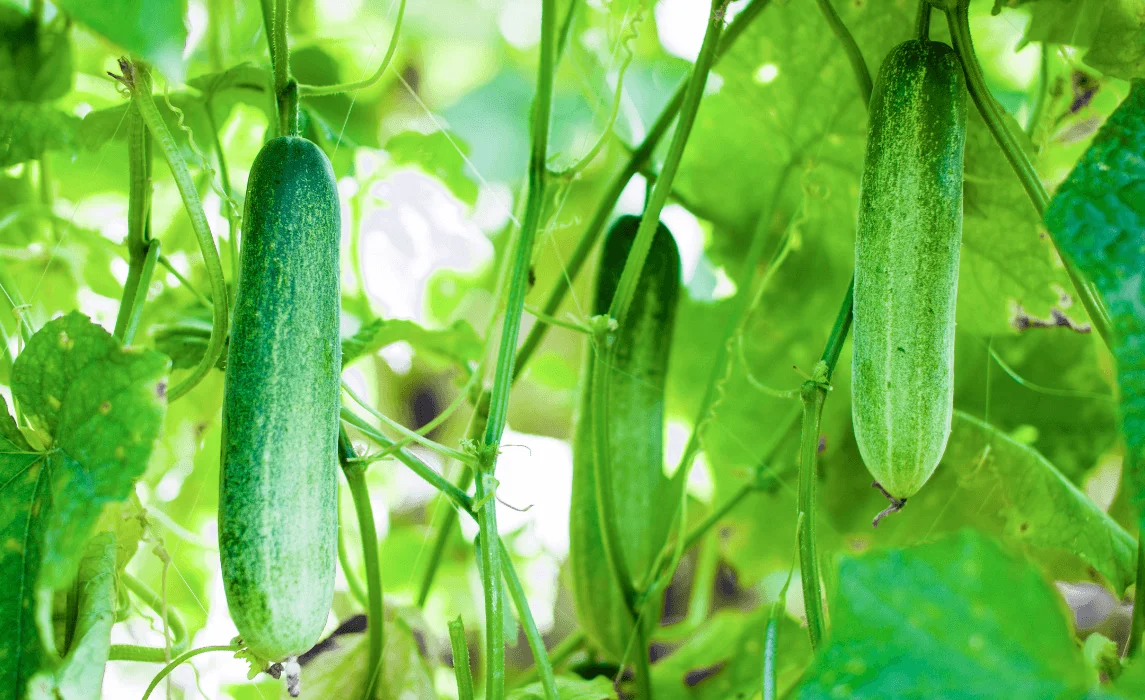
Cucumbers are a classic summer crop that even new gardeners can master. Native to South Asia, they have been grown for over 3,000 years and remain one of the most rewarding vegetables to grow for beginners. Depending on the variety, cucumber plants can sprawl across the ground or climb a trellis, reaching 6 feet or more. Their vines produce bright yellow flowers that attract pollinators, followed by slender green fruits with pale, crisp flesh. Cucumbers love the heat and need full sun, rich soil, and consistent deep watering to grow better. Mulch around the base of each plant to retain moisture and reduce pest pressure, and use a cage or trellis to save space and improve airflow. Harvest often — the more you pick, the more the plant produces. Gardeners with a warm, sunny spot and a little vertical space will find cucumbers immensely satisfying to grow all summer long.
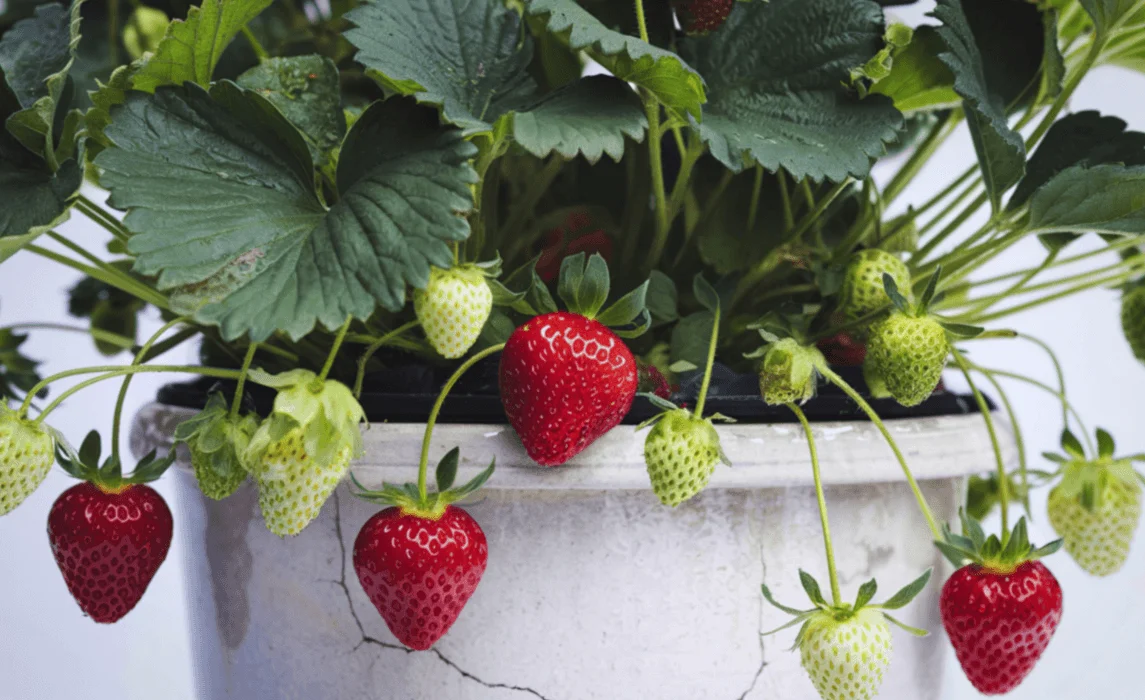
There is nothing quite like picking a sun-warmed strawberry from your own garden. These low-growing perennials form an attractive groundcover with lobed green leaves, delicate white flowers, and the iconic red fruit that pollinators love. Strawberry plants grow well in garden beds, containers, or hanging baskets on a balcony, making them one of the most versatile outdoor plants for any space. They prefer full sun and slightly acidic, well-drained soil enriched with compost. Water regularly — especially while fruit is developing — and mulch around plants to keep berries clean and soil evenly moist. Remove runners if you want larger fruit, or let them spread to fill out your garden beds for next year. Everbearing varieties produce from spring through late summer, while June-bearing types give one big flush. They are ideal for gardeners who want a sweet, edible reward season after season.
Soil: Slightly acidic, well-drained, pH 5.5-6.8
Water: 1-2 inches per week
Light: Full sun (6-8 hours)
Humidity: Moderate
Fertilizer: Balanced, after harvest and again mid-season
Discover beginner-friendly herbs like basil, mint, and parsley that are easy to grow indoors or outdoors.
6. Snap Peas
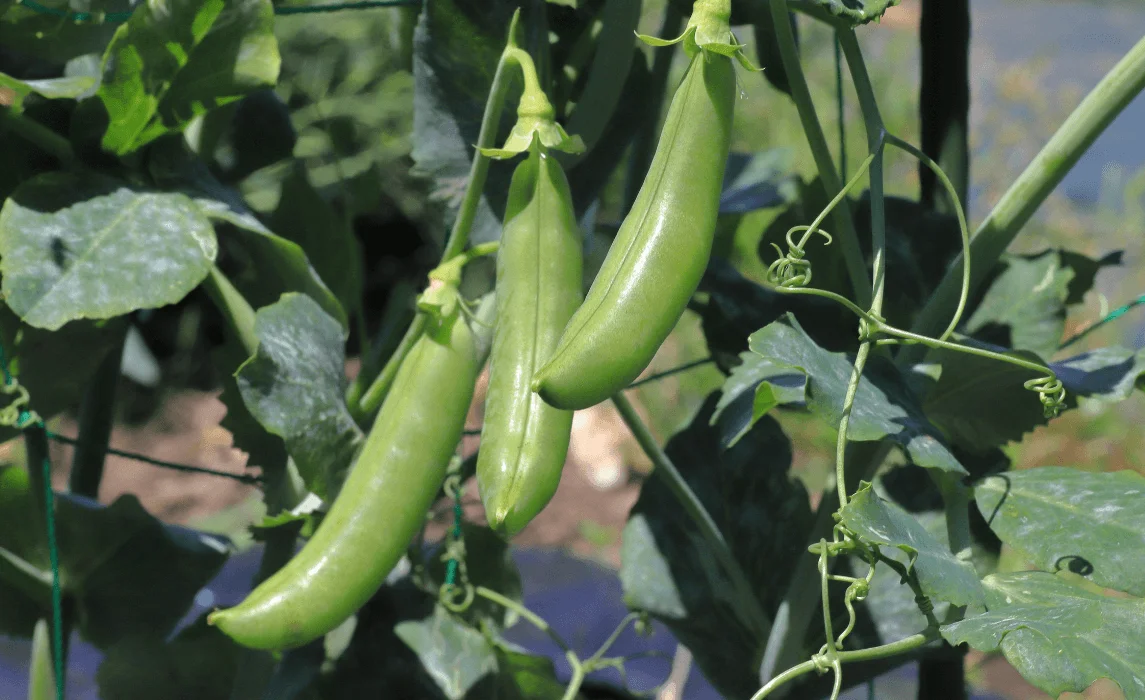
Snap peas are the ideal cool season vegetable for beginner gardeners getting started with spring planting. These sweet, crunchy pods are delicious raw or lightly cooked, and the plants themselves are beautiful climbers with delicate white or pink flowers. Snap pea vines grow 3 to 6 feet tall and need a trellis or cage to climb, which makes them a smart pick for small spaces, raised beds, or a sunny balcony. Plant them as soon as the soil can be worked in early spring, in good soil amended with compost. They like full sun but tolerate part shade in warmer regions. Keep the soil consistently moist and harvest pods when they are plump but still tender. Snap peas are low maintenance and forgiving, perfect for anyone new to gardening who wants a productive, tasty addition to every garden.
Soil: Well-drained, neutral pH 6.0-7.5
Water: About 1 inch per week
Light: Full sun to part shade
Humidity: Moderate
Fertilizer: Light; avoid high-nitrogen blends
Temperature: 55-75°F (13-24°C)
USDA Zone: 3-11
7. Squash
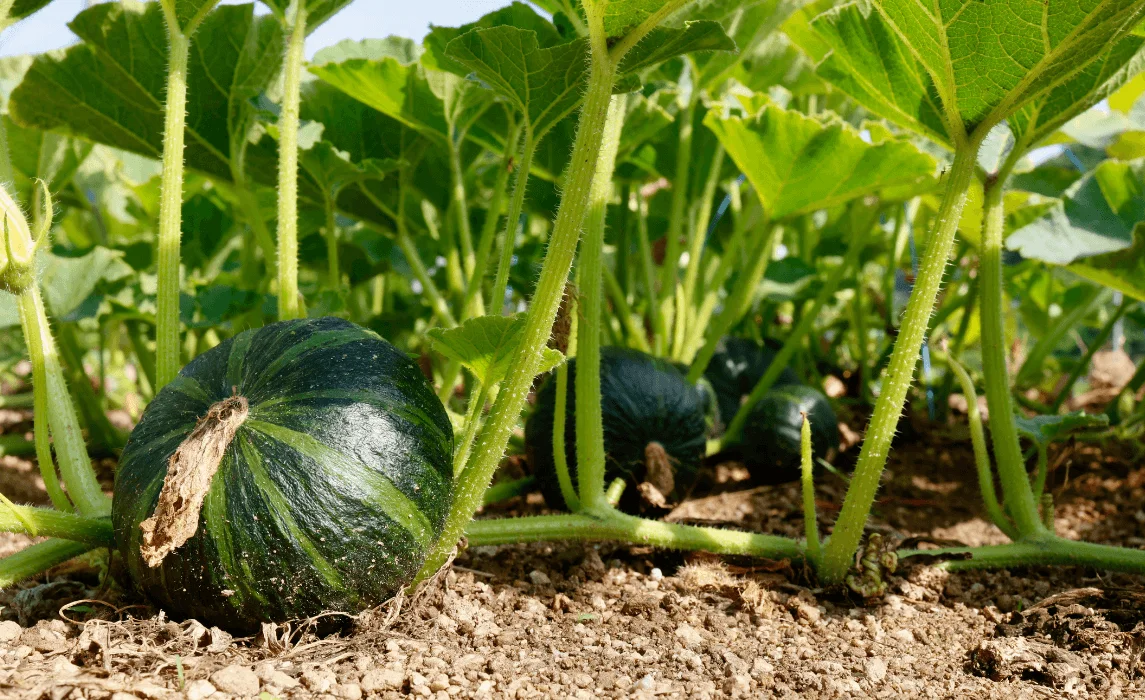
If you want to feel like a successful gardener quickly, plant squash. Both summer squash (like zucchini) and winter squash love the heat and produce abundantly with minimal fuss. These sprawling plants have large, textured leaves, bright yellow or orange blooms that attract pollinators, and fruits that range from pale green to deep orange depending on the variety. Most squash plants need plenty of room — a single plant can spread 3 to 6 feet — so give them space in garden beds or train vining types up a sturdy trellis. They thrive in full sun with rich, well-drained soil and consistent watering at the base. Mulch helps retain moisture and suppress weeds. Keep an eye out for the squash bug pest, and pick summer varieties regularly to keep production going. Squash is perfect for gardeners with a little room and a love of abundance.
Soil: Rich, well-drained, compost-amended
Water: 1-2 inches weekly, deep watering
Light: Full sun (8 hours ideal)
Humidity: Moderate
Fertilizer: Balanced feed monthly once fruiting
Temperature: 70-85°F (21-29°C)
USDA Zone: 3-10
8. Kale and Mustard Greens
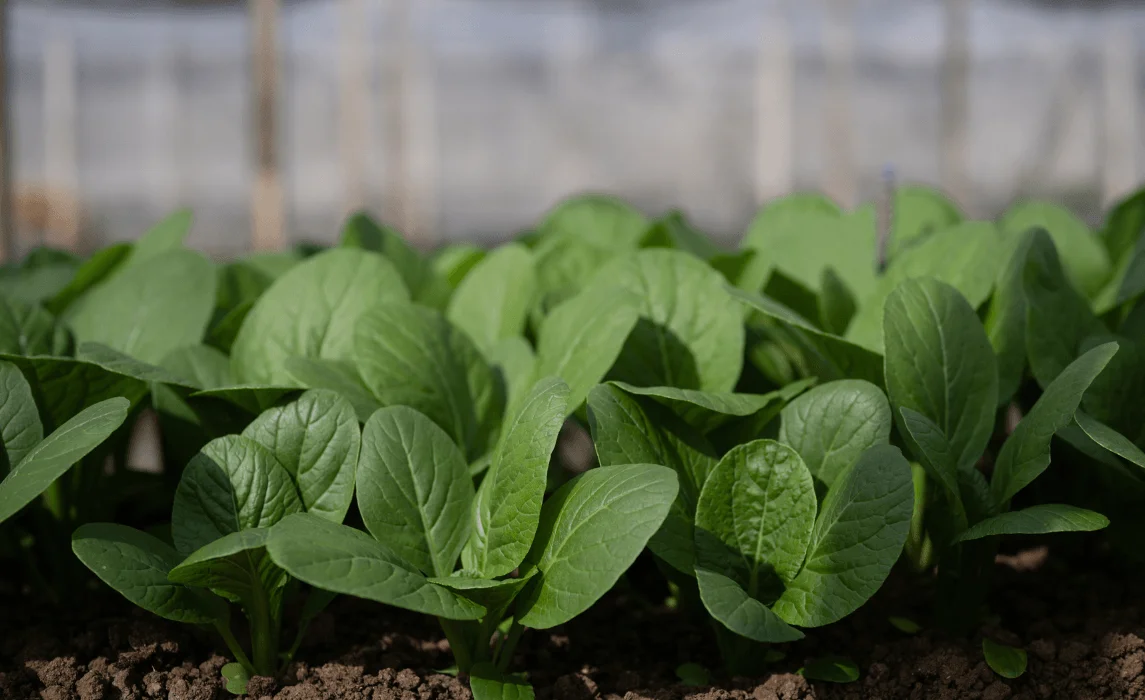
Kale is a cool season powerhouse that is as beautiful as it is nutritious — and mustard greens are a spicy, fast-growing cousin worth planting alongside it. Native to the Mediterranean and Asia Minor, kale has been cultivated for over 2,000 years. Plants grow 1 to 3 feet tall with deeply ruffled or curly leaves in shades of blue-green, deep green, or purple, while mustard greens offer peppery, frilly leaves that mature in just 30 to 40 days. Both thrive in cool weather and actually taste sweeter after a light frost. Plant them in early spring or late summer in rich, well-drained soil with full sun to partial shade. Water consistently and mulch to keep roots cool. Harvesting outer leaves regularly encourages continuous production for months. These greens are ideal for beginner gardeners who want reliable, healthy plants that keep giving and are easy to eat fresh or cooked.
Soil: Fertile, well-drained, pH 6.0-7.5
Water: 1-1.5 inches weekly
Light: Full sun to partial shade
Humidity: Moderate
Fertilizer: Nitrogen-rich feed every 4-6 weeks
Temperature: 55-75°F (13-24°C)
USDA Zone: 3-9
9. Rosemary
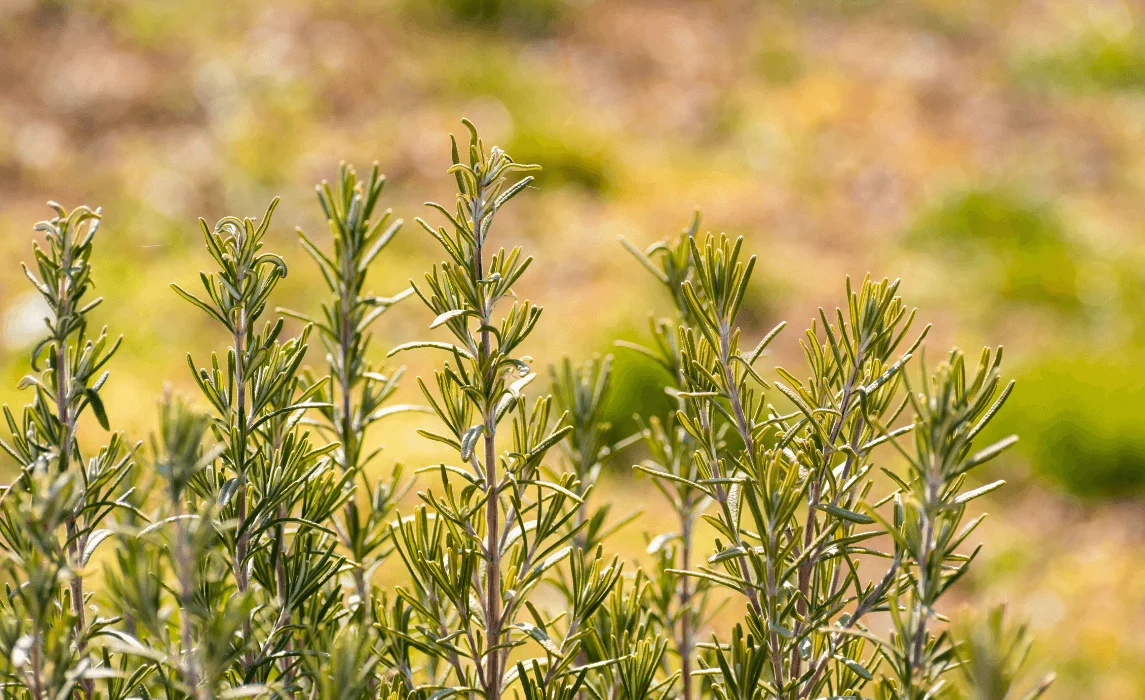
Rosemary is a Mediterranean classic that rewards neglect more than overcare. This woody, evergreen herb grows into an upright or trailing shrub, reaching 2 to 5 feet tall with needle-like silver-green leaves and small blue flowers that pollinators love. Rosemary tolerates drought beautifully, making it one of the most low-maintenance, easy-care herbs you can grow. It needs full sun, sandy or gravelly well-drained soil, and minimal water once established — in fact, overwatering is the most common way to kill it. In colder zones, grow rosemary in a container so you can bring it indoors during winter to overwinter on a sunny windowsill. Prune regularly to keep it bushy and harvest sprigs for roasts, breads, and teas. Ideal for hands-off gardeners, container growers, and anyone ready to learn to grow Mediterranean herbs.
Soil: Sandy, well-drained, slightly alkaline
Water: Let top inch of soil dry between waterings
Light: Full sun (6-8 hours)
Humidity: Low to moderate
Fertilizer: Light, once or twice a year
Temperature: 55-80°F (13-27°C)
USDA Zone: 7-10 (container indoors in colder zones)
10. Parsley
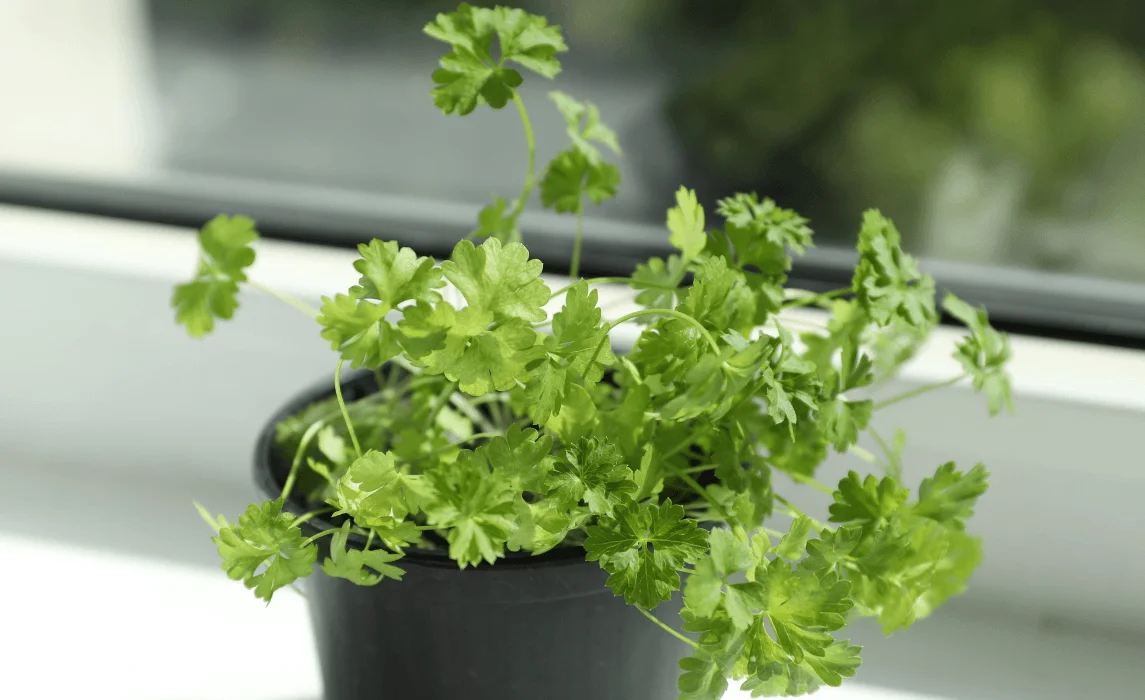
Parsley is a biennial herb that is grown as an annual in most gardens, and it is one of the most useful plants for your garden and kitchen. It forms a low, tufted mound 8 to 12 inches tall with bright green, curly or flat leaves that bring flavor to countless dishes. Parsley tolerates a range of conditions and works well in garden beds, containers, or even indoors on a sunny windowsill. Plant it in rich, moist soil with full sun to partial shade, and water regularly to keep the soil evenly moist. Seeds are slow to germinate, so be patient with early seedlings or start with transplants from your local nursery. Once established, parsley produces continuously for months and attracts pollinators like butterflies when it flowers in its second year. It is a perfect pick for beginner gardeners who want a versatile, easy-care herb.
Discover beginner-friendly garden layouts—from raised beds to square-foot gardening—to maximize space, improve organization, and boost your harvest.
Frequently Asked Questions:
1. Can I grow these plants on a balcony or indoors?
Yes. Many of these thrive in containers. Basil, parsley, rosemary, lettuce, strawberries, and jalapeños all do well on a sunny balcony or in bright indoor spots. Make sure containers have drainage holes, use quality potting mix, and place plants where they get enough light for their type. A south-facing window usually works well for herbs grown indoors.
2. How often should I water my beginner garden?
Most beginner plants need consistently moist, not soggy soil. A deep watering 2 to 3 times per week usually works better than daily shallow watering because it encourages deeper root growth. Stick your finger an inch into the soil; if it feels dry, water. Mulch helps keep soil moisture steady between waterings and reduces how often you need to water overall.
3. Which plants work best in cool seasons versus hot summers?
Cool season crops like lettuce, kale, snap peas, broccoli, cauliflower, and radish do best in spring and fall. Heat-loving plants including basil, cucumber, squash, jalapeños, strawberries, and zinnias thrive through the heat of summer. Matching the plant to the right season makes a huge difference, it is often the single biggest factor in beginner success.
Related posts
Here are some articles you might be interested in.



.webp)