Ryan Johnson relocated to his grandfather's old farm when he was 22 years old where he discovered the joys of farming and gardening. With his cool demeanor and strong-willed passion for the agrarian lifestyle, he now shares his know-how to aspiring gardeners.
Planting Calendar Q&A
Is an almanac planting calendar exact?
No. It is a useful regional estimate built from historical conditions. Confirm its suggested planting date with your local forecast, soil condition, and microclimate.
When is the best time to plant?
The best time to plant is when the crop's temperature needs match your frost window and the soil is workable. Cool crops can begin earlier; tender warm-season crops wait until frost danger has passed.
Can every vegetable be started indoors?
No. Tomatoes and peppers handle indoor seed starting well, while carrots are usually sown directly in the ground. Follow crop-specific seed packets and avoid disturbing sensitive roots.
What if a late frost is forecast?
Delay transplanting tender crops, move containers inside, or cover established plants overnight. Remove covers after temperatures rise so light and airflow return.
How often should I revise my calendar?
Review it at the start of each growing season and add notes after major sowings and harvests. Records reveal which dates, varieties, and methods work best in your garden.
Evergreen Shrubs Q&A
How do I choose evergreen shrubs for my outdoor space?
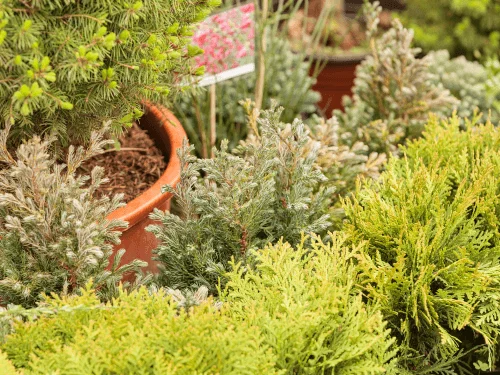
Match mature size to USDA hardiness, light, drainage, and wind. Use a tall evergreen for screening, a mounded shrub for foundation planting, or ground cover on slopes. Repetition unifies home landscapes, while contrast creates a focal point in the landscape.
What are the best small evergreen shrubs?
Blue Star juniper, dwarf Chamaecyparis, azalea, and Daphne are strong small-space choices. The best evergreen shrubs fit without constant shear work; check mature spread and leave airflow around glossy foliage.
Do evergreen shrubs flower as long as hydrangea?
Not usually. A hydrangea may have a long bloom time from mid-summer onward, while evergreen shrubs often bloom briefly. Combine azalea for spring, Viburnum or Mahonia for winter, and summer perennials.
When should I prune an evergreen hedge?
Prune flowering shrubs after bloom, and shape boxwood, yew, or Thuja lightly during growth. Avoid leafless old conifer wood; natural forms need less pruning and preserve year-round interest.
Why can an evergreen turn brown in winter?
Frozen soil, wind, salt, or poor drainage can brown green foliage. Water before freezing, mulch roots, and choose a protected area so evergreen shrubs retain year-round beauty and lasting structure.
Starting a Fruit Garden Q&A
What is the easiest fruit to grow for a first garden?
Strawberry is often the simplest starting point because it fits containers, fruits quickly, and is easy to replace. Raspberry, blackberry, and currant can also be forgiving when their spread is controlled. The best fruit is the one matched to your climate, sunlight, soil, and available care.
Can I grow fruit trees in a small space?
Yes. Choose a dwarf tree on a clearly labeled rootstock, train an espalier against wires, or use fruit trees in containers with sufficient soil volume and winter protection. Confirm mature dimensions, pollination needs, and whether the container can be watered consistently before you grow fruit trees.
Do I need more than one fruit tree?
It depends on the cultivar. Some trees are self-fertile, while others need compatible partners that bloom together. A nursery may recommend 2-4 fruit trees for varied harvests, but one self-pollinating dwarf tree can be enough when garden space is limited.
How soon will fruit plants produce fruit?
Strawberries and some cane fruits may crop in the first or second season, while a grafted fruit tree often takes several years. Rootstock, plant age, climate, pruning, and stress all affect timing. Remove an excessive early crop if the young plant needs energy for roots and structure.
Can a fruit garden share space with vegetables?
Yes. A combined vegetable and fruit area works when permanent crops do not shade or crowd annual beds. Put long-lived fruit plants where future digging will not disturb their roots, maintain clear paths, and choose fruits to grow at home that fit the same sunlight and watering pattern as the wider garden.
If you want to grow lemon, deciding to grow a tree in your own space is a wonderful and aromatic journey. A lemon tree provides much more than just a beautiful splash of green; it offers incredibly fragrant blossoms and brilliant, acidic fruit that can elevate your cooking and baking. Whether you want a large citrus plant in your backyard or a little lemon tree for your living room, learning how to grow a lemon tree is deeply rewarding. When you harvest fresh lemons from your own carefully tended plant, you experience a unique sense of accomplishment. Plus, harvesting lemons at home means you always have a fresh supply of vitamin C right at your fingertips. From the very first lemon seed you plant to the day you bring in your homegrown lemons, the process of nurturing these beautiful fruit trees is a true joy.
What Are Lemon Trees Good For?
Lemon trees are versatile, beautiful, and highly productive. They are fantastic additions to any garden or bright indoor space because they serve multiple purposes. Cultinarily, the citrus fruit is unmatched—the juice, zest, and flesh of a true lemon can be used in savory dishes, sweet desserts, and refreshing beverages. Beyond the kitchen, a lemon tree indoors acts as a natural air freshener; when the plant begins to bloom, the lemon blossoms release a heavy, sweet, jasmine-like scent that perfumes the entire house. For outdoor growers, these trees provide lovely evergreen foliage and shade.
Plant Name
Lemon Tree (Citrus limon)
Plant Type
Broadleaf evergreen tree
Size
10–20 feet outdoors; often maintained at around 4 feet indoors in containers
Soil Type
Well-draining potting soil or sandy loam
Soil pH
5.5–6.5 (slightly acidic)
Bloom Time
Spring; may flower year-round in warm climates or ideal indoor conditions
Hardiness Zones
8–11
Native Area
Asia (Northeast India, Northern Myanmar, and China)
Toxicity Level
Toxic to pets (dogs, cats, and horses) due to essential oils and psoralens
Best Varieties
Meyer Lemon – Sweeter hybrid ideal for container gardening Eureka – Classic, vigorous true lemon variety Lisbon – Heat-tolerant variety with reliable fruit production
When and Where to Plant
Choosing the right time and place is essential when you decide to grow lemon trees. If you live in a warm climate (growing zones 8 through 11), you can plant your lemon tree directly in the ground. The best time to plant outdoors is in the early spring, well after the danger of frost has passed, so the young tree has the entire growing season to establish its roots. Find a sunny spot in your garden that receives at least 8 to 12 hours of direct sunlight daily.
For those in cooler climates, indoor growing is the best route. You will need to plant your lemon tree in a pot. You can start growing trees indoors at almost any time of the year, provided you can control the temperature and light. Place your container lemon trees near a large south-facing window. If you don't have enough natural light, you will need to supplement with full-spectrum grow lights to ensure the tree will grow properly. During the warm summer months, many gardeners choose to move their potted citrus trees outside to a sunny patio to soak up the real sun. However, you must bring it indoors before the first fall frost threatens, as citrus trees are highly sensitive to freezing temperatures.
Grow a Lemon Tree from a Seed or Seedling
You can grow a lemon tree from a seed, or you can purchase a young tree (usually a grafted tree or a cutting) from a nursery. Nursery trees will produce fruit much faster—often within a year or two—because the scion (top part of the tree) is already mature. If you grow a tree from a lemon seed at home, it can take 3 to 7 years to see your first baby lemons, but it is an incredibly fun and educational project.
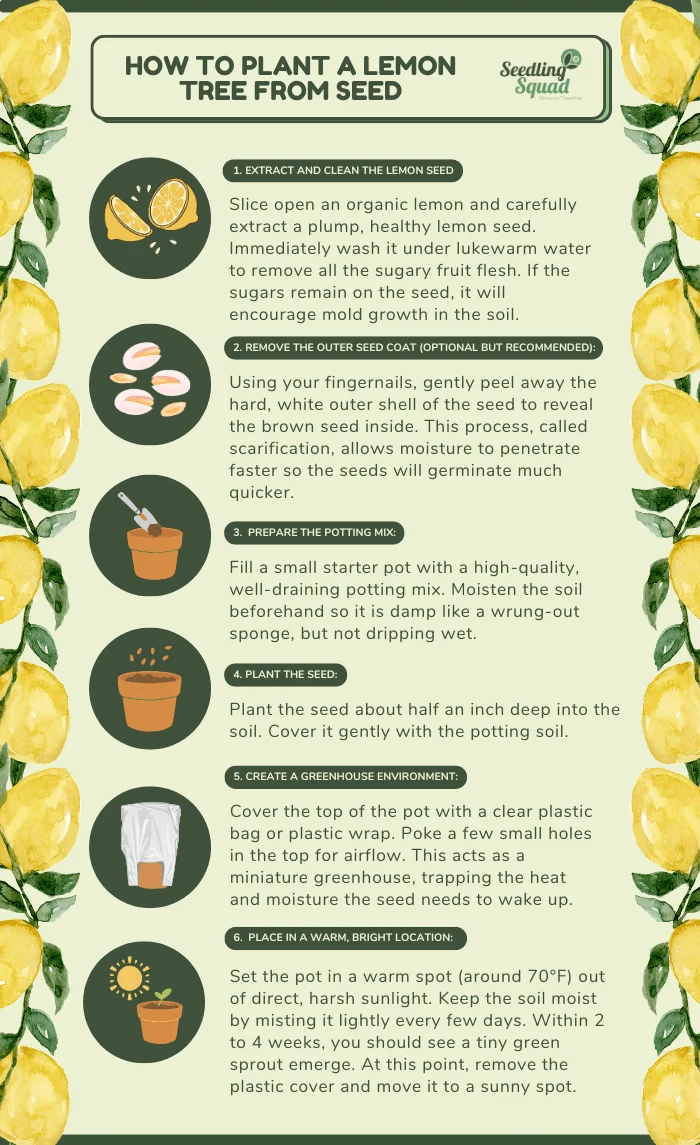
How to Plant a Lemon Tree from Seed
1. Extract and Clean the Lemon Seed
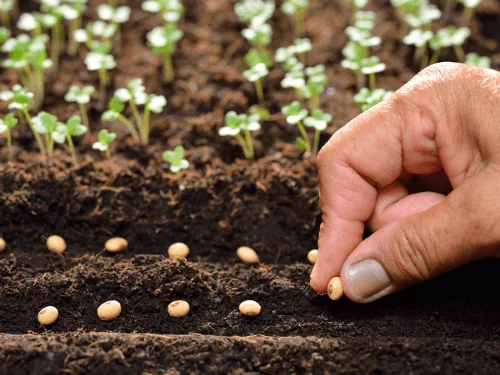
Slice open an organic lemon and carefully extract a plump, healthy lemon seed. Immediately wash it under lukewarm water to remove all the sugary fruit flesh. If the sugars remain on the seed, it will encourage mold growth in the soil.
2. Remove the Outer Seed Coat (Optional but Recommended)
Using your fingernails, gently peel away the hard, white outer shell of the seed to reveal the brown seed inside. This process, called scarification, allows moisture to penetrate faster so the seeds will germinate much quicker.
3. Prepare the Potting Mix
Fill a small starter pot with a high-quality, well-draining potting mix. Moisten the soil beforehand so it is damp like a wrung-out sponge, but not dripping wet.
4. Plant the Seed
Plant the seed about half an inch deep into the soil. Cover it gently with the potting soil.
5. Create a Greenhouse Environment
Cover the top of the pot with a clear plastic bag or plastic wrap. Poke a few small holes in the top for airflow. This acts as a miniature greenhouse, trapping the heat and moisture the seed needs to wake up.
6. Place in a Warm, Bright Location
Set the pot in a warm spot (around 70°F) out of direct, harsh sunlight. Keep the soil moist by misting it lightly every few days. Within 2 to 4 weeks, you should see a tiny green sprout emerge. At this point, remove the plastic cover and move it to a sunny spot.
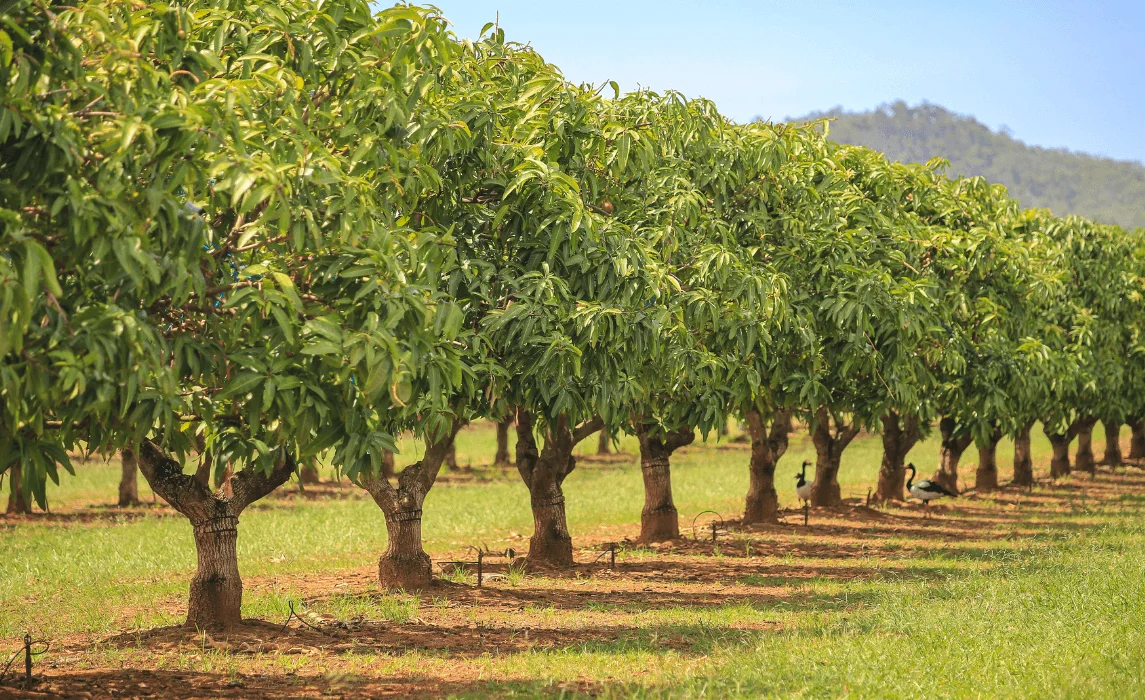
Learn how to grow a mango tree from seed with this beginner-friendly guide covering seed preparation, germination, planting, and long-term care tips.
```
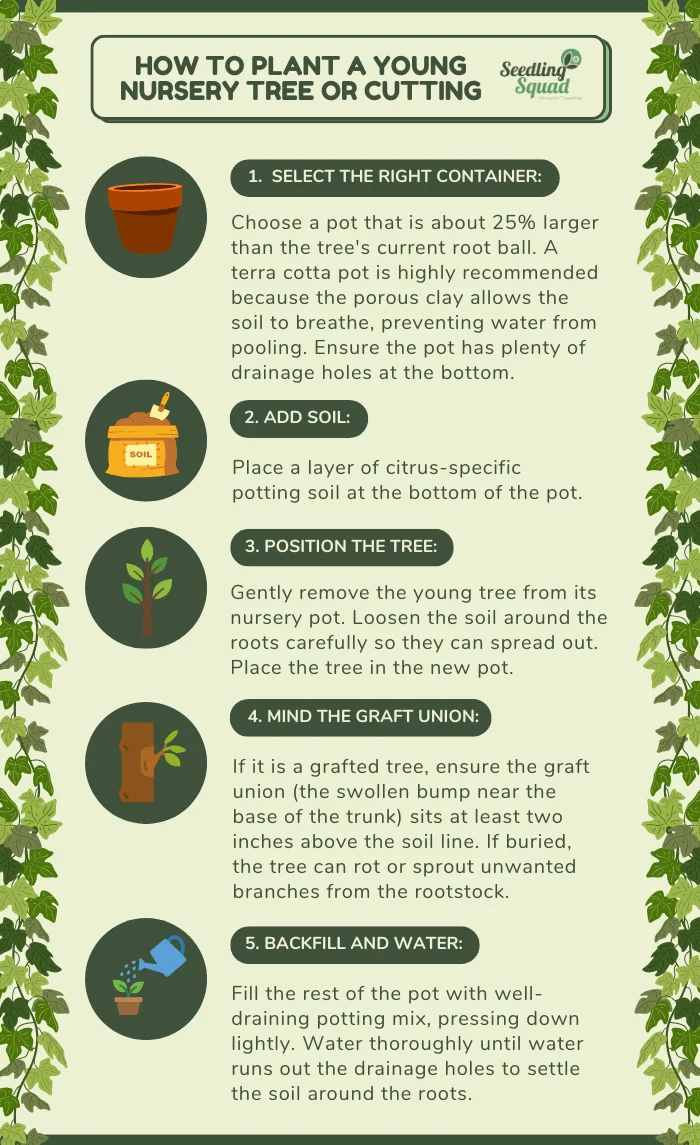
How to Plant a Young Nursery Tree or Cutting
If you prefer a head start, planting your tree from a nursery seedling or cutting is very straightforward:
1. Select the Right Container
Choose a pot that is about 25% larger than the tree's current root ball. A terra cotta pot is highly recommended because the porous clay allows the soil to breathe, preventing water from pooling. Ensure the pot has plenty of drainage holes at the bottom.
2. Add Soil
Place a layer of citrus-specific potting soil at the bottom of the pot.
3. Position the Tree
Gently remove the young tree from its nursery pot. Loosen the soil around the roots carefully so they can spread out. Place the tree in the new pot.
4. Mind the Graft Union
If it is a grafted tree, ensure the graft union (the swollen bump near the base of the trunk) sits at least two inches above the soil line. If buried, the tree can rot or sprout unwanted branches from the rootstock.
5. Backfill and Water
Fill the rest of the pot with well-draining potting mix, pressing down lightly. Water thoroughly until water runs out the drainage holes to settle the soil around the roots.
Growing a Lemon Tree Requirements
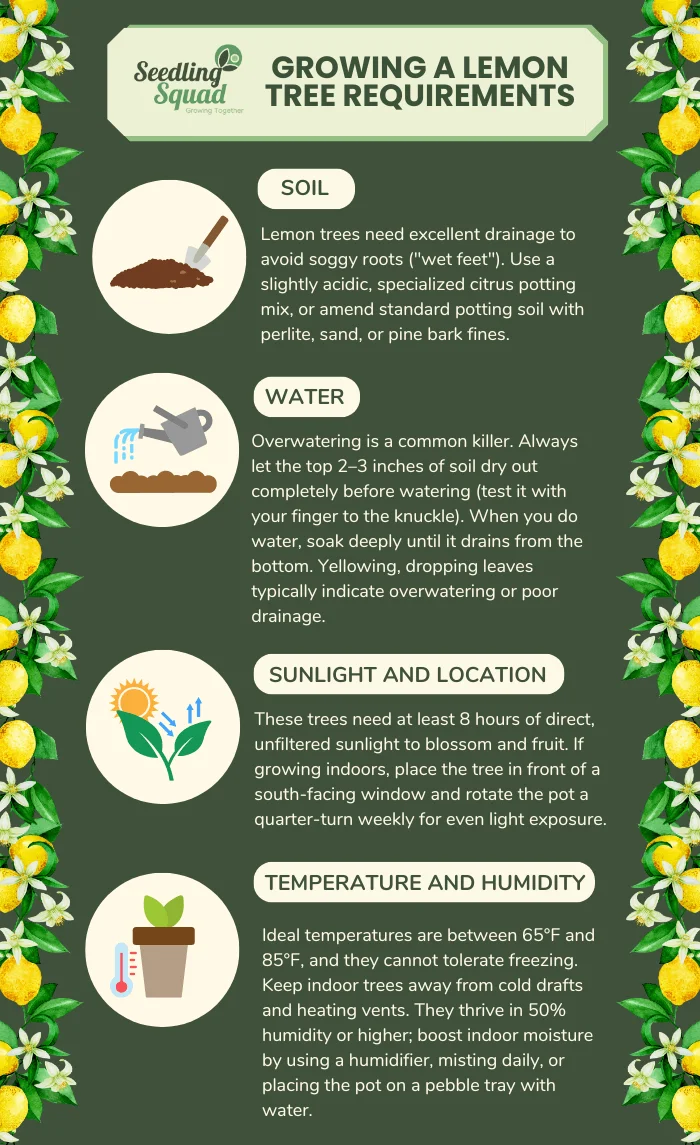
To ensure your lemon trees grow best, you must mimic their native subtropical environment. Understanding what a lemon tree needs regarding its environment is the key to a healthy plant and a bountiful harvest.
Soil
Citrus trees hate "wet feet," which means their roots cannot sit in soggy conditions. They require excellent drainage. Use a specialized citrus potting mix, or create your own by mixing standard potting soil with perlite, sand, or pine bark fines to ensure good drainage. The soil should be slightly acidic.
Water
Knowing when to water is the most critical part of tree care. A lemon tree needs water regularly, but overwatering is the number one killer of trees in containers. Always allow the top two to three inches of the soil to dry out completely before watering again. Stick your finger into the soil; if it feels dry at your knuckles, it is time to water. When you do water, soak it deeply until water runs out the bottom of the pot. Keep the soil moist but never waterlogged. If the leaves of your tree are turning yellow and dropping, it is usually a sign of poor drainage or overwatering.
Sunlight and Location
Lemon trees are sun worshippers. They need massive amounts of light to produce enough energy to blossom and fruit. Whether grown outdoors in a garden or kept as trees indoors, they require a minimum of 8 hours of direct, unfiltered sunlight. When indoor growing, place the plant directly in front of an unobstructed south-facing window. Turn the pot a quarter-turn every week so the whole plant gets even light.
Temperature and Humidity
Lemon trees like it warm. Ideal temperatures range between 65°F and 85°F. They cannot tolerate freezing temperatures, which is why bringing them inside for the winter is mandatory in cold climates. Indoors, keep them away from cold drafts near doors or blasting heat from radiators. Furthermore, indoor winter air is often very dry, but citrus trees love 50% humidity or higher. To help them grow well indoors, place a humidifier nearby, mist the leaves daily, or rest the pot on a tray filled with pebbles and water.
Maintenance Tips for Growing a Lemon Tree
Fertilizing
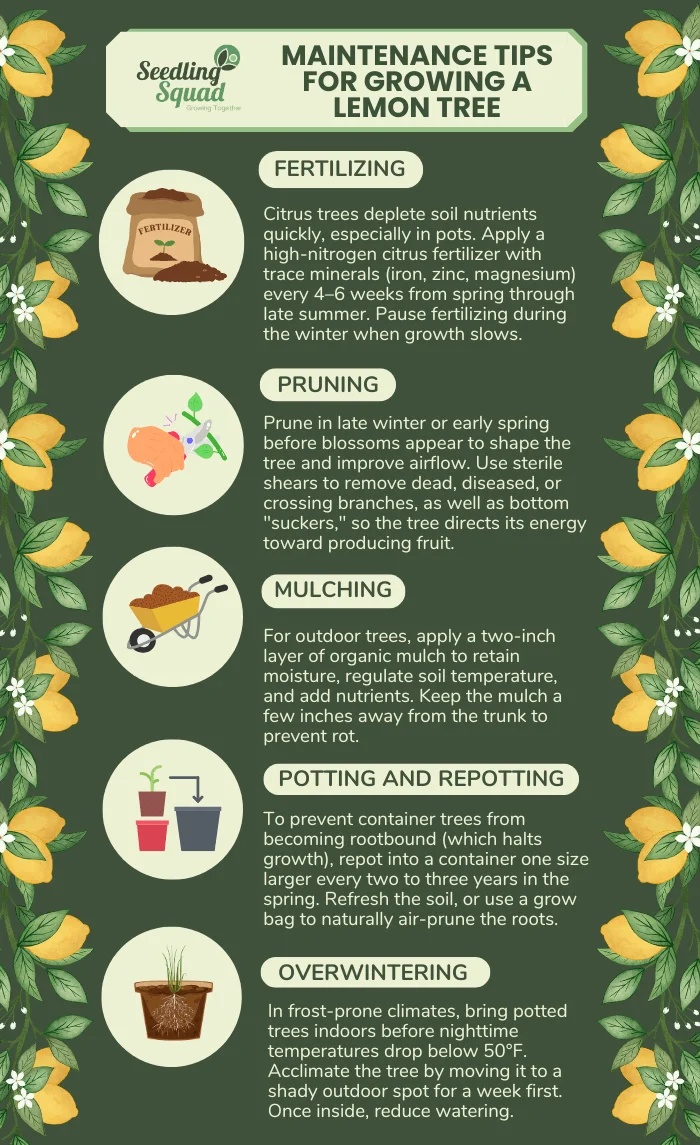
Citrus trees are heavy feeders, meaning they deplete nutrients from their soil quickly, especially when grown in containers. You must fertilize your tree regularly during the active growing season (spring through late summer). Use a specialized citrus fertilizer that is high in nitrogen and contains trace minerals like iron, zinc, and magnesium. Apply the fertilizer according to the package directions, usually every 4 to 6 weeks. Do not fertilize in the winter when the tree's growth slows down.
Pruning
You should prune your lemon tree to maintain its shape, encourage branching, and improve airflow. The best time to prune is in the late winter or early spring before the new blossoms appear. Use sterile, sharp pruning shears. Cut away any dead, diseased, or crossing branches. Also, prune away any "suckers"—vigorous, thorny shoots that grow from the very bottom of the trunk around the base of the plant. Removing these ensures the tree directs all its energy into the main canopy to produce fruit.
Mulching
If your tree is planted outdoors in the garden, apply a two-inch layer of organic mulch around the base of the tree. Keep the mulch a few inches away from the actual trunk to prevent rot. Mulch helps retain soil moisture, regulates soil temperature, and slowly breaks down to feed the tree.
Potting and Repotting
As your container lemon trees grow, their root systems will eventually fill the pot. A rootbound tree will stop growing and drop its leaves. Every two to three years, you should repot your tree into a container that is one size larger. Spring is the ideal time for repotting. Refresh the potting soil during this process to give the roots access to new nutrients. Alternatively, you can use a grow bag, which naturally air-prunes the roots and prevents the tree from becoming rootbound.
Overwintering
If you live in a climate that experiences frost, you must bring your potted lemon tree indoors before nighttime temperatures dip below 50°F. The transition must be gradual. Move the tree to a slightly shadier spot outdoors for a week to acclimate it to lower light levels before moving it inside for the winter. Once inside, reduce watering, as the tree will not dry out as quickly indoors without the hot summer sun and wind.
Common Pests and Diseases
Even with excellent care, your lemon tree might encounter a pest or disease. Being vigilant is key to preventing major infestations.
Common Pests
Aphids
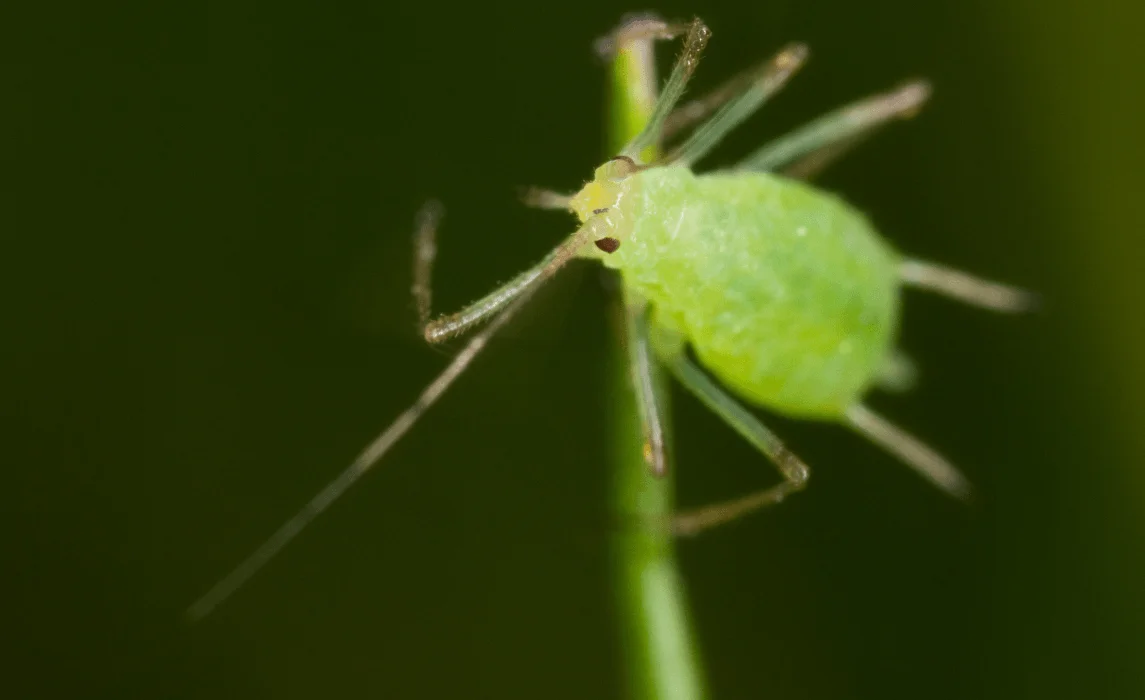
Aphids are sap-sucking insects that can be prevented by avoiding excess nitrogen fertilizer and inspecting new growth often, and they can be treated by blasting them with a strong stream of water, introducing ladybugs, or applying insecticidal soap or neem oil.
Spider Mites
Spider mites are microscopic webbing pests prevented by maintaining high humidity and wiping leaves with a damp cloth, and treated by washing their webs off with water before coating the leaves with neem oil or horticultural soap.
Scale
Scale insects present as immobile, hard brown bumps that can be prevented by regularly inspecting stems and leaf veins and quarantining new plants, and they are treated by scraping them off manually, dabbing them with rubbing alcohol, or smothering them with horticultural or neem oil.
Common Diseases
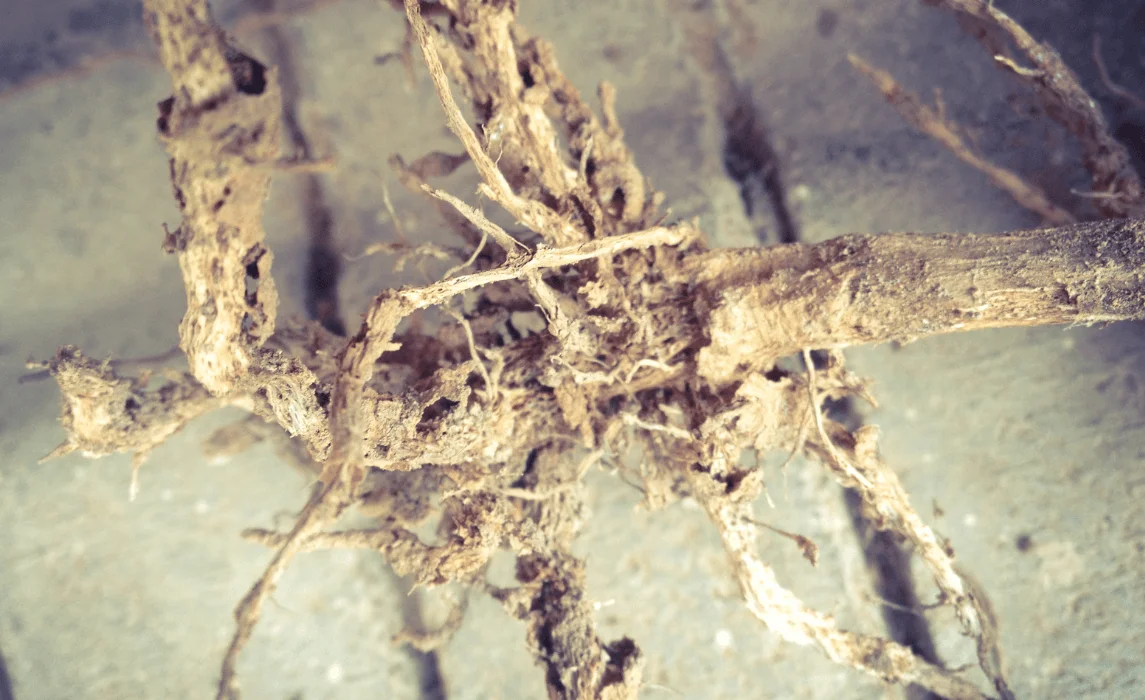
Root Rot: Caused by poor drainage and overwatering. The roots turn to mush, and the tree's leaves turn yellow and drop. To save a tree from root rot, you must repot it immediately into fresh, dry soil and trim away the rotten roots.
Fruit Drop: Sometimes, a lemon tree will spontaneously drop its baby lemons. While a small amount of fruit drop is a natural thinning process, excessive dropping is usually caused by sudden temperature changes, erratic watering, or poor nutrition. Keep your care routine consistent to prevent this.
How to Harvest a Lemon Tree
Patience is required when waiting for your citrus fruit to mature. From the moment the sweet-smelling blossoms appear to the day the lemons are ready to pick, it can take anywhere from 6 to 9 months.
You will know your lemons are ready when they have developed their full, vibrant yellow color (or a deep golden-yellow if you grow Meyer lemons). Unlike some fruits, lemons do not continue to ripen or get sweeter once they are picked from the tree, so it is crucial to leave them on the branch until they are fully ripe. They should feel slightly soft to the touch and heavy for their size, indicating they are full of juice.
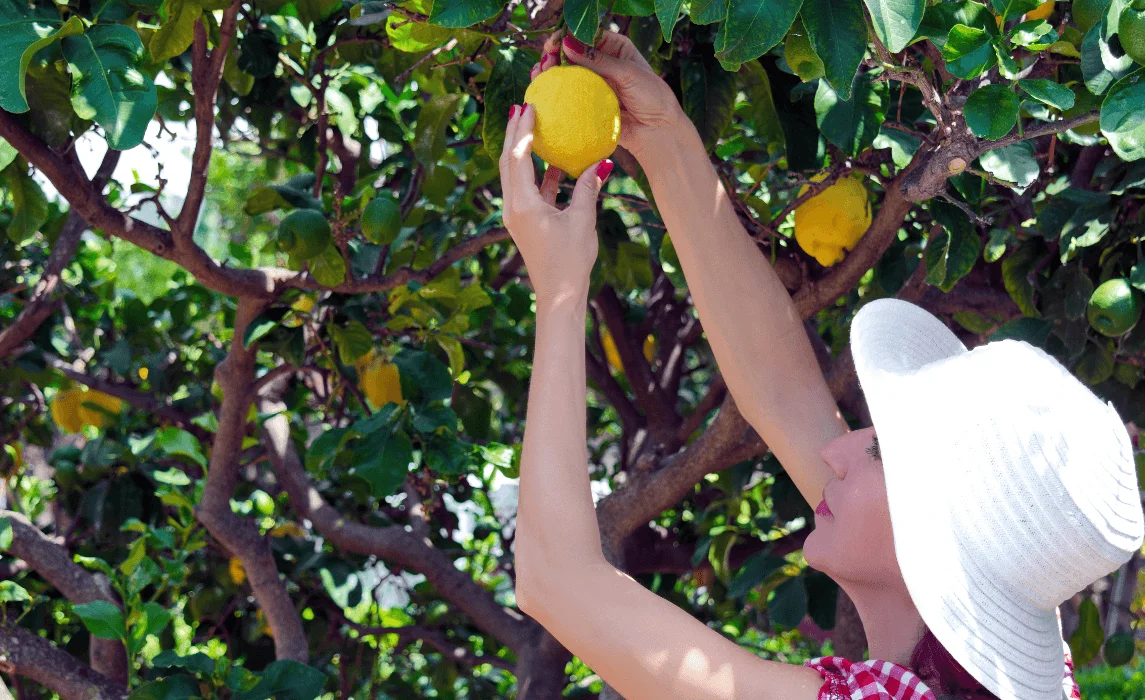
When it is time to harvest, do not just pull the fruit, as this can tear the branch and damage the tree. Instead, grasp the lemon in your palm and gently twist it until it snaps off the stem. You can also use a clean pair of pruning snips to cut the stem just above the fruit. Enjoy your homegrown lemons immediately in your favorite recipes, or store them in the crisper drawer of your refrigerator to keep them fresh for weeks.
Discover some of the best fruit trees for home gardens, from apples and citrus to peaches and figs, with tips on choosing varieties that suit your space and climate.
```
FAQ: Frequently Asked Questions
Do I need two lemon trees to produce fruit?
No, you do not. Lemons are self-pollinating, which means the flowers contain both the male and female parts necessary to produce fruit. A single little lemon tree can yield an abundant harvest all on its own.
How do I pollinate my indoor lemon tree?
While lemons are self-pollinating, they normally rely on wind and bees to move the pollen around the blossom. Because you are growing indoors, you must act as the bee. When the tree is in full bloom, take a small, soft paintbrush or a cotton swab and gently brush the inside of each flower, moving from blossom to blossom. This simple act will successfully pollinate the flowers, ensuring they turn into fruit.
Why is my Meyer lemon tree not blooming?
A Meyer lemon tree typically fails to bloom due to a lack of light or insufficient fertilizer. Ensure your tree is getting a full 8 to 12 hours of direct sunlight. Also, double-check your feeding schedule; a lack of phosphorus can inhibit blooming. Finally, ensure the tree isn't too cold, as cool temperatures can delay or prevent the bloom cycle entirely.
Related posts
Here are some articles you might be interested in.