Invasive Plant Guide: 10 Invasive Plants You Need to Watch out For
Published on
November 23, 2026
Author
Ryan Johnson
Ryan Johnson relocated to his grandfather's old farm when he was 22 years old where he discovered the joys of farming and gardening. With his cool demeanor and strong-willed passion for the agrarian lifestyle, he now shares his know-how to aspiring gardeners.
Invasive Plants Q&A
What is the difference between a non-native plant and an invasive plant?
A non-native plant is any species growing outside its natural range, usually because people moved it. Most non-native species stay where they are planted. An invasive plant is a non-native plant species that spreads aggressively on its own, harms natural ecosystems, and causes economic or human health problems.
What key physical traits make an invasive plant easy to spot early on?
Watch for plants that leaf out earlier and hold leaves later than native species, grow unusually fast, form dense patches of a single species, or climb over other vegetation. Heavy seed production is another red flag.
What is the difference between an invasive species and a officially listed "noxious weed"?
Invasive species is an ecological label for organisms that spread and cause harm. A noxious weed is a legal designation set by a state or the U.S. Department of Agriculture, which can restrict selling or moving the plant. Many noxious weeds are invasive, but not every invasive is legally listed.
How do invasive plants harm local ecosystems, soil chemistry, and native wildlife?
They crowd out native plants that insects, birds, and mammals rely on, which lowers native biodiversity. Some, like garlic mustard, change soil chemistry and fungal networks, while others alter water flow or erosion. The combined impact of invasive species can endanger rare plants and animals and is a factor in the decline of many endangered species.
Can invasive plants cause structural damage to private property or lower land values?
Yes. Knotweed rhizomes can push through foundations, drains, and pavement, while English ivy and kudzu add weight that brings trees down onto roofs and fences. A heavy infestation can shrink usable land, raise removal costs, and in some markets complicate home sales.
Are any common invasive plant species toxic or hazardous to humans and pets?
Several are. Wild parsnip and giant hogweed sap can cause severe burns in sunlight. English ivy leaves and berries can upset the stomachs of people and pets, and buckthorn berries are a strong laxative. Dense shrub thickets like Japanese barberry also hold humid air that favors deer ticks.
How do invasive plant seeds accidentally hitchhike into new areas?
Plant seeds ride along in mud on boots, tires, and mowers, in contaminated mulch, fill dirt, hay, and birdseed, and on boat trailers. Birds eat fruit and drop seeds elsewhere, and floods carry fragments downstream. Cleaning gear between sites slows the spread of invasive plants.
What is the safest and most effective way to remove invasive plants on your property?
Identify the plant, then match the method. Hand pulling works for seedlings and garlic mustard, repeated cutting weakens vines, and herbicide on cut stems handles woody shrubs. Good plant control takes protective gear, careful label reading, and several years of follow-up, since managing invasive species always involves resprouts.
Why is standard yard-waste composting unsafe for invasive plant materials?
Home compost piles rarely get hot enough to kill seeds, roots, or stem fragments. Knotweed rhizomes, honeysuckle stems, and seed heads can survive and sprout wherever the finished compost goes, aiding the spread of invasive weeds into your garden.
How should pulled or cut invasive plants be properly disposed of?
Bag seed heads and flowering plants in heavy black plastic and leave them in the sun for a few weeks before sending them to the landfill. Dry woody stems on a tarp away from bare soil. Some counties also run special collections for invasives.
What native plant alternatives should be used to reseed areas after invasive removal?
Pick native alternatives suited to your region and site. In the Southeast, coral honeysuckle or crossvine can replace Japanese honeysuckle, Christmas fern or wild ginger work as shade groundcover, and serviceberry or redbud can stand in for Callery pear. The North Carolina Native Plant Society offers guidance on native plant species for local gardens.
Where and how can citizens report sightings of high-priority invasive species?
Use EDDMapS, a free app and website that sends early detection reports to land managers, or contact your county Cooperative Extension office or state department of agriculture. In North Carolina, the NC Invasive Plant Council shares reporting resources. Include a clear photo, the exact location, and the date to support a rapid response.
Winter Plants Q&A
How do I protect plants from cold winter damage?
Mulch roots with 2 to 3 inches of shredded bark, water well before the ground freezes and cover tender plants with frost cloth before a hard freeze. Choosing plants that thrive in your USDA zone is the best protection, since healthy plants survive winter far better.
Can winter plants grow in pots?
Yes. Pansies, kale and heath all grow well in containers. Use pots with drainage holes and fresh potting mix. Containers freeze faster than soil, so check which plants are suitable for one zone colder than yours.
When should I plant for winter color?
Plant shrubs, perennials and bulbs in fall so roots settle before the ground freezes. You can buy plants from winter sales at a garden center, but check the zone first.
What do plants need to look their best?
Most plants need good drainage, shelter from drying wind and the right light. Pick a selection of plants that bloom at different times, and keep watering during dry spells, so you can embrace the beauty of winter all season.
Smart Garden Q&A
Is a smart garden worth it for beginners?
Yes, if you keep it simple. One soil moisture sensor and a free app give new gardeners real feedback for very little money. Expensive systems only pay off once you know you enjoy the hobby and understand what your plants need.
Which herbs grow best in a smart indoor garden?
Basil, mint, parsley, chives and thyme are reliable choices. They stay compact, tolerate indoor conditions and reward regular harvesting, so you can grow fresh herbs for cooking all year. Woody herbs like rosemary are harder indoors because they want strong light and drier soil.
How is a hydroponic garden different from soil?
A hydroponic system grows roots in nutrient-rich water instead of soil, usually with plant pods, a water tank and an LED light. It tends to be cleaner and faster for herbs and vegetables, but it needs steady power, nutrients and regular reservoir checks.
Do I need wi-fi for a smart garden?
Not always. Many sensors and lights run on timers or batteries. Wi-fi adds remote monitoring and an alert on your phone when it is time to water your plants, which is helpful but optional.
Can I grow fruit and vegetables in an indoor garden?
Yes, though they need more light and space than herbs. Compact varieties like cherry tomatoes and lettuce do well under a strong full spectrum light with a larger planter.
Does a smart garden make a good gardening gift?
A countertop kit is an easy gift because it works out of the box for people without a green thumb. Pick one with pre-seeded pods so the recipient can enjoy fresh herbs within weeks, and check that refills are easy to buy.
Not every non-native plant is a problem. Plenty of garden favorites come from elsewhere and stay put. An invasive plant is different. It escapes cultivation, spreads into forests and wetlands, and crowds out the native plant life local wildlife depends on. Invasive species cost the U.S. an estimated $21 billion per year, and the disruption to natural ecosystems is harder to price. Many introduced plants arrived as a nursery bestseller, an erosion fix, or livestock forage. The North Carolina Native Plant Society and NC Invasive Plant Council keep an invasive plant list to help every gardener tell the difference. Below are 10 invasive plant species to know and how to manage invasive plants before they take over. Early detection and rapid response remain the cheapest way to protect native plant communities and native biodiversity.
10 Invasive Plant Species Worth Removing
1. Kudzu
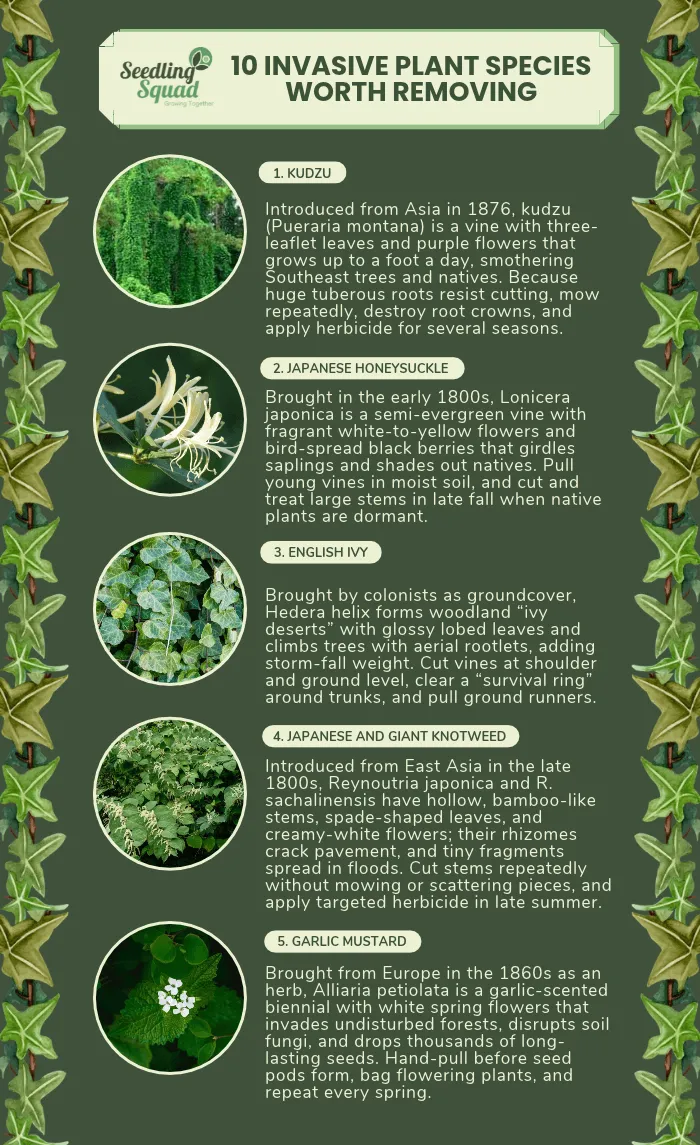
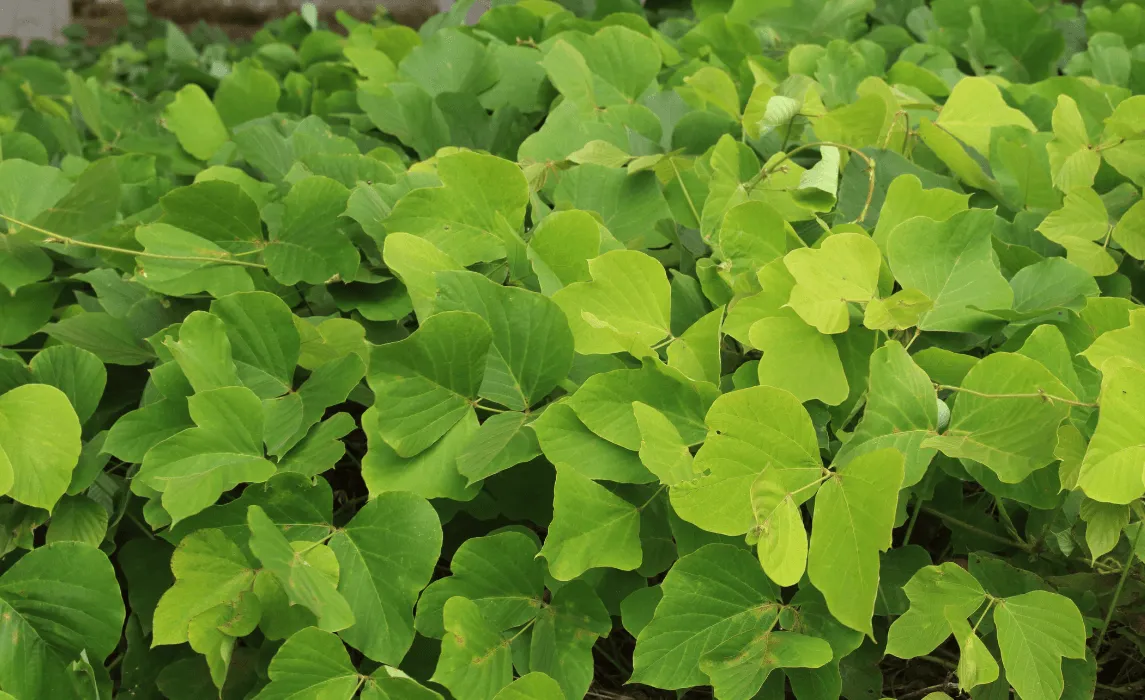
Kudzu (Pueraria montana) came from Asia in 1876 and was later promoted by the federal government for erosion control. It is a semi-woody perennial vine with large compound leaves made of three broad leaflets, each 3 to 4 inches wide, and clusters of purple, grape-scented flowers that open in late summer. It thrives on sunny forest edges, roadsides, and old fields across the Southeast, growing up to a foot a day in summer. Kudzu climbs trees, shrubs, and poles, forming blankets that smother everything underneath and block sunlight from native vegetation. Its huge tuberous roots store energy, so cutting vines alone rarely works. To keep it under control, mow repeatedly, destroy the root crowns, and follow up with a labeled herbicide for several seasons.
2. Japanese Honeysuckle
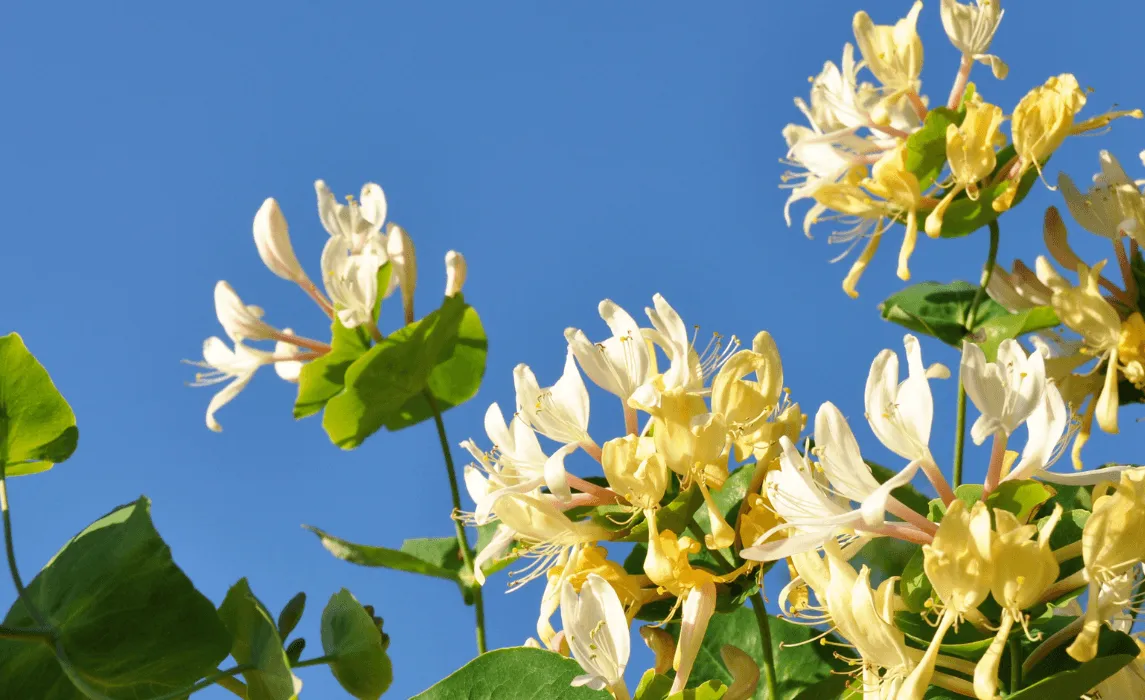
Japanese honeysuckle (Lonicera japonica) arrived in the early 1800s as an ornamental and was later planted widely for erosion control and wildlife forage. The woody vine has oval, opposite leaves 1 to 3 inches long that stay semi-evergreen in mild winters, fragrant tubular flowers that open white and fade to yellow, and small black berries in fall. It handles a wide range of habitats, from floodplains to fence lines and backyards. It twines around saplings tightly enough to girdle them, and its mats shade out wildflowers and native tree seedlings. Birds eat the berries and drop the seeds in new areas. Pull young vines by hand when the soil is moist, cut large vines at the base, and treat cut stems in late fall, when it stays green after native plants go dormant.
3. English Ivy
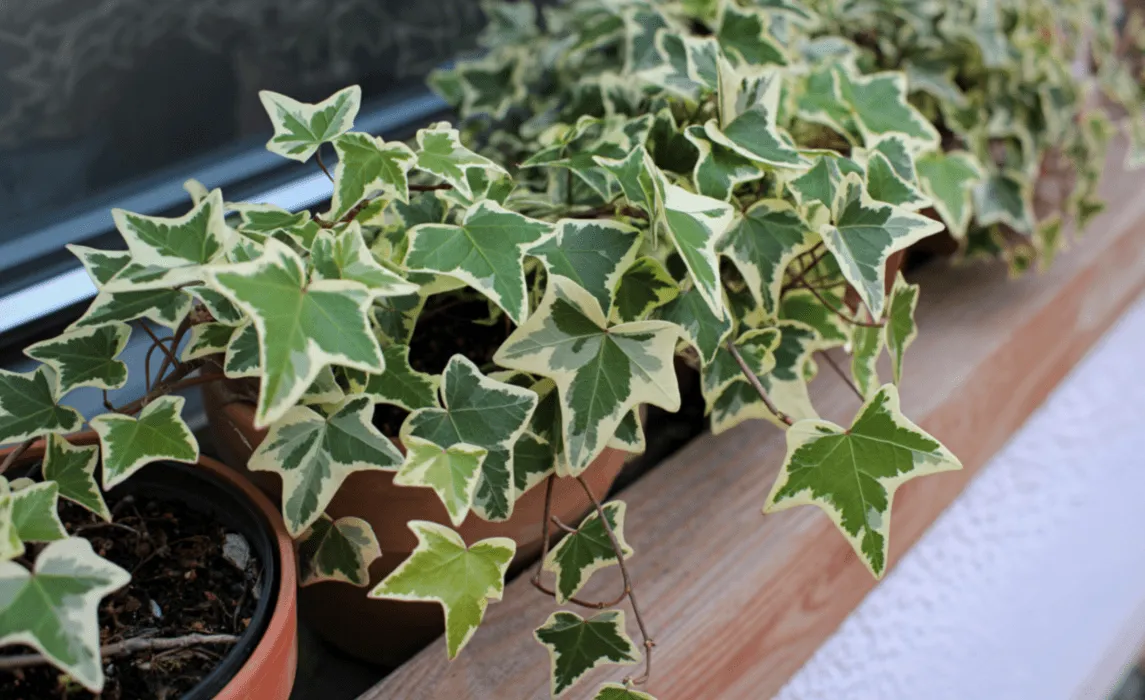
English ivy (Hedera helix) came over with European colonists and is still sold in nurseries as an evergreen groundcover. Young vines have glossy, dark green leaves with three to five lobes, while mature climbing stems grow unlobed leaves, greenish-white flowers, and blue-black berries. It grows in shade or sun, especially in moist woodland soil. On the forest floor it creates "ivy deserts" that crowd out native plant species, and it climbs tree trunks with tiny aerial rootlets. The extra weight weakens trees and makes them likelier to fall in storms. To manage it, cut every vine around a tree at shoulder height and again at ground level, peel the ivy back a few feet from the trunk to make a "survival ring," then pull ground runners and resprouts.
4. Japanese and Giant Knotweed
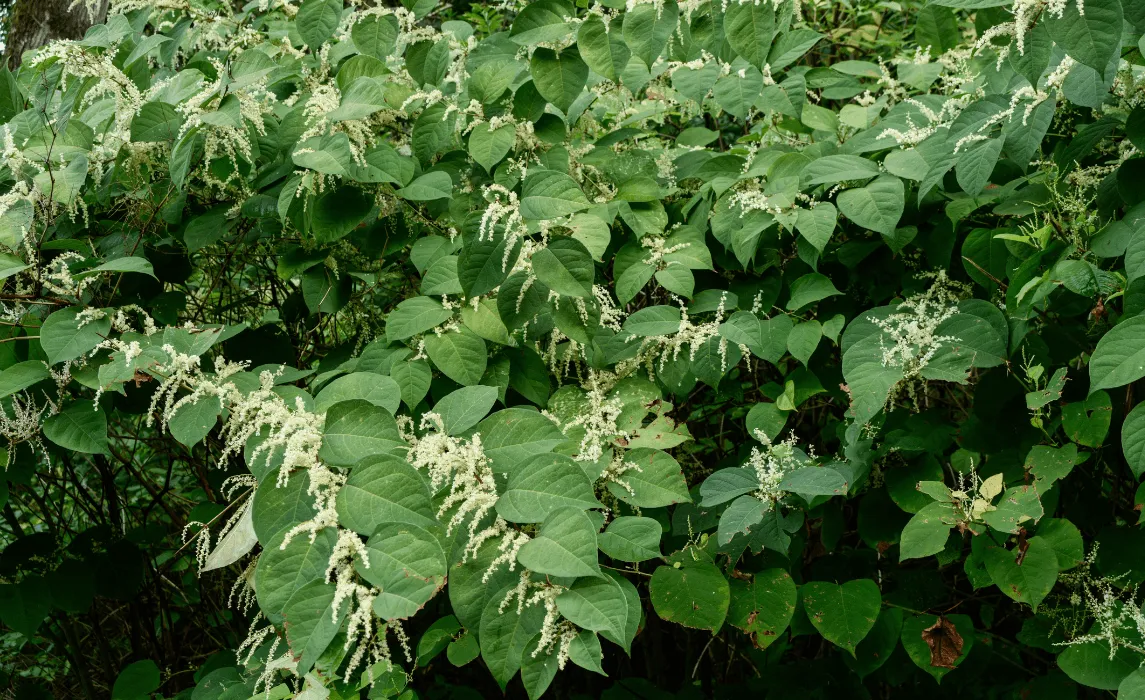
Japanese and giant knotweed (Reynoutria japonica and Reynoutria sachalinensis) were introduced from East Asia in the late 1800s as ornamental screens and later used to stabilize banks. These perennials grow 4 to 15 feet tall from hollow, bamboo-like stems speckled with red. Japanese knotweed has spade-shaped leaves 4 to 6 inches long, while giant knotweed leaves can reach a foot or more, and both bear sprays of tiny creamy-white flowers in late summer. They thrive on streambanks, roadsides, and disturbed soil, forming dense stands that shade out everything else. The rhizomes can push through foundation cracks and pavement, and a fragment smaller than a thumbnail can start a new plant, so floods carry it downstream. Cut stems repeatedly through the season, never mow and scatter the pieces, and use targeted herbicide in late summer on established patches.
How to Grow Peppermint Indoors: A Complete Guide to Growing Peppermint and Other Mint Varieties Year-Round
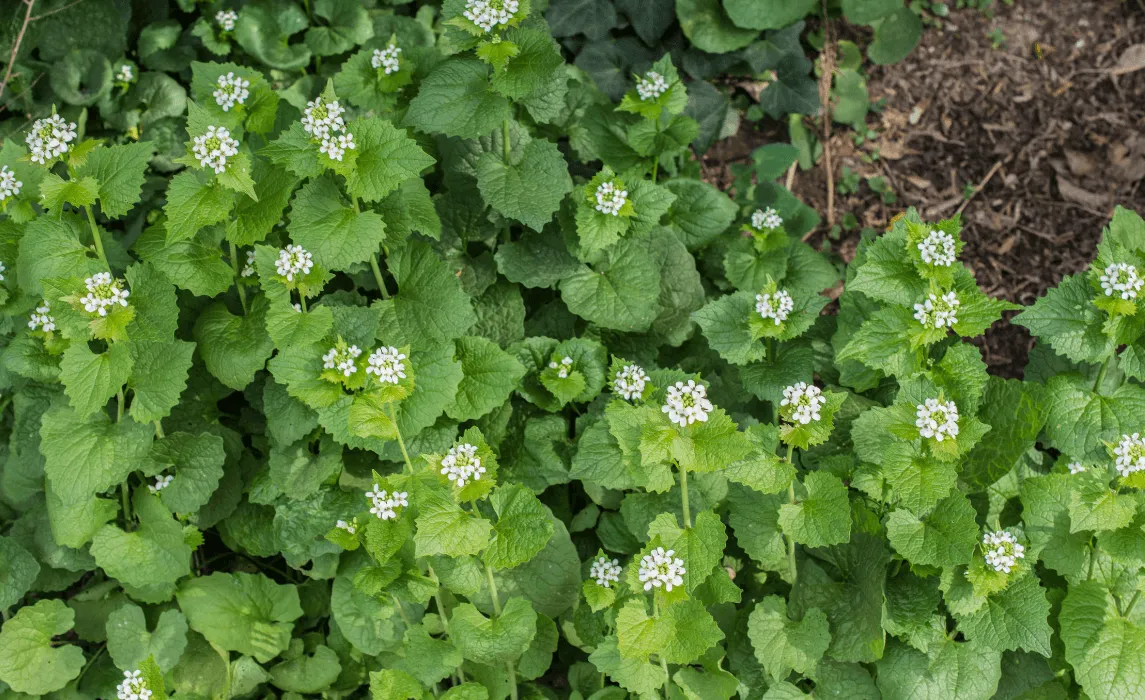
Garlic mustard (Alliaria petiolata) was brought from Europe in the 1860s as a culinary herb. It is a biennial that forms a low rosette of kidney-shaped, scalloped leaves in its first year, then sends up 2 to 4 foot stalks with triangular, toothed leaves and small four-petaled white flowers the following spring. Crushed leaves smell like garlic. It thrives in shaded forests, floodplains, and woodland edges, and is one of the few invasives that can enter undisturbed forest. Its roots release chemicals that disrupt the mycorrhizal fungi native trees and wildflowers rely on, and each plant drops thousands of seeds that last years in the soil. Hand pull before the seed pods form, bag any flowering plants, and revisit the spot every spring until the seed bank is gone.
6. Wild Parsnip
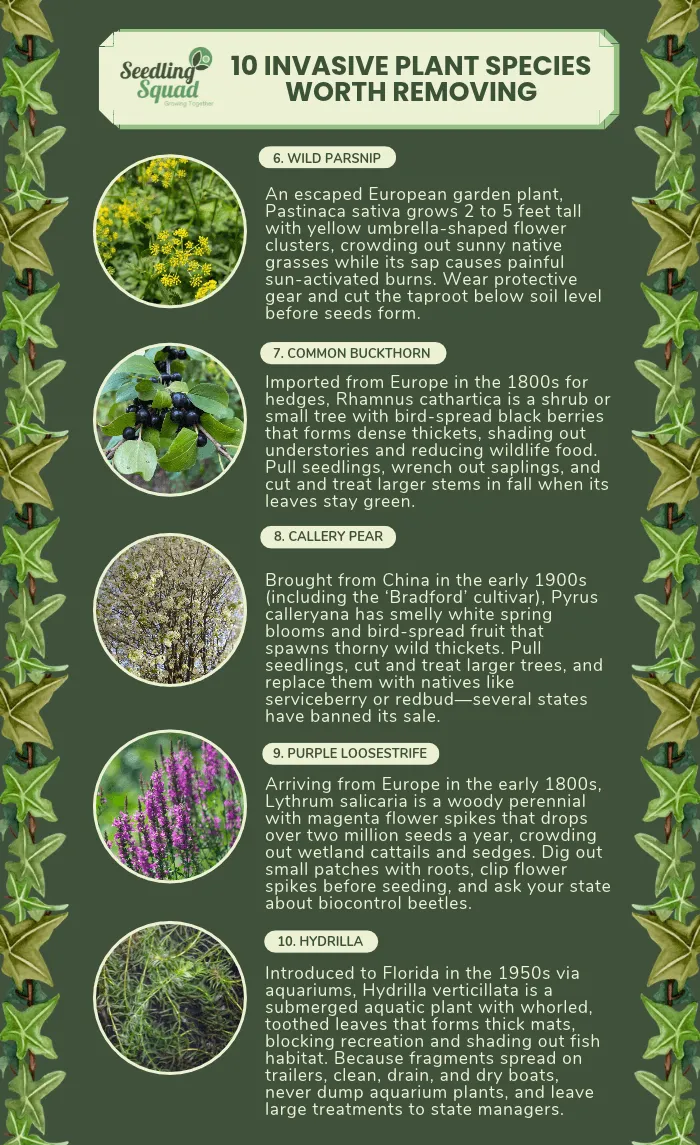
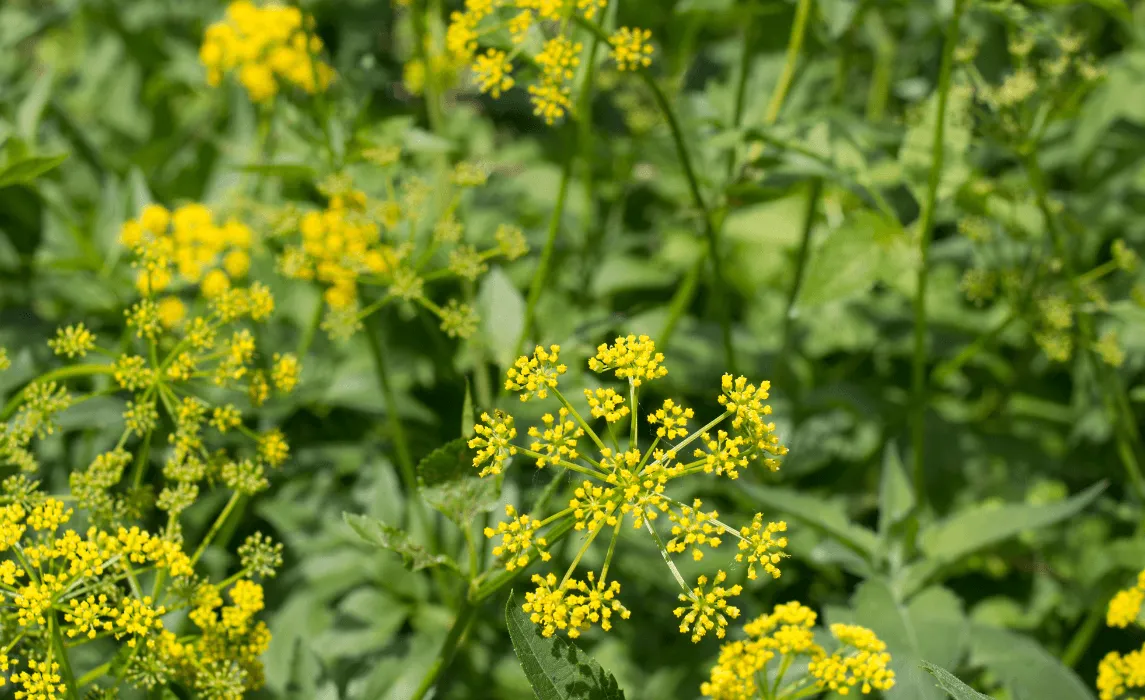
Wild parsnip (Pastinaca sativa) is the escaped form of the garden parsnip, brought to North America by early European settlers. It grows as a low rosette its first year, then bolts to 2 to 5 feet with a grooved stem, compound leaves with saw-toothed leaflets, and flat, umbrella-shaped clusters of yellow flowers from late spring into summer. It favors sunny roadsides, pastures, and old fields, and several states list it as a noxious weed. It spreads by seed, forming dense patches that push out native grasses. Its sap is a human health concern, causing painful burns and blisters when skin is exposed to sunlight. Wear gloves, long sleeves, and eye protection, and cut the taproot just below the soil line before seeds form.
7. Common Buckthorn
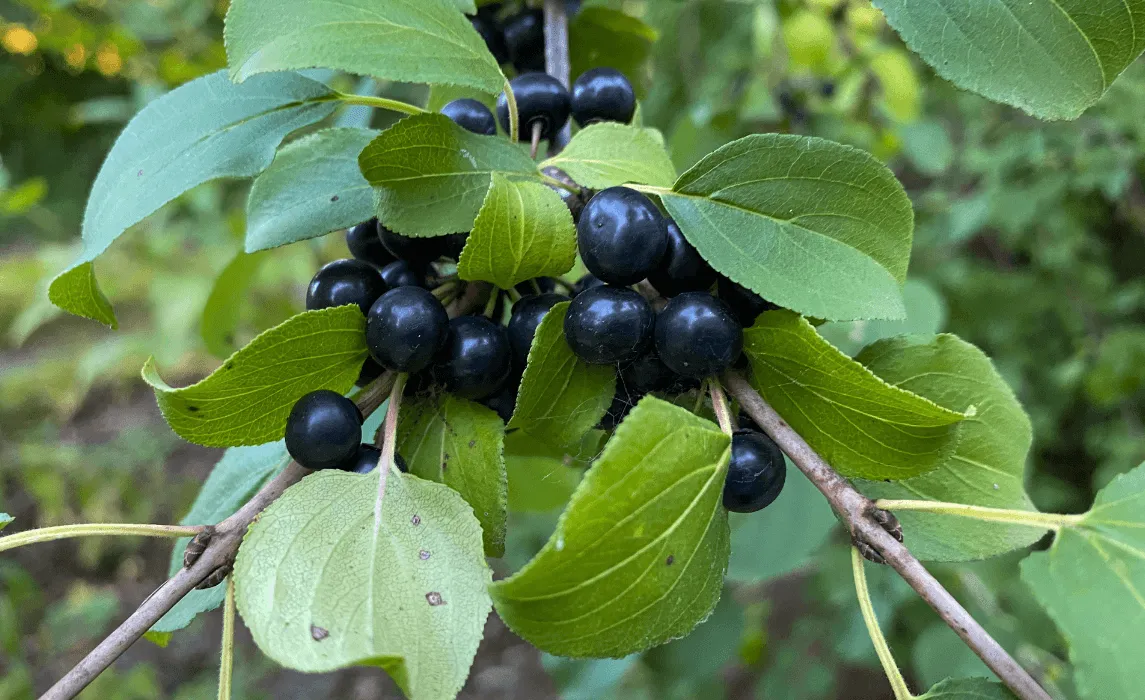
Common buckthorn (Rhamnus cathartica) was imported from Europe in the 1800s and planted as a hedge and windbreak shrub. It grows up to 25 feet tall as a large shrub or small tree, with oval, finely toothed leaves that have curved veins, small yellow-green flowers in spring, and clusters of glossy black berries on female plants. It keeps its leaves into late fall, long after native species drop theirs. Buckthorn thrives in woodlands and hedgerows on almost any soil. It forms dense thickets that shade out the understory, and birds that eat the berries scatter the seeds far and wide. Wildlife are left with fewer native plants for food. Pull small seedlings, use a weed wrench on saplings, and cut and treat larger stems in fall, when the green leaves make it stand out.
8. Callery Pear
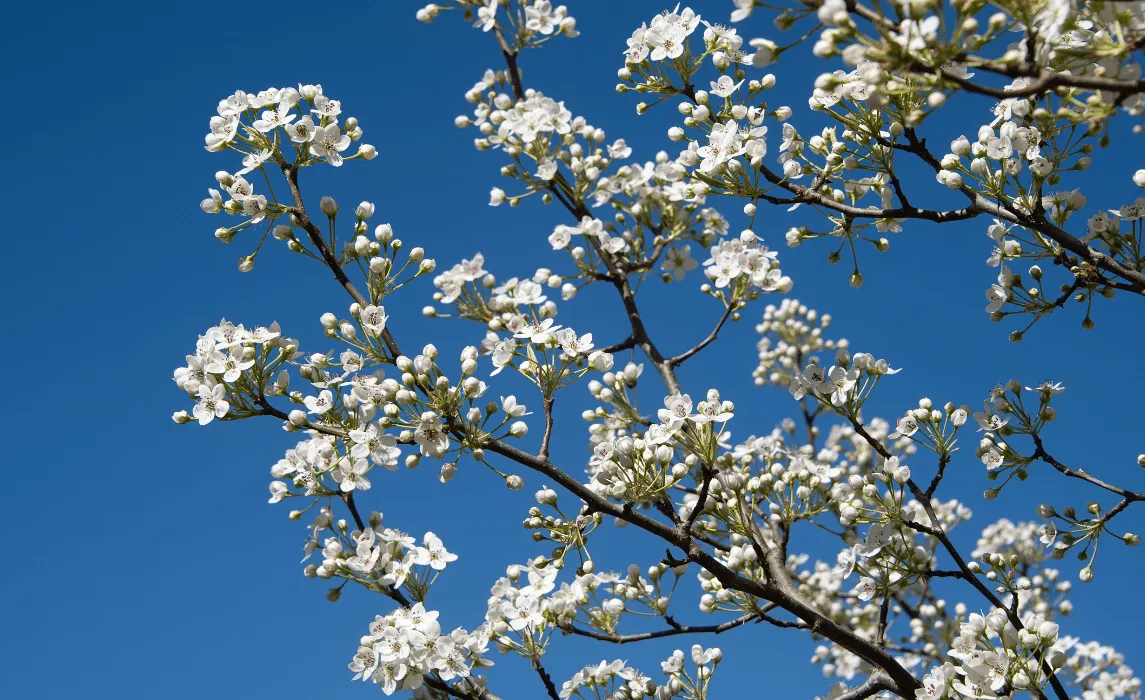
Callery pear (Pyrus calleryana) was brought from China in the early 1900s, and the 'Bradford' cultivar became a hugely popular ornamental plant and street tree from the 1960s onward. It grows 30 to 50 feet tall with glossy, oval leaves that turn red to purple in fall and masses of white, strong-smelling blossoms in early spring before the leaves appear. Cultivars cross-pollinate and produce small fruit that birds carry off. Wild seedlings often grow thorns and form dense thickets in pastures, roadsides, and old fields, crowding out native vegetation. Pull seedlings, cut and treat larger trees, and replace planted ones with a native tree like serviceberry or eastern redbud. Ohio and South Carolina are among the states that have banned its sale.
9. Purple Loosestrife
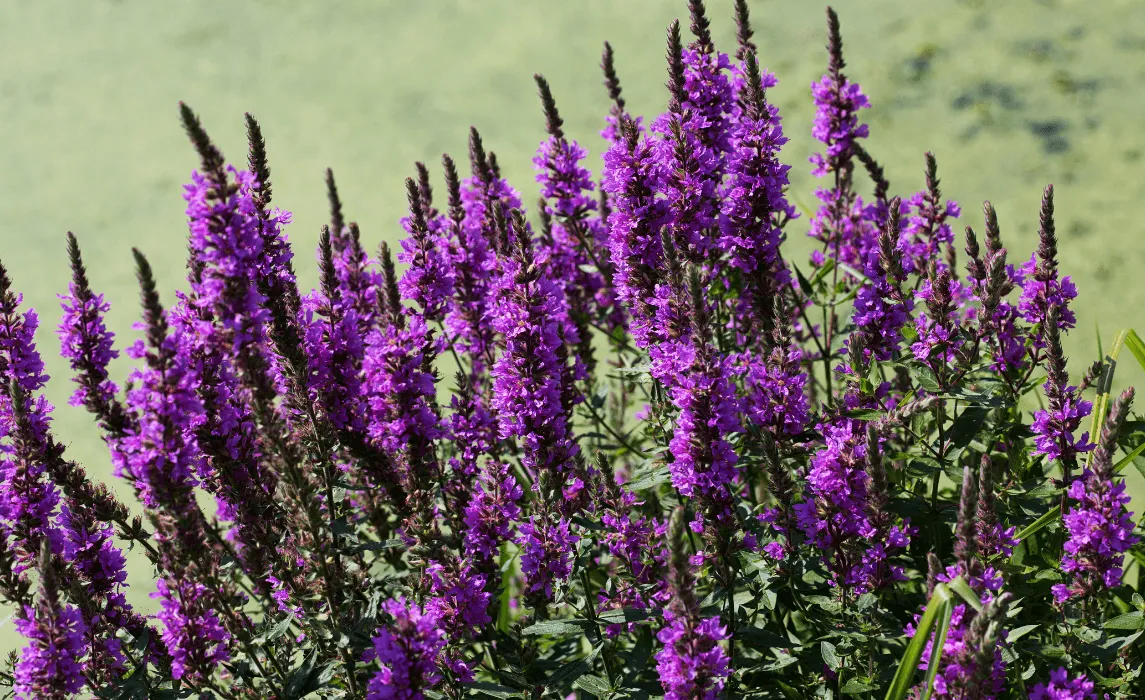
Purple loosestrife (Lythrum salicaria) arrived from Europe in the early 1800s, in ship ballast and as a garden ornamental. This perennial grows 3 to 7 feet tall with square, woody stems, narrow lance-shaped leaves in pairs or whorls, and tall spikes of magenta-purple flowers from midsummer into fall. It thrives in wetland areas like marshes, ditches, and pond edges, where it crowds out native aquatic plants. A single plant can produce over two million tiny seeds a year, spread by water, wind, and muddy boots. Dense stands push out cattails, sedges, and other species in wetlands that waterfowl and amphibians need, cutting local plant diversity. Dig out small patches with the entire root, clip flower spikes before they set seed, and ask your state about approved biocontrol beetles for larger areas.
10. Hydrilla
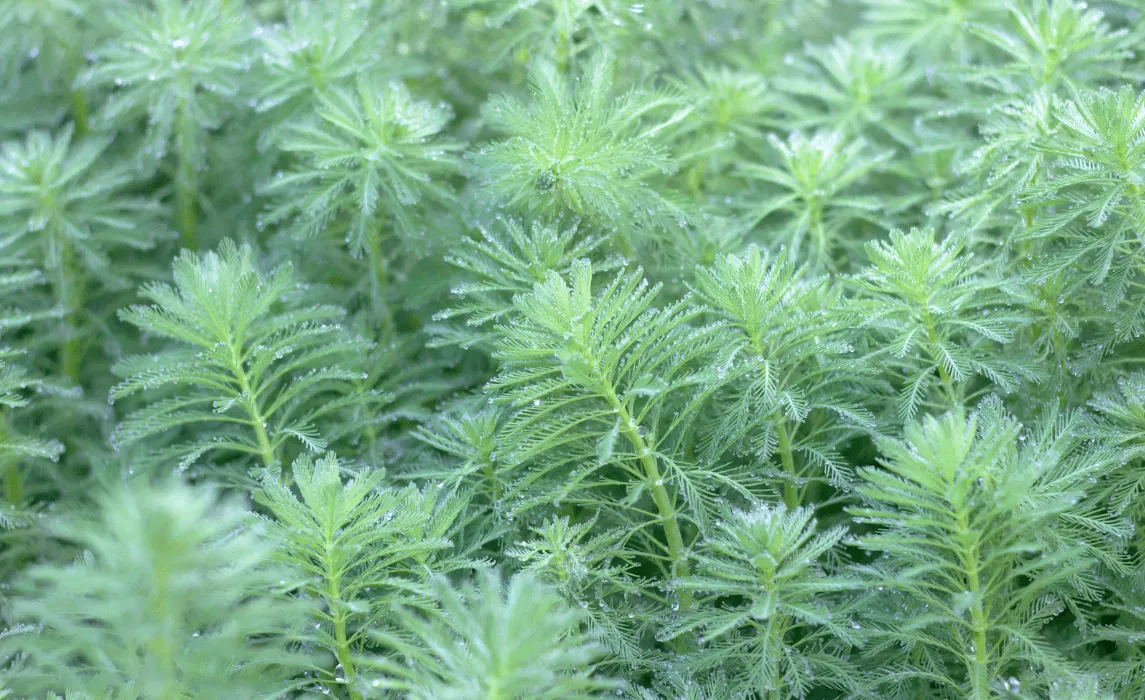
Hydrilla (Hydrilla verticillata) is a submerged aquatic plant first found in Florida in the 1950s, likely released through the aquarium trade. It has small, pointed, strap-shaped leaves with toothed edges arranged in whorls of four to eight along long branching stems, plus tiny white flowers that float at the surface. It grows in lakes, ponds, reservoirs, and slow rivers, including many in North Carolina. Hydrilla can grow about an inch a day, forming thick mats that block boating, swimming, fishing, and water intakes while shading out the underwater habitat that fish and other native wildlife depend on. It spreads from stem fragments and small underground tubers, so a single piece caught on a boat trailer can start a new population. Clean, drain, and dry boats, never dump aquarium plants, and leave large-scale treatment to state managers.
Frequently Asked Questions:
What is the difference between a non-native plant and an invasive plant?
A non-native plant is any species growing outside its natural range, usually because people moved it. Most non-native species stay where they are planted. An invasive plant is a non-native plant species that spreads aggressively on its own, harms natural ecosystems, and causes economic or human health problems.
What key physical traits make an invasive plant easy to spot early on?
Watch for plants that leaf out earlier and hold leaves later than native species, grow unusually fast, form dense patches of a single species, or climb over other vegetation. Heavy seed production is another red flag.
What is the difference between an invasive species and a officially listed "noxious weed"?
Invasive species is an ecological label for organisms that spread and cause harm. A noxious weed is a legal designation set by a state or the U.S. Department of Agriculture, which can restrict selling or moving the plant. Many noxious weeds are invasive, but not every invasive is legally listed.
How do invasive plants harm local ecosystems, soil chemistry, and native wildlife?
They crowd out native plants that insects, birds, and mammals rely on, which lowers native biodiversity. Some, like garlic mustard, change soil chemistry and fungal networks, while others alter water flow or erosion. The combined impact of invasive species can endanger rare plants and animals and is a factor in the decline of many endangered species.
Can invasive plants cause structural damage to private property or lower land values?
Yes. Knotweed rhizomes can push through foundations, drains, and pavement, while English ivy and kudzu add weight that brings trees down onto roofs and fences. A heavy infestation can shrink usable land, raise removal costs, and in some markets complicate home sales.
Are any common invasive plant species toxic or hazardous to humans and pets?
Several are. Wild parsnip and giant hogweed sap can cause severe burns in sunlight. English ivy leaves and berries can upset the stomachs of people and pets, and buckthorn berries are a strong laxative. Dense shrub thickets like Japanese barberry also hold humid air that favors deer ticks.
How do invasive plant seeds accidentally hitchhike into new areas?
Plant seeds ride along in mud on boots, tires, and mowers, in contaminated mulch, fill dirt, hay, and birdseed, and on boat trailers. Birds eat fruit and drop seeds elsewhere, and floods carry fragments downstream. Cleaning gear between sites slows the spread of invasive plants.
What is the safest and most effective way to remove invasive plants on your property?
Identify the plant, then match the method. Hand pulling works for seedlings and garlic mustard, repeated cutting weakens vines, and herbicide on cut stems handles woody shrubs. Good plant control takes protective gear, careful label reading, and several years of follow-up, since managing invasive species always involves resprouts.
Why is standard yard-waste composting unsafe for invasive plant materials?
Home compost piles rarely get hot enough to kill seeds, roots, or stem fragments. Knotweed rhizomes, honeysuckle stems, and seed heads can survive and sprout wherever the finished compost goes, aiding the spread of invasive weeds into your garden.
How should pulled or cut invasive plants be properly disposed of?
Bag seed heads and flowering plants in heavy black plastic and leave them in the sun for a few weeks before sending them to the landfill. Dry woody stems on a tarp away from bare soil. Some counties also run special collections for invasives.
What native plant alternatives should be used to reseed areas after invasive removal?
Pick native alternatives suited to your region and site. In the Southeast, coral honeysuckle or crossvine can replace Japanese honeysuckle, Christmas fern or wild ginger work as shade groundcover, and serviceberry or redbud can stand in for Callery pear. The North Carolina Native Plant Society offers guidance on native plant species for local gardens.
Where and how can citizens report sightings of high-priority invasive species?
Use EDDMapS, a free app and website that sends early detection reports to land managers, or contact your county Cooperative Extension office or state department of agriculture. In North Carolina, the NC Invasive Plant Council shares reporting resources. Include a clear photo, the exact location, and the date to support a rapid response.
Related posts
Here are some articles you might be interested in.