Zuri's frequent journeys to South Africa in her youth ignited her fervor for environmental science, gardening, and sustainable living. These travels deepened her connection with nature, inspiring her to contribute to conservation efforts in her own meaningful ways.
Growing Chia Plants Q&A
Can I grow chia from the chia seeds I buy at the store?
Yes. Organic chia seeds from the grocery store will often germinate, though germination can vary. Fresh seed from a garden supplier is more reliable.
How long does it take to grow chia?
Seeds sprout in about a week. The plant needs 100 to 150 days to mature before you can harvest the seeds.
Is chia a California native plant?
Salvia hispanica is native to central Mexico and Guatemala. However, Salvia columbariae, sometimes called California chia, is a California native plant.
Can I grow chia indoors?
You can grow chia sprouts and microgreens indoors easily. A full-size chia plant needs strong light and rarely sets a good seed crop indoors.
Why won't my chia flower?
Chia flowers when days get shorter. Plants in cooler regions or those lit at night may bloom late or not at all.
How to Grow Pumpkins Q&A
Can I grow pumpkins in a small home garden?
Yes. Choose bush or miniature varieties, grow vines on a trellis, or use raised beds. Plan on one or two plants per hill and prune vines when space is tight.
When should I plant pumpkins for Halloween?
Plant seeds in late May or early June in most climates. Count back from your first frost date and allow for 90 to 120 days of growth.
Why does my pumpkin plant have flowers but no fruit?
Male flowers appear first, so early flowers will not set fruit. If female flowers open but fail to fruit, you probably have too few bees. Pollinate by hand in the morning.
What causes pumpkin leaves to turn white?
This is usually powdery mildew. Improve airflow, water at the base, remove infected leaves, and apply a fungicide or neem oil.
Can I eat the pumpkin I grew for carving?
Yes, though carving types are stringy and bland. Pie pumpkins are sweeter, but the seeds from any pumpkin can be roasted.
Growing Grapevines Q&A
How long does it take for a grape plant to produce fruit?
Most young vines need two to three years after planting before they set a full crop, though a few clusters may appear in year two. Patience pays off — established vines can keep producing for 40 years or more.
Do I need more than one vine to grow grapes?
No. Since most grape varieties are self-fertile, one plant is enough to produce fruit on its own. Planting a second variety nearby is optional and mainly helps with cross-pollination in a few less common types.
Can grape vines grow in containers?
Yes, though grape vines grow best planted directly in the ground, where the root system has room to spread. A large container works for a year or two, but expect to transplant once the vine outgrows the pot.
Why aren't my grapes ripening?
Grapes ripen slowly compared to many fruits, and cool weather, too much shade, or overcrowded canes can all delay the process. Give the vine full sun, thin the clusters, and be patient through the growing season.
What's the difference between table grapes and wine grapes?
Table grapes are bred for fresh eating, with thinner skins and fewer seeds, while wine grapes tend to have thicker skins, more seeds, and higher sugar content suited to fermentation.
Are grape vines toxic to pets?
Grapes and grape leaves are not toxic to people, but grapes and raisins are toxic to dogs and can cause kidney damage, so keep fallen fruit cleaned up if pets have access to the vineyard.
If you are familiar with chia seeds from the store, growing your own is a fun next step. Chia is easy to grow, attractive in the garden, and generous with its tiny seeds. Whether you want to grow chia seeds for eating, enjoy fresh chia sprouts, or add a California native plant to a dry garden, this guide on how to grow chia covers every step, from sowing to harvesting. If you have ever considered growing chia, now is the time to try growing chia in your own yard or pots.
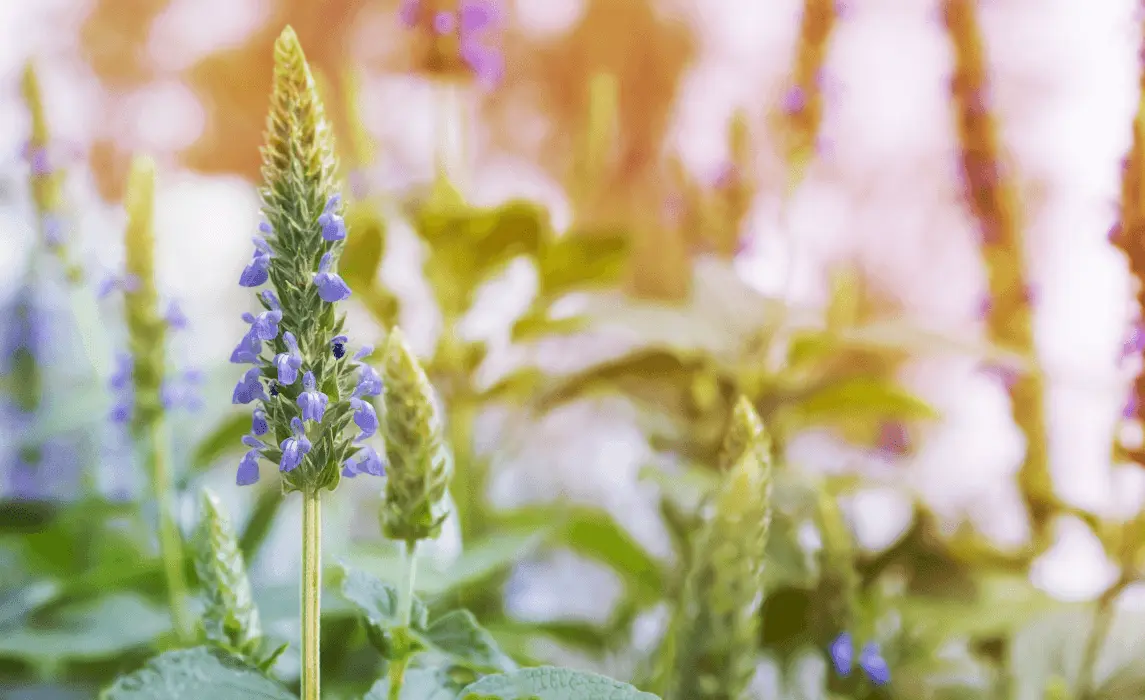
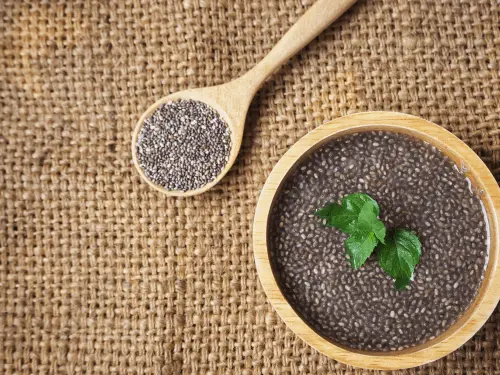
The chia plant (Salvia hispanica) belongs to the mint family. It has serrated chia leaves and spikes of small purple or white chia flowers that bees love. People try growing chia for the health benefits of chia, since the seeds contain fiber, omega-3 fatty acids, protein, and minerals. Soaked seeds form a thick chia gel, which makes eating the seeds in puddings and drinks easy. The seeds also work for a chia pet or chia microgreens.
Plant Name
Chia (Salvia hispanica)
Plant Type
Annual herb grown for seed production, in the mint family
Size
3–5 feet tall and about 2 feet wide
Soil Type
Light, sandy, well-drained soil
Soil pH
6.0–8.0 (slightly acidic to alkaline)
Bloom Time
Late summer to fall, as days shorten
Hardiness Zones
Grown as an annual in most zones; may survive as a short-lived perennial in zones 9–11
Native Area
Central and southern Mexico and Guatemala
Toxicity Level
Non-toxic to people, dogs, and cats
Types of Chia
Before you purchase chia seeds, it helps to know the types of chia you may come across.
Black chia seeds
The most common type. They come from plants with purple flowers and are the usual choice if you want to grow chia for eating.
White chia
A less common variety with white flowers and pale seeds. The nutrition is very similar to black chia, and some gardeners choose it for its look in the garden.
Salvia columbariae
Often called golden chia or desert chia, this is a true California native plant. It is a small, drought-tolerant desert plant with round flower heads. It is not the same species as the commercial seed, but it was traditionally gathered for its seeds and makes a lovely choice for a wildflower patch.
For a bigger crop of edible seed, choose Salvia hispanica.
Chia is grown in warm, sunny regions, so give it full sun. Plant chia outdoors after the last frost, when nights stay above about 50°F. Chia is sensitive to cold, and one freeze can kill it. It needs a long growing season of roughly 100 to 150 days from sowing to harvesting. In cooler climates, plants may flower too late for seeds to ripen, so start seeds indoors early.
Container growing works very well. Chia plants can be grown on a sunny patio or balcony, which is great if you want to grow chia with limited space. You can also grow chia indoors on a bright windowsill, though mature plants indoors get leggy and rarely set a full seed crop. Indoors suits sprouts and microgreens better.
How to Plant Chia Seeds
Chia seeds can be grown in garden beds or pots, and the tiny seeds need a light touch. Even beginners are able to grow chia from seed, and you can sow seeds in the garden once the soil warms. Plant the seeds in spring, after the last frost.
Plant Chia Seeds Outdoors
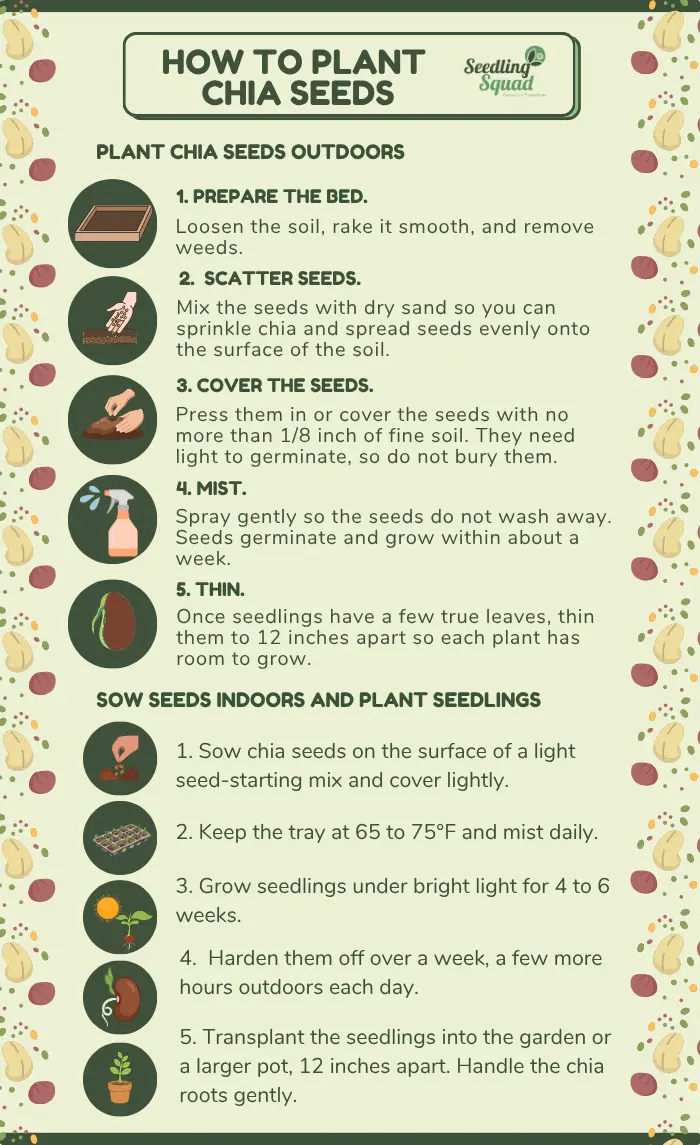
Prepare the bed- Loosen the soil, rake it smooth, and remove weeds.
Scatter seeds- Mix the seeds with dry sand so you can sprinkle chia and spread seeds evenly onto the surface of the soil.
Cover the seeds- Press them in or cover the seeds with no more than 1/8 inch of fine soil. They need light to germinate, so do not bury them.
Mist- Spray gently so the seeds do not wash away. Seeds germinate and grow within about a week.
Thin- Once seedlings have a few true leaves, thin them to 12 inches apart so each plant has room to grow.
Sow Seeds Indoors and Plant Seedlings
Sow chia seeds on the surface of a light seed-starting mix and cover lightly.
Keep the tray at 65 to 75°F and mist daily.
Grow seedlings under bright light for 4 to 6 weeks.
Harden them off over a week, a few more hours outdoors each day.
Transplant the seedlings into the garden or a larger pot, 12 inches apart. Handle the chia roots gently.
How to Sprout Chia Seeds
You do not need a garden to enjoy chia sprouts. To sprout chia seeds, spread a thin layer on a damp paper towel, shallow dish, or terra cotta planter, the way a classic chia pet works. Mist twice a day and keep out of direct sun. The seeds form a gel coating, then sprout in a few days. Rinse gently each day to prevent mold. Chia seed sprouts are ready in 5 to 7 days at 1 to 2 inches tall. Use organic chia seeds labeled for sprouting.
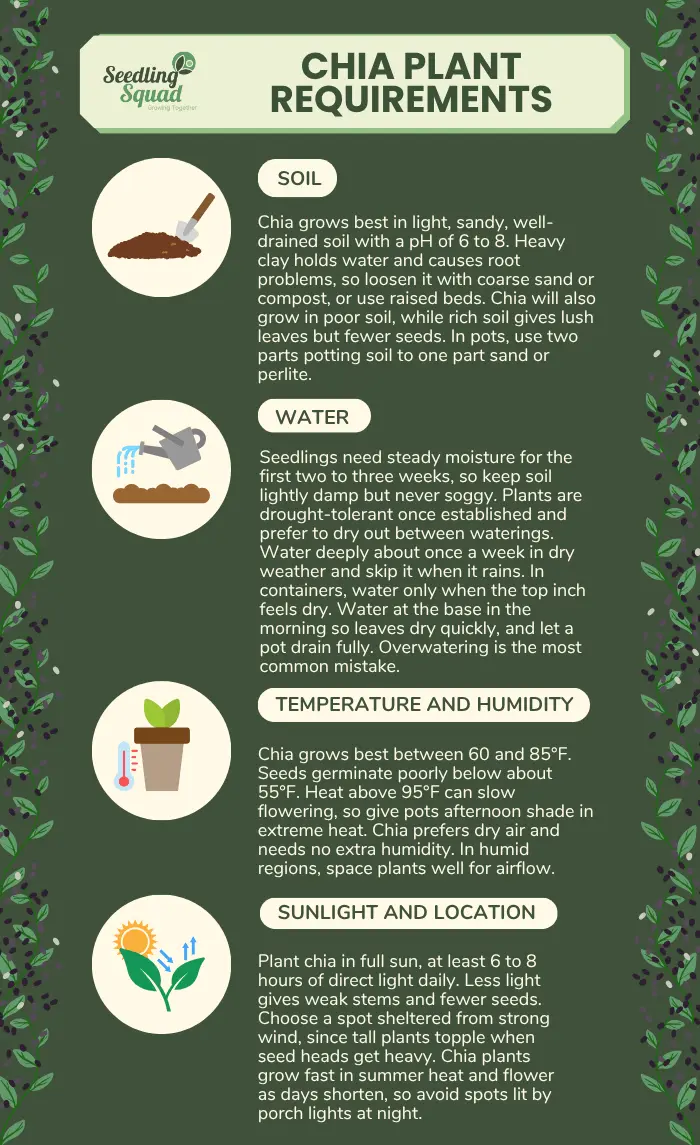
Chia grows best in light, sandy, well-drained soil with a pH of 6 to 8. Heavy clay holds water and causes root problems, so loosen it with coarse sand or compost, or use raised beds. Chia will also grow in poor soil, while rich soil gives lush leaves but fewer seeds. In pots, use two parts potting soil to one part sand or perlite.
Water
Seedlings need steady moisture for the first two to three weeks, so keep soil lightly damp but never soggy. Plants are drought-tolerant once established and prefer to dry out between waterings. Water deeply about once a week in dry weather and skip it when it rains. In containers, water only when the top inch feels dry. Water at the base in the morning so leaves dry quickly, and let a pot drain fully. Overwatering is the most common mistake.
Temperature and Humidity
Chia grows best between 60 and 85°F. Seeds germinate poorly below about 55°F. Heat above 95°F can slow flowering, so give pots afternoon shade in extreme heat. Chia prefers dry air and needs no extra humidity. In humid regions, space plants well for airflow.
Sunlight and Location
Plant chia in full sun, at least 6 to 8 hours of direct light daily. Less light gives weak stems and fewer seeds. Choose a spot sheltered from strong wind, since tall plants topple when seed heads get heavy. Chia plants grow fast in summer heat and flower as days shorten, so avoid spots lit by porch lights at night.
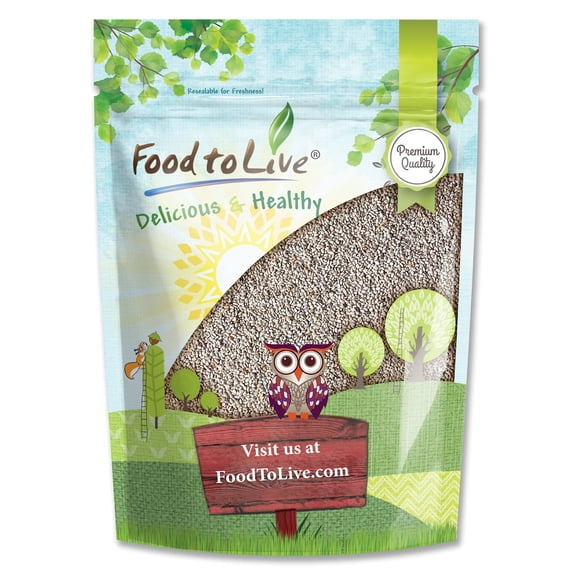
Terrasoul Superfoods Organic Black Chia Seeds – 1 lb
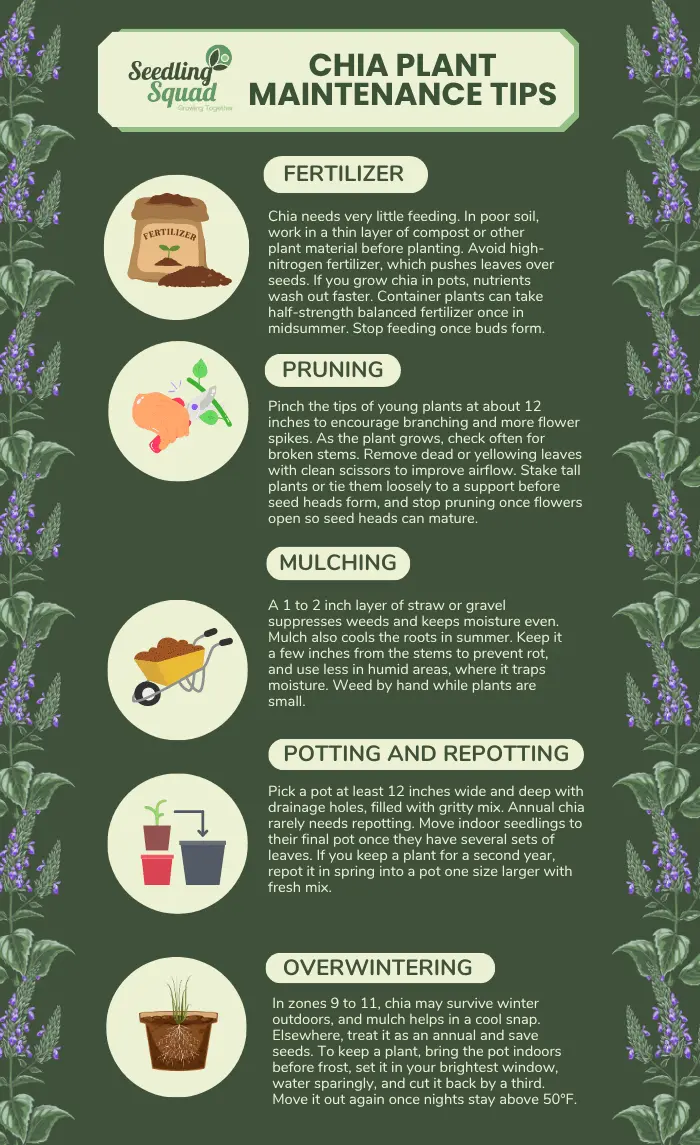
Chia needs very little feeding. In poor soil, work in a thin layer of compost or other plant material before planting. Avoid high-nitrogen fertilizer, which pushes leaves over seeds. If you grow chia in pots, nutrients wash out faster. Container plants can take half-strength balanced fertilizer once in midsummer. Stop feeding once buds form.
Pruning
Pinch the tips of young plants at about 12 inches to encourage branching and more flower spikes. As the plant grows, check often for broken stems. Remove dead or yellowing leaves with clean scissors to improve airflow. Stake tall plants or tie them loosely to a support before seed heads form, and stop pruning once flowers open so seed heads can mature.
Mulching
A 1 to 2 inch layer of straw or gravel suppresses weeds and keeps moisture even. Mulch also cools the roots in summer. Keep it a few inches from the stems to prevent rot, and use less in humid areas, where it traps moisture. Weed by hand while plants are small.
Potting and Repotting
Pick a pot at least 12 inches wide and deep with drainage holes, filled with gritty mix. Annual chia rarely needs repotting. Move indoor seedlings to their final pot once they have several sets of leaves. If you keep a plant for a second year, repot it in spring into a pot one size larger with fresh mix.
Overwintering
In zones 9 to 11, chia may survive winter outdoors, and mulch helps in a cool snap. Elsewhere, treat it as an annual and save seeds. To keep a plant, bring the pot indoors before frost, set it in your brightest window, water sparingly, and cut it back by a third. Move it out again once nights stay above 50°F.
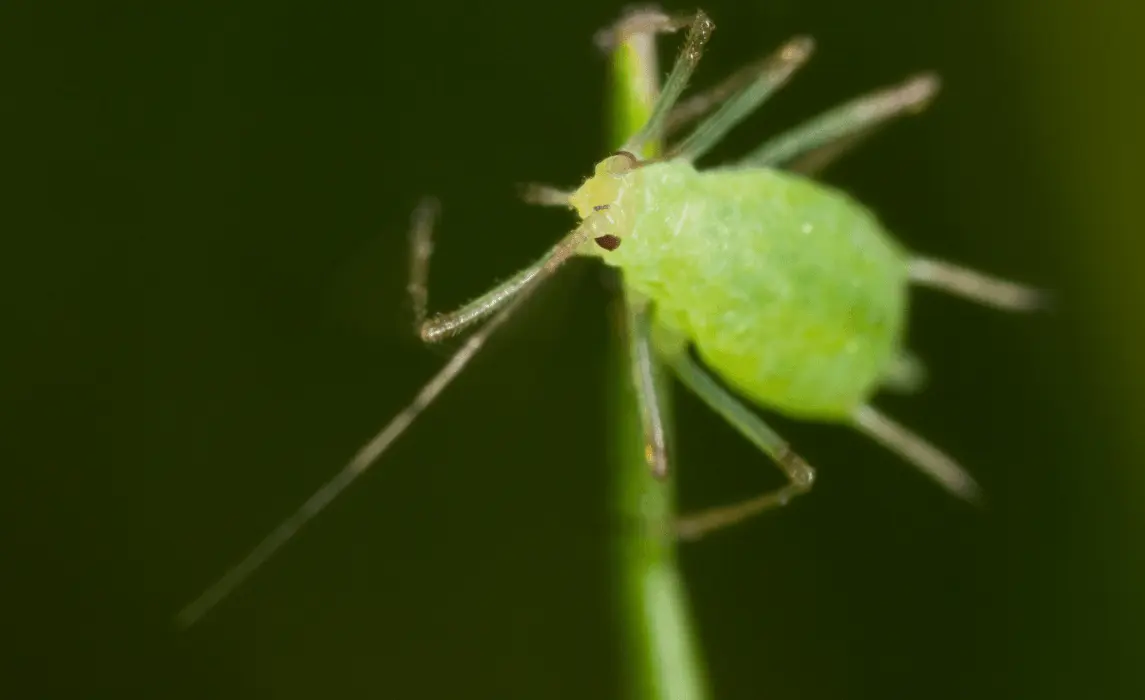
The good news is that chia plants have virtually no pests. The strong scent of the leaves and the mint family chemistry keep most insects away. Still, a few common problems can show up.
Aphids and whiteflies
These can cluster on new growth. Knock them off with a spray of water or use insecticidal soap.
Spider mites
More likely in hot, dry spells. Rinse the leaves and increase airflow.
Damping off
Seedlings collapse at the soil line. Prevent it by using clean pots, sterile mix, and avoiding soggy soil.
Root rot
Caused by poor drainage and overwatering. If your chia plant wilts despite moist soil, cut back on watering and move it to a better-draining spot.
Powdery mildew
A white coating on leaves in humid weather. Space plants well and remove affected leaves.
If your chia won't flower or set seed, the cause is usually a short season, too much nitrogen, or light at night. Check each of these first.
How to Harvest Chia Seeds
Here is how to harvest chia.
Wait- Flowers appear in late summer or fall. Seed production follows, and the seed heads are ready when they turn dry and brown, usually 3 to 4 weeks after flowering. Seeds on the plant should rattle.
Cut- Cut stems on a dry day, since wet seed heads mold.
Dry- Hang the seed heads upside down in a warm, dry spot for a week or two.
Release- Shake or rub the heads in a paper bag to release the seeds.
Clean- Pour seeds between bowls in a light breeze so chaff blows away.
Store- Keep in an airtight jar, cool and dark. Dried seeds last for years.
Leave a few seed heads to self-sow, and any plants allowed to grow may return next spring. Growing these seeds yearly saves money.
Can I grow chia from the chia seeds I buy at the store?
Yes. Organic chia seeds from the grocery store will often germinate, though germination can vary. Fresh seed from a garden supplier is more reliable.
How long does it take to grow chia?
Seeds sprout in about a week. The plant needs 100 to 150 days to mature before you can harvest the seeds.
Is chia a California native plant?
Salvia hispanica is native to central Mexico and Guatemala. However, Salvia columbariae, sometimes called California chia, is a California native plant.
Can I grow chia indoors?
You can grow chia sprouts and microgreens indoors easily. A full-size chia plant needs strong light and rarely sets a good seed crop indoors.
Why won't my chia flower?
Chia flowers when days get shorter. Plants in cooler regions or those lit at night may bloom late or not at all.
Related posts
Here are some articles you might be interested in.